 Advertise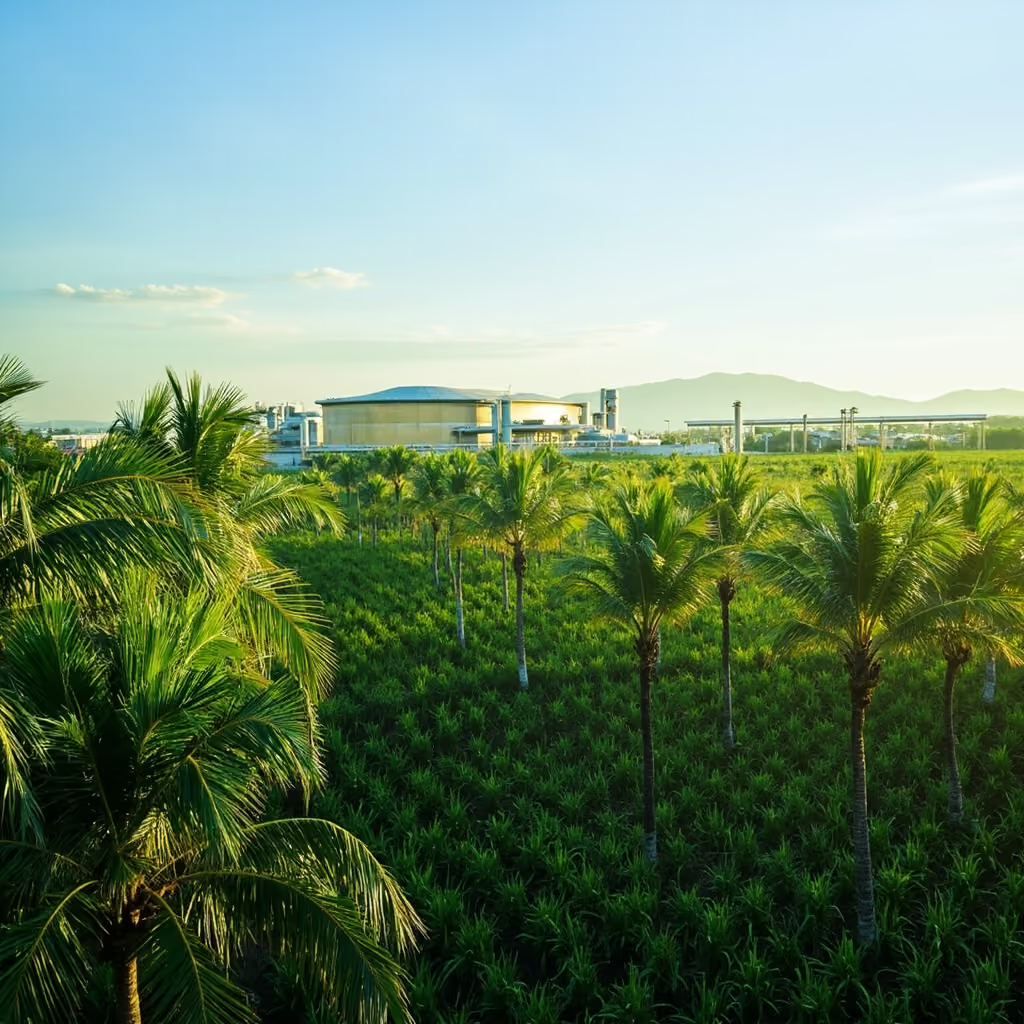
Gokul Agro Resources (GAR) is undertaking a significant vertical integration and capacity expansion initiative, aiming to add 8 lakh metric tons per annum (MTPA) to its processing capabilities. This strategic move, set for completion by the fiscal year 2027, also includes an ambitious plan to reduce power costs by 55% and expand its palm oil plantation footprint to 900 hectares. The agricultural expansion is specifically designed to secure a sustainable feedstock supply for the lucrative European Union (EU) biodiesel export market, leveraging the company's recently operational Gandhidham biodiesel plant.
This dual-pronged expansion positions Gokul Agro Resources Limited to enhance its manufacturing output by 8 lakh MTPA, optimize operational expenses through a 55% power rate reduction, and significantly scale its palm oil plantations to 900 hectares. These efforts are primarily geared towards serving the EU biodiesel market.
Gokul Agro is actively transitioning from its traditional role as a pure-play, low-margin edible oil refiner into an integrated player in green energy and specialty ingredients. By backward integrating palm plantations to 900 hectares and fully utilizing its 300 TPD (tons per day) Gandhidham biodiesel plant, the company intends to establish captive supply lines, ensuring access to premium export margins. The expansion of captive power generation facilities is expected to act as a structural margin defender, safeguarding the firm from volatile grid tariffs.
The company's strategic pivot towards high-margin exports and substantial cost reduction is viewed positively by both credit and equity markets. An 8 lakh MTPA capacity increase, coupled with the establishment of sustainable feedstock sourcing for the EU market, is anticipated to elevate Gokul Agro above its peers in the domestic refining sector, who often operate on thin margins. This transformation could potentially lead to a structural re-rating of the company's valuation.
These aggressive expansion plans, focused on high-margin opportunities, are underpinned by a strong financial performance in Q1 FY2027. During this period, Gokul Agro reported a remarkable 74.28% year-over-year surge in net profit, reaching ₹123.74 crore, up from ₹71 crore in the prior year. The optimization of captive power and continued export growth are identified as key fundamental triggers for this performance.
India currently imports approximately 55% to 60% of its edible oil demand. Given the highly competitive domestic refining margins, typically ranging from 2% to 3%, forward-thinking industry players are increasingly shifting their focus towards bio-based applications, green chemistry, and biodiesel production. Gokul Agro's specific emphasis on the EU biodiesel market strategically places it within a high-growth, regulated demand segment where feedstocks derived from waste or certified as sustainable command premium pricing.
For Q1 FY2027, Gokul Agro reported a consolidated net profit increase of 74.28% year-over-year, reaching ₹123.74 crore. This was achieved on a 7.26% rise in revenue, which climbed to ₹5,281.95 crore from ₹4,924.35 crore in the corresponding period last year. Separately, on June 8, 2026, independent directors Keyoor Madhusudan Bakshi, Pankaj Mangharam Kotak, and Pooja Hemang Khakhi concluded their tenures and stepped down from their positions.
Gokul Agro's strategic shift towards vertical integration, renewable energy, and export-driven biodiesel production represents a fundamentally superior capital allocation framework when compared to traditional domestic bulk refining models.
Source: Sahi