 Advertise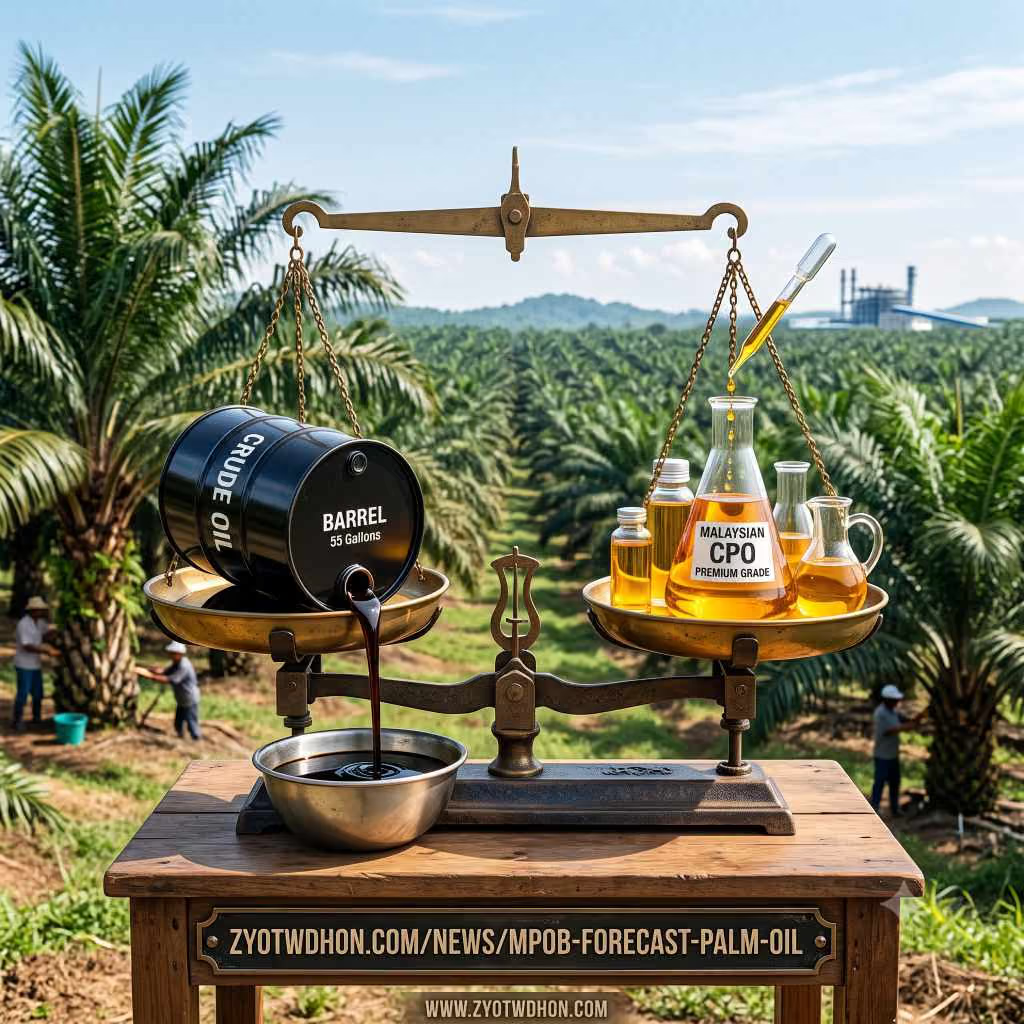
The Malaysian Palm Oil Board (MPOB) has projected that the average price of crude palm oil (CPO) will remain highly resilient and robust for the remainder of this year, fluctuating within a strong estimated range of RM4,000 to RM4,300 per metric tonne. This stable pricing outlook is primarily attributed to the prevailing trends and price movements in the global petroleum markets.
During a press conference following the conclusion of the MPOB 2026 Palm Oil Technology Transfer (TOT) Programme held in Bangi, MPOB Director-General Datuk Dr. Ahmad Parveez Ghulam Kadir highlighted the direct correlation between global oil prices and CPO values. He specifically pointed out that ongoing geopolitical tensions surrounding the critical shipping route of the Strait of Hormuz have significantly impacted global petroleum supply lines. This volatility in the fossil fuel sector acts as a major catalyst, driving up the valuation of both palm oil and alternative vegetable oils worldwide due to the closely linked nature of these commodity markets.
In addition to geopolitical factors, the director-general outlined a major production bottleneck confronting the domestic palm oil sector. The industry is currently dealing with the delayed, long-term repercussions of the El Niño weather phenomenon, which is severely limiting output by affecting oil palm pollination. Datuk Dr. Ahmad Parveez explained that the impact of El Niño is not instantaneous but rather manifests progressively over time. The excessively hot weather and reduced rainfall patterns disrupt the natural pollination activities of oil palm weevils. When these crucial pollinating insects face intense heat, their activity declines sharply, leading to lower pollination rates and a subsequent reduction in overall oil extraction yields.
Addressing regulatory frameworks and international trade, Datuk Dr. Ahmad Parveez provided an update on the domestic response to the European Union Deforestation Regulation (EUDR). He revealed that more than 80% of smallholders operating in Peninsular Malaysia are already structurally prepared to satisfy the stringent criteria mandated by the EU regulation. Looking forward, the MPOB has established a targeted objective to integrate 90% to 95% of eligible smallholders—specifically those possessing valid regulatory licences and undisputed land ownership documentation—into the national compliance framework. This integration is designed to be fully operational before the official EUDR implementation for smallholders commences in the middle of next year, ensuring that Malaysian palm oil exports can enter the European Union markets smoothly and without encountering any trade barriers.
Source: The Edge Malaysia