 Advertise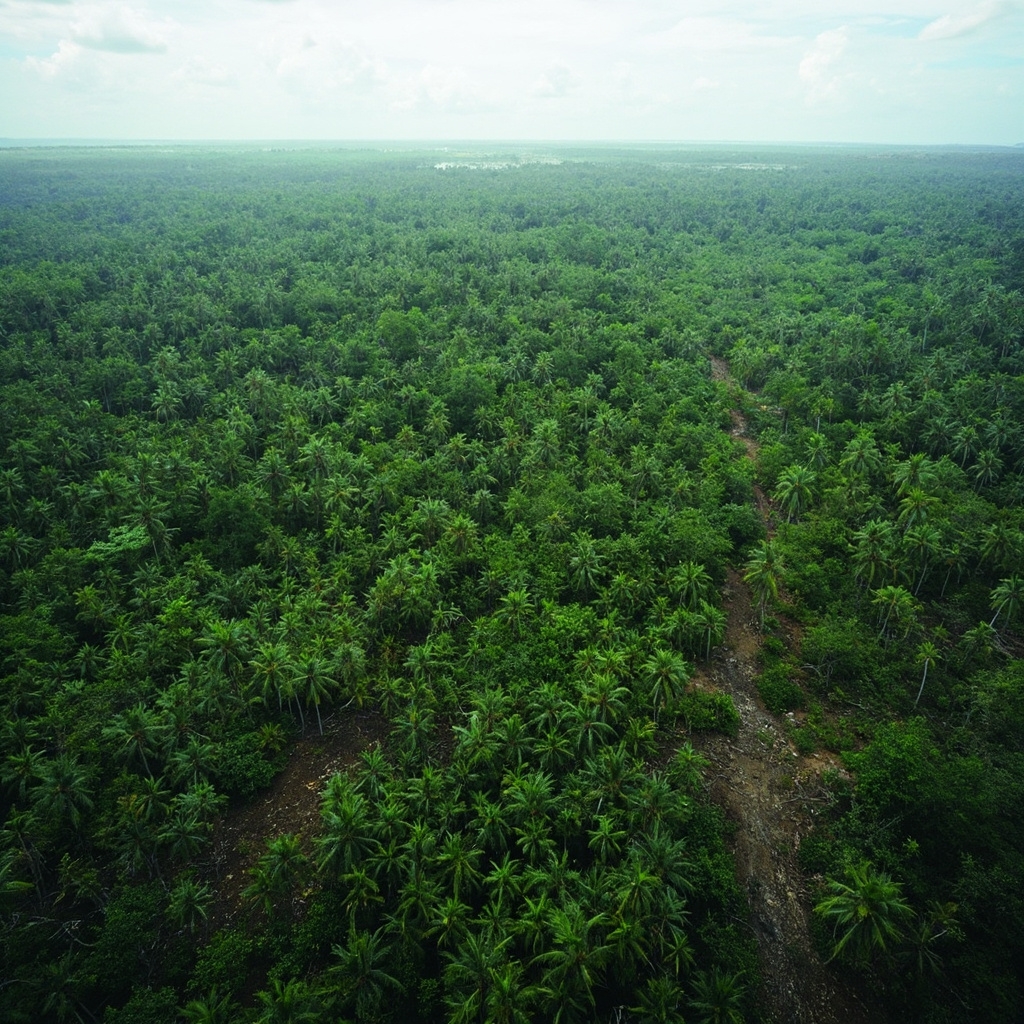
Major global financial institutions channeled approximately $31 billion in sustainability-linked loans to high-risk palm oil conglomerates across Southeast Asia between 2018 and 2025, even as these firms continued to drive tropical deforestation. An investigation by Global Witness has revealed how banks packaged this capital under environmental, social, and governance (ESG) branding, despite the recipient companies being implicated in ongoing primary forest clearing, land disputes, and corruption. These findings expose critical vulnerabilities in voluntary sustainable finance frameworks, enabling corporate borrowers to secure inexpensive capital while effectively 'greenwashing' destructive supply chains.
The report highlights a key distinction: unlike green bonds, which allocate funds to specific eco-friendly projects, sustainability-linked loans provide general corporate financing. These loans are tied to self-negotiated key performance indicators (KPIs) that often focus on less stringent metrics, such as reducing Scope 1 emissions or electrifying operational equipment. Lenders offer reduced loan margins, thereby lowering the firm's capital costs, when these often 'low-bar' goals are met.
Global Witness meticulously cross-referenced satellite monitoring data from Palmoil.io with international lending records. This analysis unveiled that many loan agreements lacked legally binding environmental standards. Banks frequently refinanced substantial revolving credit facilities without mandating comprehensive supply-chain traceability. Consequently, agribusiness giants could claim prestigious ESG credentials while their broader operations continued to clear vital primary tropical forests.
Wilmar International, one of the world's largest palm oil suppliers, features prominently in the investigation. Despite adopting a zero-deforestation commitment in 2015, satellite monitoring linked Wilmar concessions to the destruction of approximately 4,200 hectares of primary forest between 2016 and 2024 – an area comparable in size to the city of Portsmouth. Despite this documented environmental damage, international lenders committed $950 million to Wilmar in sustainability-linked financing, while ESG-labeled funds maintained $46 million of the firm's equity.
This problematic financing model extends across the entire commodity trading sector. Between 2022 and 2025, Musim Mas and Wilmar jointly secured $566 million in sustainability-linked loans, even as they faced local inquiries into palm oil export corruption. Similarly, Olam Group obtained $9.4 billion in total credit facilities from 2018 to 2023, despite maintaining active trade relationships with suppliers known to be clearing primary forests. In 2025, Louis Dreyfus secured $2.3 billion in sustainability-linked credit from a syndicate including Bank of China, Crédit Agricole, and Rabobank.
The investigation unequivocally demonstrates how voluntary ESG debt frameworks allow major corporations to self-assess their environmental progress with insufficient external oversight. Flossie Boyd, Senior Campaigner at Global Witness, stated, 'The findings demonstrate the need for the UK and the EU to introduce clear mandatory financial rules that cut off investment to firms failing to tackle deforestation in their supply chains. Voluntary standards on sustainability allow companies to effectively mark their own homework, raising serious questions for responsible investors.'
Targeted entities, however, defend their operational conduct. Wilmar International, in an official statement, rejected the findings, asserting: 'We firmly refute any suggestion that deforestation has been carried out by the company as alleged.' Lenders also maintain the integrity of their screening protocols. A spokesperson for Barclays affirmed that their internal risk reviews are rigorous: 'All of our palm oil clients are required to commit to no deforestation, no peatland development, and no exploitation in their operations and supply chain. Clients are assessed against these and other criteria as part of an annual due diligence process.'
Despite assurances from banks, the Global Witness report concludes that self-monitored contractual metrics are inadequate for protecting fragile ecosystems. When lenders approach ESG compliance primarily as a marketing tool, greenwashing proliferates significantly. To prevent capital markets from accelerating global biodiversity loss, governments must replace voluntary guidelines with legally binding due-diligence regulations, and regulators must hold financial institutions directly accountable for the real-world environmental destruction financed through their portfolios.
Source: ESG News.earth