 Advertise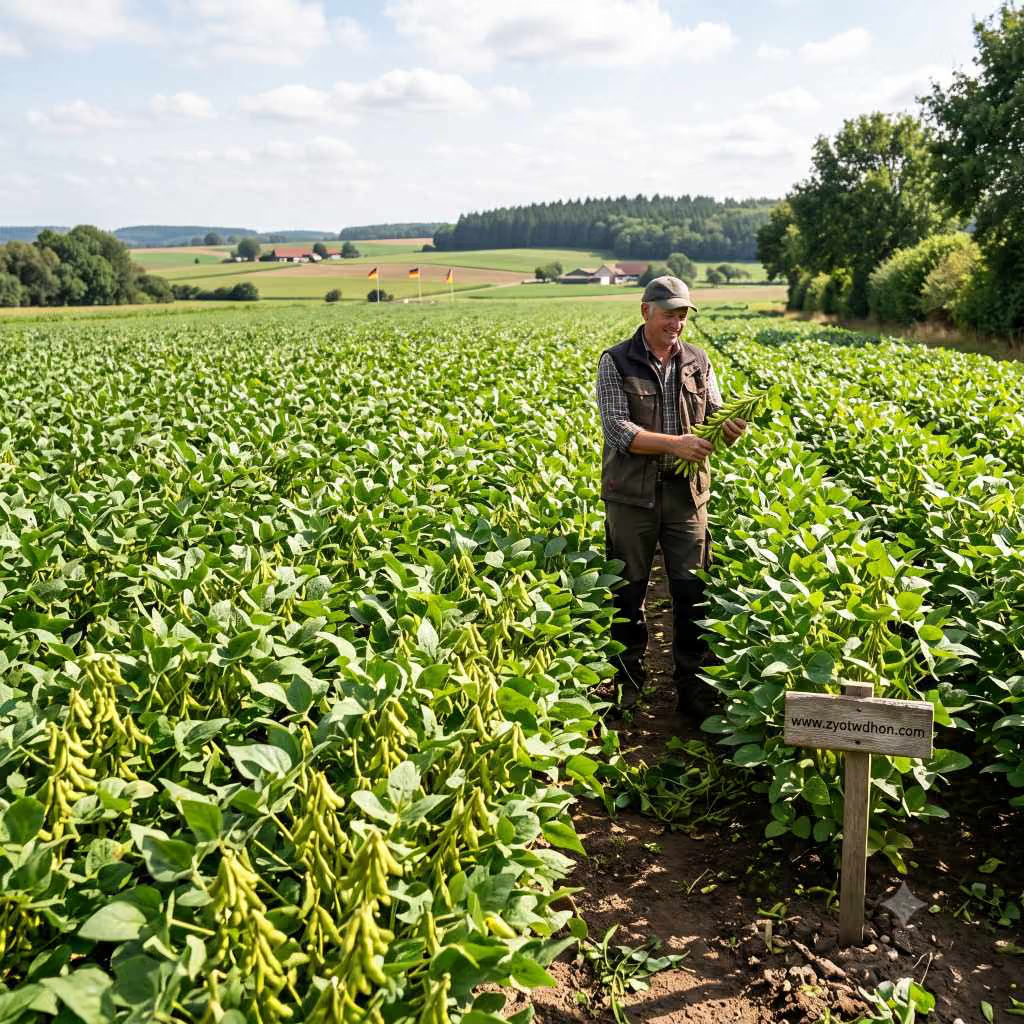
Germany is on course to achieve its most substantial soybean crop in history during 2026, marking a pivotal milestone in the country's efforts to bolster its independent domestic protein supply. This rapid agricultural expansion stands out in stark contrast to the broader trends observed across the European Union, where aggregate soy production is experiencing a noticeable contraction.
Statistical forecasts indicate that Germany's soybean yield will escalate by 21%, reaching an all-time high of approximately 159,000 tonnes. This sharp volumetric increase underscores the nation's evolving role as a localized hub for protein crop cultivation. Meanwhile, the aggregate production across the EU-27 bloc for the 2026/2027 marketing period is projected to dip by roughly 1%, dropping slightly under the threshold of 2.8 million tonnes.
Industry analysts attribute Germany's exceptional harvest prospects to a strategic expansion of agricultural acreage dedicated to grain legumes, specifically dry peas, broad beans, and soybeans. This structural shift reflects a long-term initiative to diversify regional crop rotations. It is primarily driven by an accelerating consumer and industrial demand for certified non-genetically modified (GM-free) animal feed, alongside a concerted push to satisfy national and European protein independence strategies. According to data from the Union for the Promotion of Oil and Protein Plants (UFOP), this movement is part of a broader structural shift that has seen continental soy yields triple over the preceding decade.
However, the domestic success in Germany stands isolated against a downturn in other major producing member states. Italy, which firmly retains its status as the European Union's largest soybean producer, is projecting a steep 15% reduction in output, plummeting to a five-year low of 899,000 tonnes. Conversely, France, holding the position of the bloc's second-largest supplier, expects a moderate 4% growth rate to hit 408,000 tonnes, while several smaller member states anticipate minor incremental improvements.
Looking ahead, a substantial regulatory challenge threatens the continued expansion of the European soy market. The European Commission has initiated proposals to classify soybeans as a feedstock associated with a high risk of indirect land-use change (iLUC). Industry representatives warn that implementing this classification could severely stifle market demand for European-grown variants, potentially triggering a contraction in domestic cultivation.
While the European Parliament's Committee on Industry, Research, and Energy (ITRE) has formally backed a motion to veto the Commission's regulatory proposal, the political friction continues. Opponents of the high-iLUC designation argue that such constraints directly undermine the core objectives of the EU Protein Strategy, which was designed to expand domestic crop production and reduce reliance on external imports.
At present, Germany’s booming output plays a critical role in fulfilling local livestock requirements for GM-free feed matrices, directly insulating local supply chains from international import shocks. Nonetheless, should an EU-wide production contraction materialize alongside restrictive iLUC regulations, the wider European agricultural sector could face heightened vulnerabilities. A drop in local cultivation would inevitably force European feed millers to step up imports of overseas soybean meal, re-exposing the continent to trade complexities and supply chains linked to high deforestation risks in foreign jurisdictions.
Source: ChemAnalyst