 Advertise
Note: This article was AI-translated from Arabic and is currently under manual review. The author is not responsible for any translation errors. Please refer to the original Arabic text for the most accurate and authoritative information.
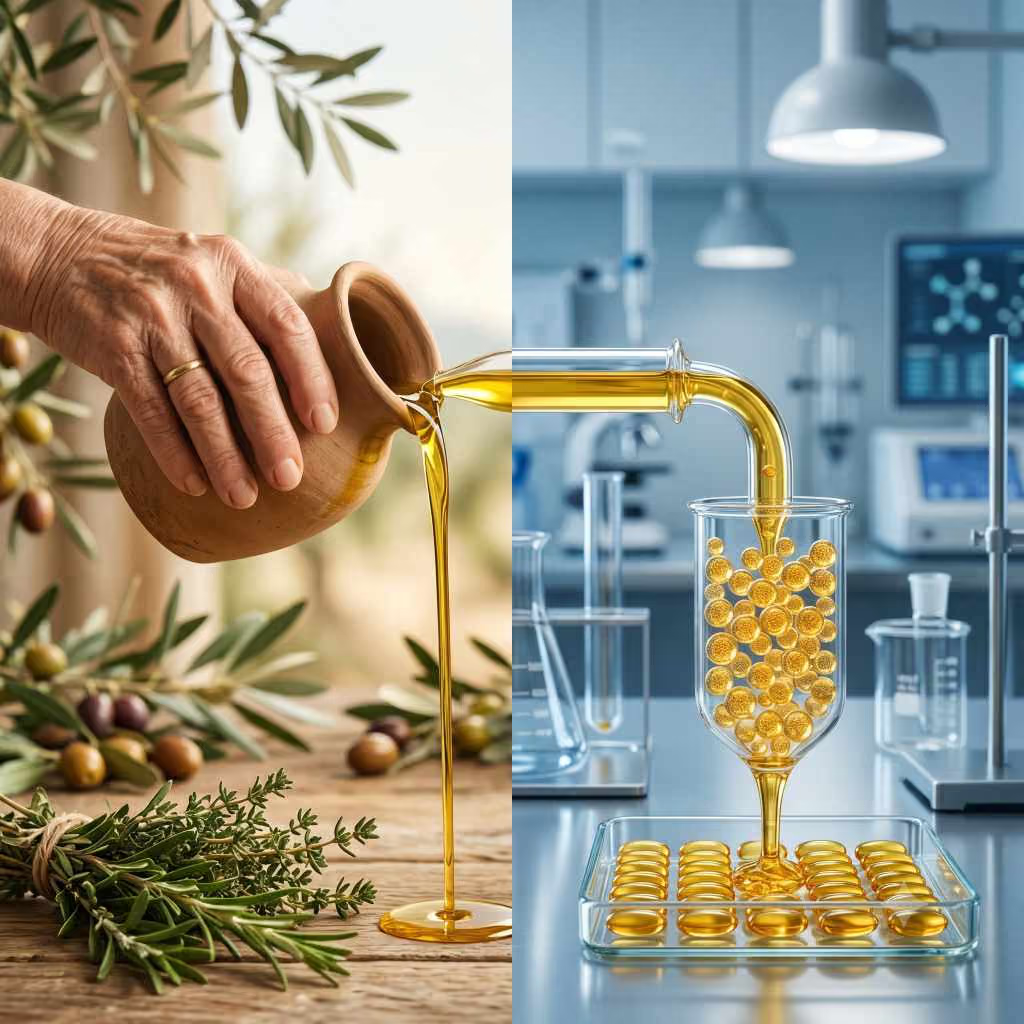
A generational dialogue... revealing how vegetable oils have transformed from traditional remedies into effective components in modern medicine and advanced drug delivery systems.
As Sarah, the young pharmacist, arranged bottles of vegetable oils on her desk, a small, golden-colored oil bottle caught her mother's eye.
Mother: This oil reminds me of your grandmother... She used oils for everything, from treating wounds to easing joint pain. They weren't just food; they were a part of medicine in our time.
Sarah: What's fascinating, Mom, is that what you relied on instinctively has now become a part of advanced scientific research. Vegetable oils are no longer just used for nutrition; today, they are studied as therapeutic compounds, and even as advanced mediums for drug delivery within the body.
Mother: So, modern medicine is returning to oils again?
Sarah: Yes, but with more precise language and more advanced tools... What was once traditional wisdom has now become a science in its own right.
Vegetable oils are no longer merely considered a source of dietary energy, but have proven their ability to have a direct impact within the body due to their rich chemical composition.
Vegetable oils contain essential fatty acids such as:
These compounds play a pivotal role in:
A prominent scientific example:Extra Virgin Olive Oil (EVOO), which contains the compound Oleocanthal, exhibits biological activity similar to non-steroidal anti-inflammatory drugs (NSAIDs) by inhibiting COX enzymes. It is important to note that this effect is observed with regular, long-term consumption and is not a direct pharmaceutical substitute.
Some vegetable oils possess natural antimicrobial properties, especially those rich in medium-chain fatty acids.
A practical example:Coconut oil, rich in Lauric Acid, which converts to Monolaurin, capable of:
(It should be noted that Monolaurin's antimicrobial activity is primarily established in in vitro studies, while clinical evidence remains limited.)
Beyond their direct effects, vegetable oils play an advanced role as functional components in therapeutic systems.
Thanks to their lipophilic nature, oils can:
Practical examples:
Are used as carrier oils to deliver:
contributing to:
Some oils form a protective layer on the skin, reducing transepidermal water loss (TEWL), which is a key factor in managing chronic skin conditions.
Practical example: Using shea butter to support skin hydration and protection in:
where it acts as a barrier protecting tissues during the regeneration phase (as a supportive moisturizing agent, not a primary treatment for severe burns).
With the advancement of pharmaceutical science, vegetable oils have become an integral part of advanced drug delivery systems.
Oils are combined with water to produce fast-absorbing therapeutic creams.
Approximate compositional model:
Result: Deep hydration with high efficiency in delivering active ingredients.

Oils provide an ideal environment for preserving sensitive substances within capsules.
Example: Evening primrose oil, traditionally used for:
(Note that scientific evidence for its effectiveness in regulating hormones and premenstrual symptoms remains mixed and limited.)
Oils are used to build nanoparticles to enhance drug performance.
Benefits:
Between traditional wisdom and laboratory experiments, a complete picture emerges: vegetable oils are not just a traditional dietary or therapeutic legacy, but a growing cornerstone in the world of green pharmacy.
Today, these oils are used according to precise standards that include:
What our ancestors instinctively understood, science now validates with evidence. Vegetable oils serve as a true bridge between nature and technology, playing a pivotal role in the future of sustainable medicine.
Note: The information provided in this article is for educational purposes only and should not replace consultation with a qualified doctor or pharmacist before any therapeutic application.