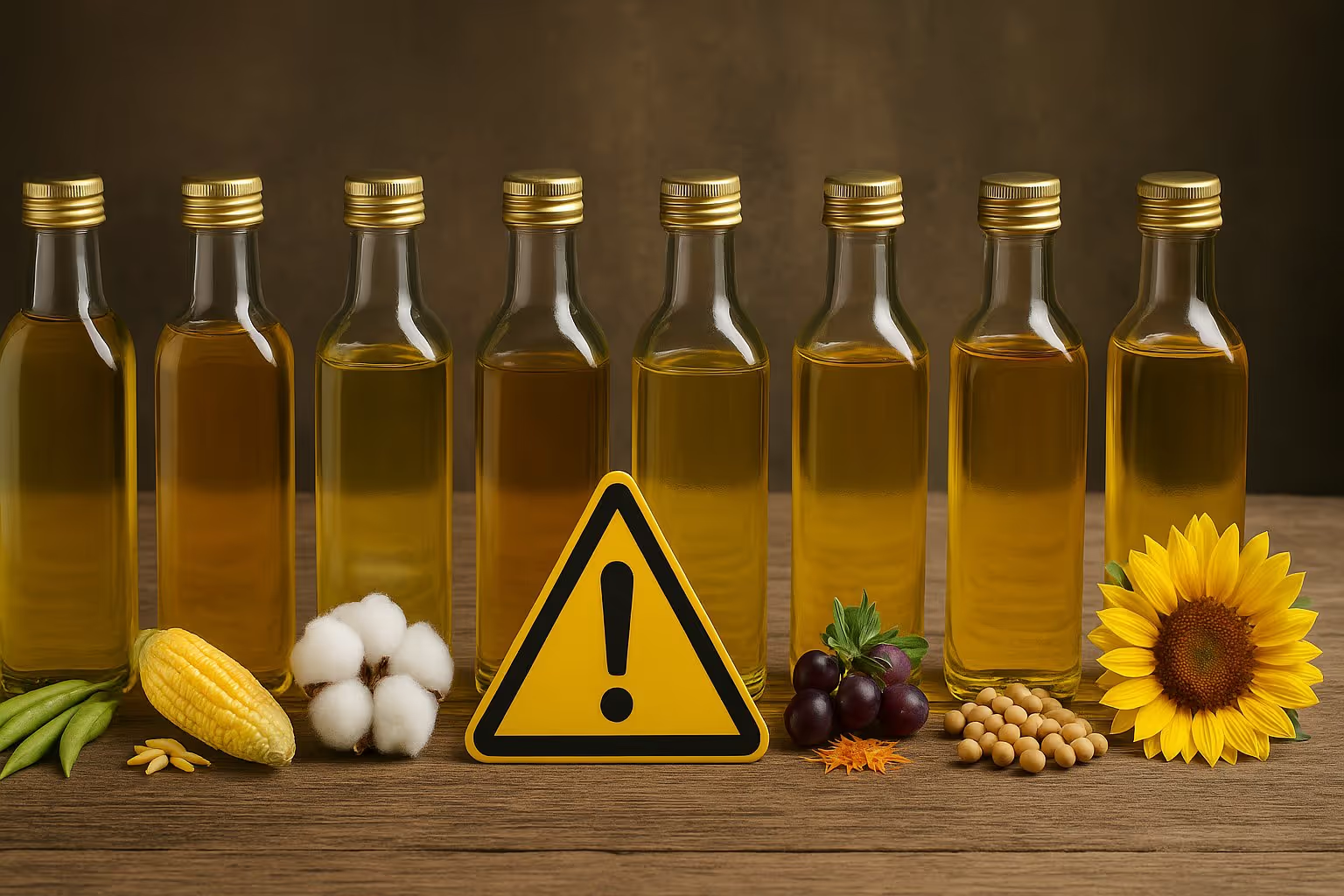
Should you avoid seed oils?

تاريخ النشر:
January 2, 2026
أخر تعديل:
June 12, 2026

‍Founder of the platform, with more than 11 years of experience in marketing within the oils and fats industry.

الفهرس

Text Link

The spread of controversy over seed oils

Seed oils have seen increased interest in recent years. According to a November 2024 International Food Information Council (IFIC) survey, 3 out of 4 Americans are familiar with the term “seed oils.”

Social media is full of information claiming that seed oils are “toxic” or contribute to multiple chronic diseases. But are these claims true? Are seed oils really harmful? Should they be avoided altogether?

The answer is not as simple as promoted by some influencers, so here is a comprehensive analysis of its nature, benefits and health risks.

What are seed oils?

Seed oils are vegetable oils extracted from plant seeds, not nuts (such as peanut oil) or fruit pulp (such as olive oil).

Opponents of these oils call them the “hated eight”. They include:

  • Canola oil (kale)
  • corn oil
  • cottonseed oil
  • grapeseed oil
  • rice bran oil
  • safflower oil
  • soy oil
  • sunflower oil

These oils are frequently used in cooking, especially because of their high degree of combustion, making them suitable for frying, roasting and baking.

It is also used in salads and many processed foods.

Dietary aspects

Seed oils are rich in polyunsaturated fatty acids (PUFAs), especially omega-6 acids.

Essential fatty acids such as omega-3 and omega-6 are not produced by the body and must be obtained from food. It plays a role in cellular membrane function, regulation of inflammation, and blood clotting.

Possible health benefits

According to the American Heart Association, omega-6 acids can reduce the risk of heart disease.
A study involving more than 68,000 people found an association between higher omega-6 levels and a lower risk of heart attacks and strokes.

A systematic review in 2025 of a number of studies showed improvements in blood fat levels and sugar control in patients with diabetes and dyslipidemia when using seed oils.

Health concerns

Extraction and purification method

Seed oils are often extracted using hexane, a solvent. Some critics claim that traces of hexane remain in the oil and may be toxic.

But a 2017 study found that hexane effects in commercially sold seed oils were below the limits allowed by the EU and therefore posed no real risk.

inflammations

Seed oils are said to cause inflammation because they are rich in linoleic acid (omega-6), which can turn into arachidonic acid that causes inflammation.
But multiple researches, including a systematic review of 30 studies in 2017, found no relationship between linoleic acid consumption and increased markers of inflammation.

The ratio of omega-6 to omega-3

The Western diet is very high in omega-6 compared to omega-3 (16:1 ratio).
Although the body needs both, increasing omega-6 may reduce the body's benefit from omega-3, increasing the risk of inflammation.

A study from 2024 in Britain linked a high percentage of omega-6 and omega-3 to an increased risk of death from heart disease and cancer.

Seed oils and chronic diseases

A systematic study from the World Health Organization in 2022 found that:

  • Taking omega-6 reduces the risk of death by 9%.
  • However, it is associated with a 31% increased risk of breast cancer after menopause.
  • Linoleic acid reduces the risk of heart disease.
  • But arachidonic acid has been linked to an increased risk of breast cancer.

Conclusion: the effect is twofold, and a full understanding still needs further studies.

Seed oils and weight gain

Although seed oils have been criticized for their role in obesity, the biggest problem lies in the ultra-processed foods they contain.

These foods are often high in calories and low in nutritional value. They contain added sugars, fats, colorants and preservatives. They include:

  • sodas
  • fast food
  • Sausage, sausage and chicken nuggets
  • ready-made cakes and pastries
  • frozen meals
  • ready-made desserts

These foods account for more than 50% of the calorie intake of American adults and have been linked to obesity, heart disease, type 2 diabetes, and mental health disorders.

The real cause of weight gain is not the seed oils themselves, but The surrounding food environment.

Are there alternatives?

Yes, like:

  • olive oil: It is rich in monounsaturated acids and is considered an essential ingredient in the Mediterranean diet.
  • avocado oil: It is also rich in monounsaturated acids and has a higher combustion point than olive oil.

However, replacing seed oils with animal fats (such as ghee and butter) may cause greater harm. For example, a study in 2025 found that eating butter frequently increases the risk of death by 15%.

Should you eliminate seed oils from your diet?

The short answer is: not.

There is no strong scientific evidence to justify total exclusion. Rather, it is recommended to moderate and reduce the consumption of ultra-processed foods, and focus on whole, unprocessed foods.

It is also recommended to increase omega-3 intake from sources such as:

  • Salmon, Mackerel, Tuna, Sardine
  • Flaxseed oil, chia seeds, walnuts

Summary

  • Seed oils are not as “toxic” as is commonly believed.
  • It is a good source of essential fatty acids and is recommended in healthy diets.
  • The problem lies in the processed foods to which these oils are added.
  • Moderation and dietary diversity is the best path, not an absolute omission.


Source: aol.

مقالات آخرى للكاتب

Newsletter

Contact us and follow us on social media platforms

Tiktok logolinkedin logoinstagram logofacebook logoyoutube logoX logoEmail icon
.Copyright Zyotwdhon. All Rights Reserved ©