 Advertise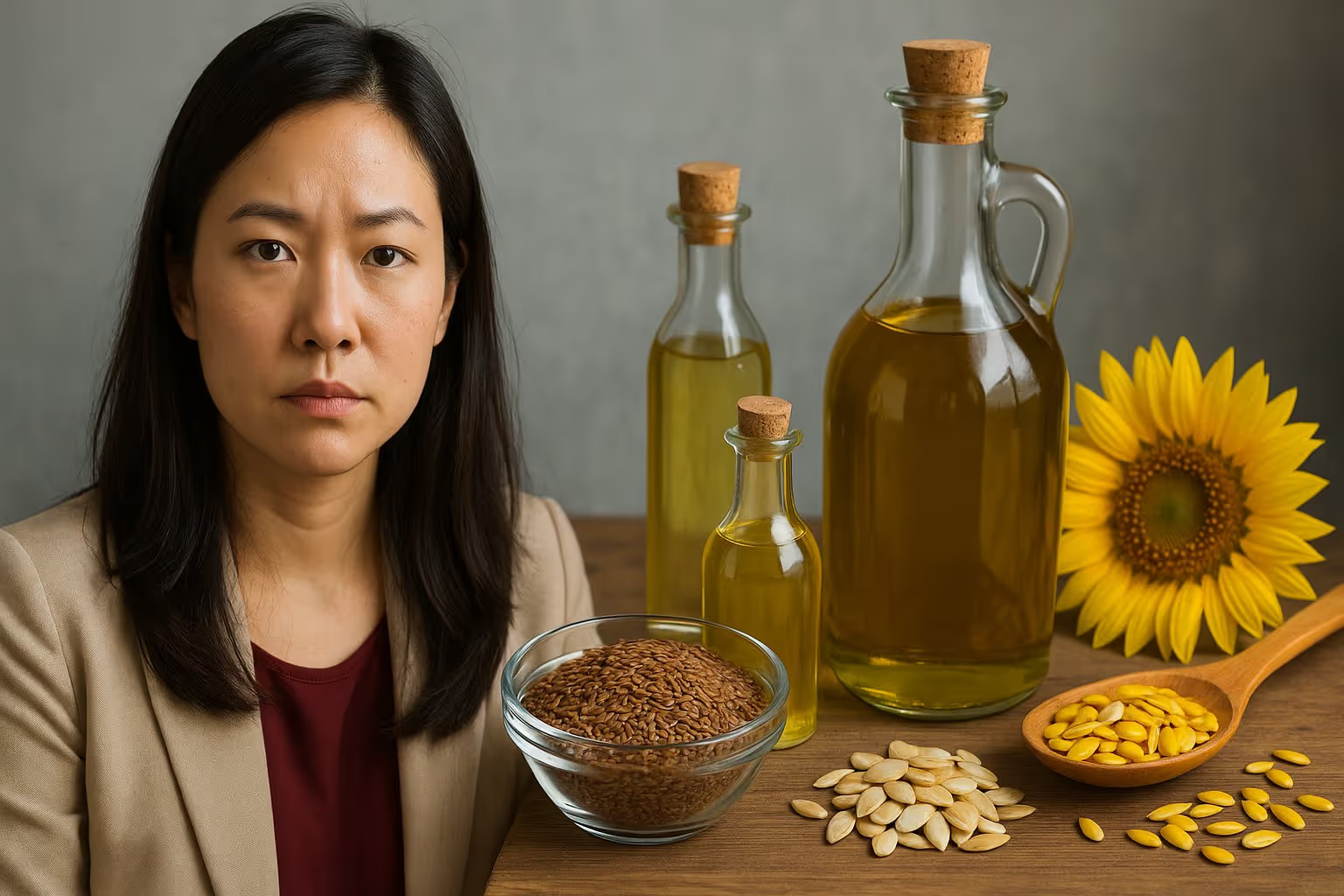
Note: This article was AI-translated from Arabic and is currently under manual review. The author is not responsible for any translation errors. Please refer to the original Arabic text for the most accurate and authoritative information.
In recent years, seed oils have become the subject of widespread controversy, involving influencers, health forums, government officials, and finally... Harvard University researchers. Between those who describe it as “toxic” that causes chronic diseases, and those who consider it a healthy option, research is in a gray area.
The doctor Jane Chow, a global public health expert and nutrition researcher at Harvard University, explains that currently available information on seed oils — such as canola, corn, and sunflower — is still inconclusive, and that many studies have methodological flaws or bias in the selection of results to support a particular opinion.
She adds:
“The fact is that we don't fully understand the effect of omega-6 fatty acids found in seed oils on disease risk.”
Most seed oils contain unsaturated fats, especially omega-6 acids. Some critics suggest that its excessive consumption leads to chronic inflammation that may contribute to the development of heart disease, cancer, and immune disorders.
But according to multiple scientific reviews, the results are inconsistent:
Despite the absence of a clear scientific consensus, the U.S. Secretary of Health decided Robert Kennedy Jr To recommend that people avoid seed oils completely and replace them with saturated fats such as beef fat.
Dr. commented. She shares this kind of approach, saying:
“The scientific community should be honest and say: we don't have all the answers yet. It doesn't confuse people, it respects them.”
Seed oils are found in all corners of the Western diet, but they vary in their health effects depending on the dietary context:
You see dr. Chow said that the problem is not the seed oils themselves, but the way they are used within unbalanced diets.
She concludes by saying:
“Until we know more, we should prefer balance over extremism. We don't have to be afraid of a croissant, nor should we drench every meal with seed oils on the grounds that they are healthy. What the debate about seed oils needs is no more fuss... But more humility and knowledge.”
Source: dailymail