 Advertise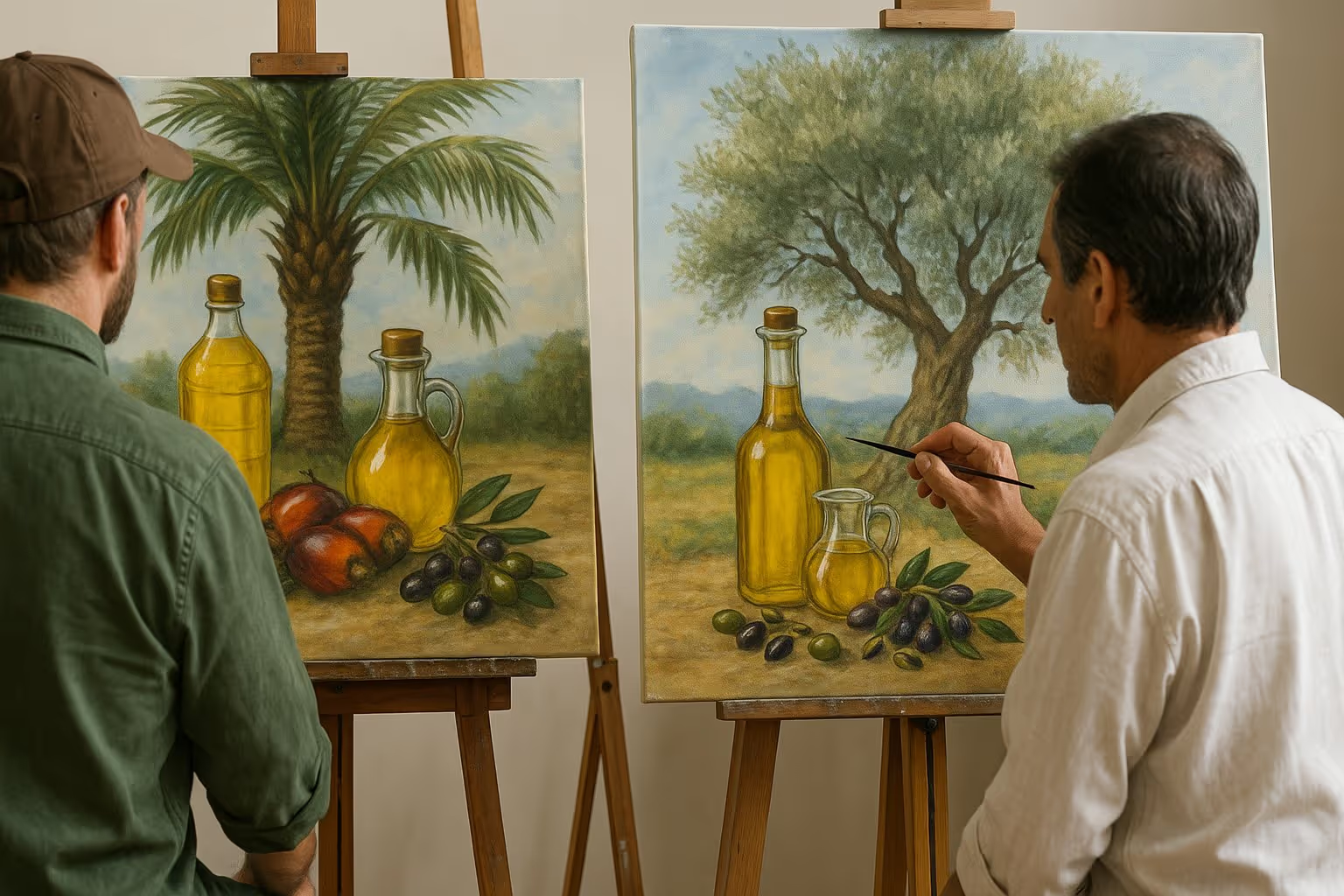
Note: This article was AI-translated from Arabic and is currently under manual review. The author is not responsible for any translation errors. Please refer to the original Arabic text for the most accurate and authoritative information.
Changing the narrative around the reintroduction of palm oil
Imagine this scene: The golden olive groves extend over the Mediterranean hills. Their ancient trees whisper stories of heritage and purity.
Now imagine the oil palm: it is often associated with deforestation, exploitation, and institutional greed. The contrast is blatant and totally unfair.
This is not because the oil palm has no value, but because we failed to tell its powerful story.
It is time to recognize the true value of this exceptional tropical plant.
Reintroducing palm oil is not just a desirable step — it is a necessity. We've talked enough. Scientific research and over a century of agricultural experience confirm its lasting value.
It is time to reintroduce oil palm and its main products: palm oil and palm kernel oil.
The olive oil industry has succeeded in transforming its product into a symbol of health and well-being — “liquid gold” from the Mediterranean.
Can palm oil do the same thing? I believe it can.
A brighter future is possible, but it requires a change in thinking, investment, cooperation, and a strong narrative. Let's redefine the story, highlight the facts, and introduce palm oil as a true tropical gem.
Palm oil and palm kernel oil are not just commodities — they are powerful natural sources.
They are nutritious, versatile, used in countless products and are the most efficient oil crop in the world.
Palm oil supports billions of people and has helped lift millions out of poverty. However, his image remains distorted — the result of mistakes made by some.
It's like a blank canvas with scattered black dots — we focus on flaws and ignore pure space.
On the other hand, olive oil has glowing stories of purity and cultural pride, although the goal of both is to produce edible oils in a sustainable and profitable way.
The difference? Narrative.
While olive oil is celebrated, palm oil's unparalleled productivity, quality, impact on livelihoods, and great potential for improvement are overlooked.
No industry is perfect — and shortages should drive progress.
The palm oil sector is developing. Those who work hard deserve recognition, those who fall behind should improve, and those who are wrong should be held accountable.
We should focus on the big picture: a future in which palm oil is presented as a model for sustainability, innovation and societal advancement.
The world needs all kinds of vegetable oils — including palm oil. It's time to reshape the narrative, tackle misinformation, and build respect for the palm oil industry.
Olive groves are not just farms — they are living experiences. Through “olive tourism”, visitors explore rich history, taste authentic products, and connect with a culture rooted in the land.
This blend of agriculture, heritage and tourism has left a lasting legacy throughout the Mediterranean.
Can oil palm plantations offer something similar? Imagine “palm tourism” that includes staying with local families, where guests wake up to a green and organized landscape. They learn the journey of kernel to oil, discover sustainable practices, and listen to real stories.
Imagine field tours in conservation areas, conversations with farmers, and seeing a life shaped by the industry.
These experiments show the human aspect of palm oil — changing perceptions and revealing the deeper truth: palm oil is not just a production. It is about people, ecosystems, and joint stewardship of the Earth.
I previously participated in the “Walking with the CEO” event at my organization — a weekend full of real-life experiments that highlighted the social, environmental and economic dimensions of oil palm cultivation.
Participants included NGOs, journalists, academics, diplomats, and families.
They visited farms, factories, research centers, workers' homes, schools, and conservation sites — encouraging dialogue and mutual learning.
This initiative has provided a direct look at the impact of the industry in reality.
Similar efforts can promote understanding and engagement elsewhere.
These visits were more than just teaching — they built trust and launched meaningful conversations.
When guests see sustainable practices and meet people behind palm oil, suspicion often turns to appreciation.
We lived according to the Malay saying: “Tak Tahu, Maka tak cinta” — “Whoever does not know does not love.” We adopted the principle of “agreeing to disagree without being unfriendly”, maintaining a sophisticated dialogue despite different opinions.
The effect was mutual. For employees, these meetings enhanced narrative skills, built trust, and deepened pride.
To really change perceptions, we need to create a new generation of passionate oil palm ambassadors. Honest communication and honest dialogue will continue to be our most powerful tools — to shape the narrative with truth, emotion, and conviction.
Farmers have always wondered — jokingly — why we still call it “crude palm oil” (CPO), while olive oil has nicknames such as “extra virgin” and “extra virgin”.
“Raw” suggests something impure or dirty — an unworthy quality for an oil that is naturally rich in nutrients and is extracted using only heat and pressure. Even worse, it reminds us of “crude oil”, reinforcing the negative image. Palm oil deserves the best.
Unlike soy, canola, sunflower, and peanut oil — which are often extracted with chemical solvents such as hexane — palm oil is completely natural. It does not require chemicals, only mechanical stress, and is rich in carotenoids, tocotrienols, and antioxidants. So why stick to a label that reduces its purity?
It's time to get over the “raw.” While “Bakr” may not be the perfect choice yet, labels such as natural palm oil (NPO), pure palm oil (PPO), or palm oil from fruit (FPO) better reflect its clean extraction method and its healthy nature.
These designations distinguish it from chemically treated oils and meet consumer demand for clean and sustainable products.
Although “red palm oil” has found a place in the health markets, a broader reintroduction is long overdue.
Providing palm oil as an excellent oil extracted naturally can change the world view and regain its position among the best oils in the world.
Palm oil is not only exceptional — it is intentionally unrefined from the source in order to preserve its purity.
From the factory to the kitchen, it is a tropical treasure that deserves to be known not for what it is called today, but for what it really is.
The reintroduction of palm oil should go beyond mere image—it should spark a renewed commitment to excellence throughout the entire value chain. This is not a marketing campaign; it is a movement that starts at the top of the chain: owners, farmers, workers, and communities to build a sustainable and resilient industry.
Palm oil drives the rural economy — creating jobs, supporting enterprises, and promoting growth in disadvantaged areas. These stories of transformation and care deserve to be told.
“Palm tourism” can help. Plantations rich in history, biodiversity, and sustainability can become destinations where guests can witness the harmony of palm trees with nature.
Later players — marketers, retailers, and policy makers — should also adopt this new narrative.
The health benefits of palm oil, its environmental contributions, its versatility, and its role in food security should be recognized and clearly communicated.
Agriculture companies are making real progress in sustainability, but technical progress often seems distant from the public. Carefully selected photos and personal stories can fill this gap—and humanize the palm oil journey.
This is a collective call to action. Whether in the field of science, sustainability, tourism, or in replacing the term “CPO” with more appropriate names — it's all about changing mentalities.
Only a joint commitment can change perceptions and prove that palm oil is a vital and responsible global resource.
Joseph Tik Chun Yee is the former president of the Malaysian Plantation Owners Association and the former CEO of the Malaysian Palm Oil Association. The opinions expressed in the article express his personal opinion.