 Advertise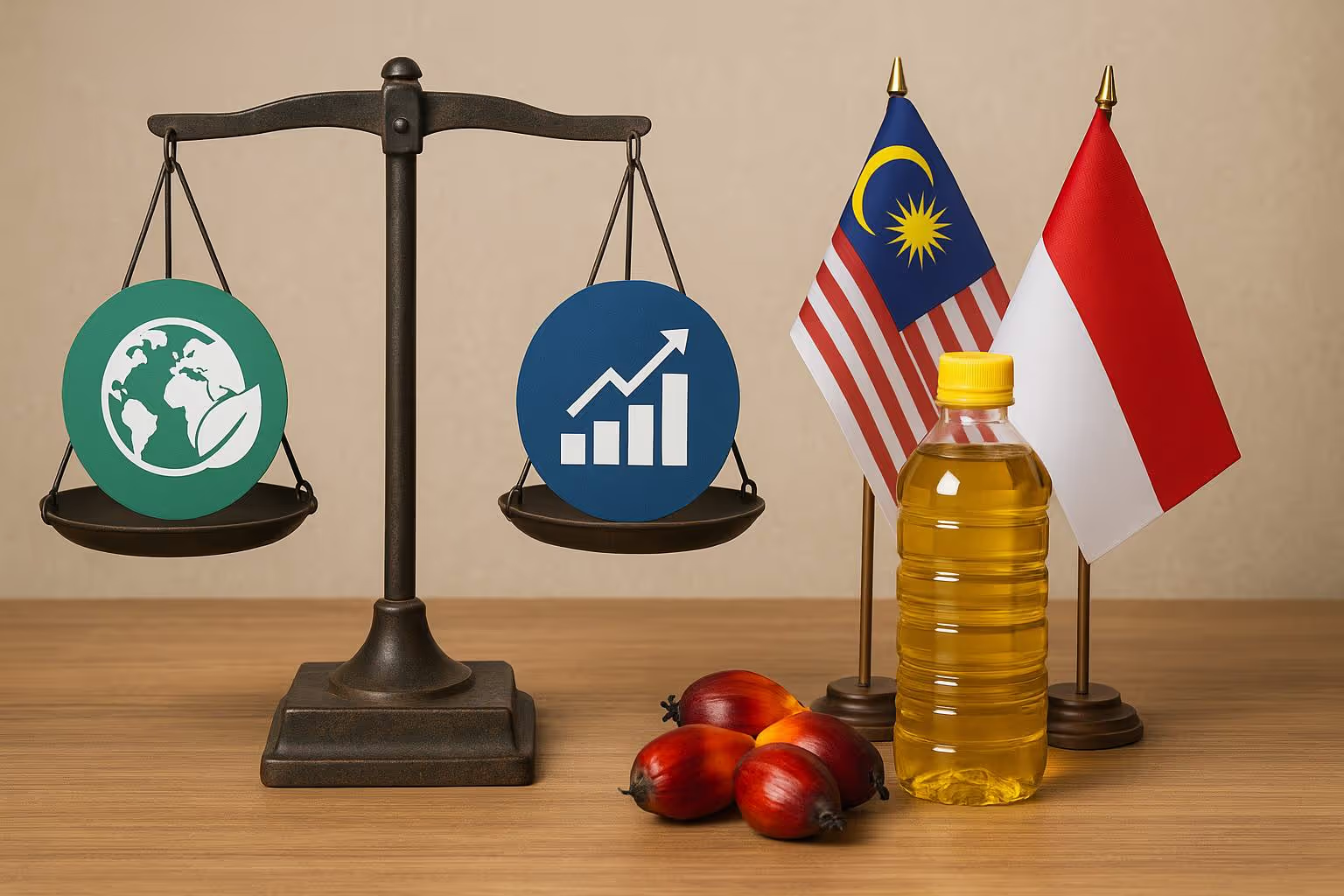
Note: This article was AI-translated from Arabic and is currently under manual review. The author is not responsible for any translation errors. Please refer to the original Arabic text for the most accurate and authoritative information.
Palm oil production is the cornerstone of the agricultural sector in Malaysia and Indonesia, two of the world's largest producers. However, this sector has been the subject of widespread controversy over the past two decades due to the indirect changes in land use that the expansion of its agriculture may cause.
The governments of Malaysia and Indonesia face a major challenge in addressing environmental and social issues related to oil palm cultivation, without hurting the interests of millions who rely on it as a basic source of livelihood.
In these two countries, small farmers play a vital role. Palm oil is a major source of income for many rural families that lack other employment alternatives. Statistics show that 42% of the total land cultivated with palm oil is owned by small farmers, who contribute about 34% of Indonesian production.
The palm oil sector contributes billions of dollars annually to the national economies of both Malaysia and Indonesia and provides direct and indirect employment opportunities to a wide segment of the population.
In Indonesia alone, the Ministry of Agriculture estimates that the number of employees in the oil palm sector is about 16.5 million people, including 9.7 million employees working directly in the palm oil production chain, in addition to millions of others working indirectly in transportation, supply and logistics support.
Professor Diana Chalil, from the University of North Sumatra, explains that palm oil production is the main source of income for 16.5 million Indonesian families, mostly in rural areas, making it a key factor in their development and improving their standard of living.
It is estimated that the total value of the sector's production in 2023 was about 62.9 million dollars, while the value of exports in 2024 was about 10.8 billion dollars, representing more than 70% of the value of Indonesian agricultural exports.
The increase in production in recent years is due to government efforts, including funding replanting programs for small farmers and strengthening partnerships with companies that provide training and good agricultural practices.
Despite significant economic benefits, the sector faces increasing criticism for its association with deforestation, loss of natural habitats for some species and displacement of some local communities. However, the governments of Malaysia and Indonesia are showing an increasing commitment to shifting towards more sustainable practices.
Both countries have committed to the United Nations Sustainable Development Goals for 2030, especially in terms of eradicating poverty, promoting economic growth, and ensuring responsible production and consumption.
Palm oil remains a vital crop for reducing poverty in rural areas due to its short cultivation cycle and high productivity, but achieving sustainability requires adopting reliable certification systems, applying strict standards to protect the environment, and ensuring respect for the rights of local communities.
Diana Chalil warns that the loss of the palm oil sector will have serious economic impacts not only on Malaysia and Indonesia, but also on consuming countries. The sector accounts for about 80% of the global market, and major consumer goods companies use about 3.4 million metric tons of palm oil in their food products.
The absence of major suppliers may lead to a shortage of supplies, an increase in food prices, and an accelerated search for alternative oils whose environmental and economic impacts may be unclear.
In immediate terms, the loss of palm oil will lead to a sharp drop in the income of millions of farmers and workers in the production chain. Related industries such as primary chemicals and biodiesel will also be affected.
In the long term, the loss of export revenues will negatively affect the balance of payments and currency stability, and may increase dependence on imports, leading to inflation, higher cost of living, and worsening levels of poverty and displacement in rural areas.
Despite efforts to diversify sources of income, palm oil will remain a key pillar in the near term. Its absence may slow economic growth, weaken farming communities and affect related sectors such as processing, logistics and scientific research.
While environmental concerns are driving serious reforms within the industry, losing the entire sector will pose serious challenges to economic development, social stability and global supply chains.
A balance between sustainable practices and maintaining economic dependence on palm oil will be an urgent necessity in the future to ensure comprehensive economic development without compromising environmental health and the rights of communities.
Source: euractiv