 Advertise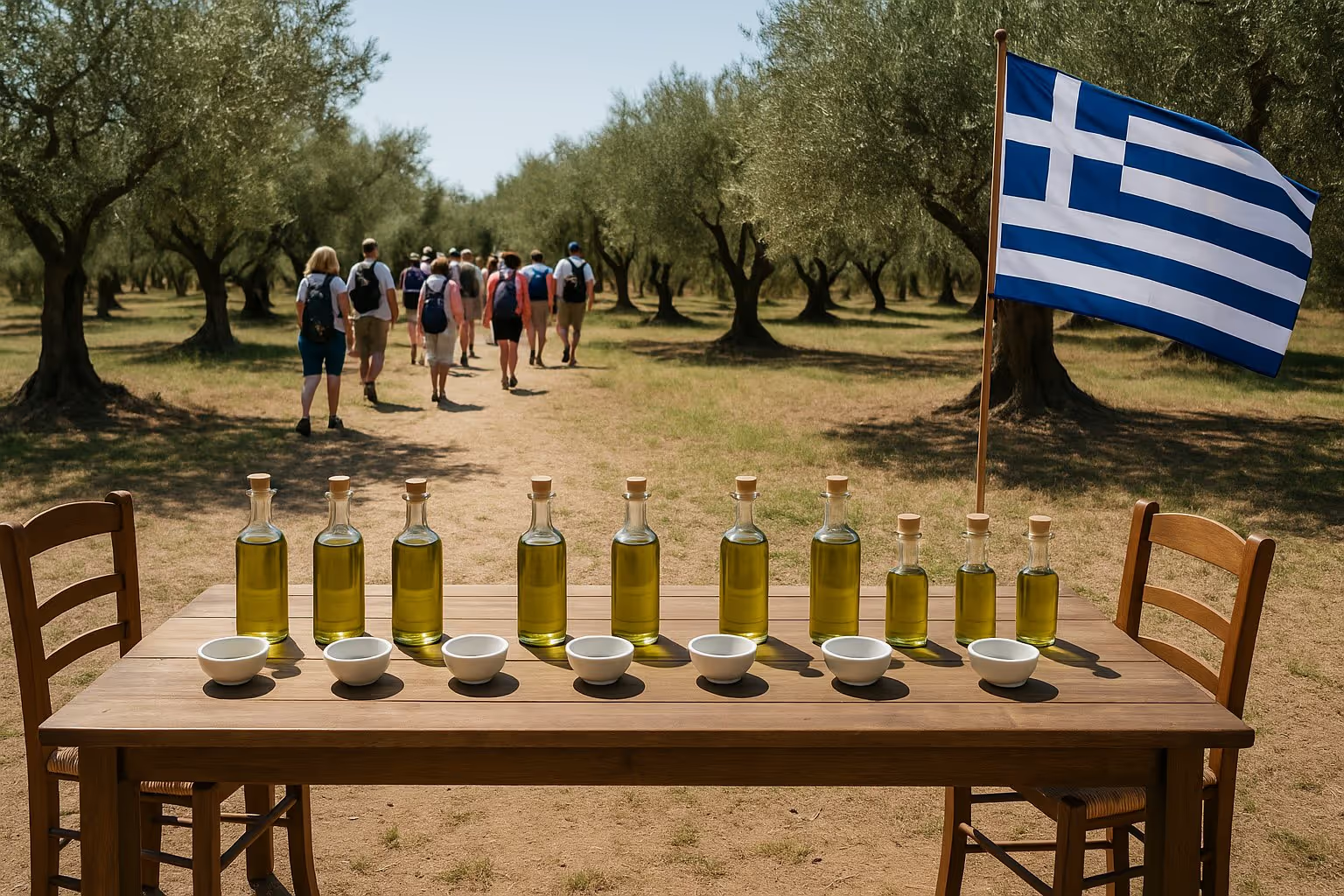
Note: This article was AI-translated from Arabic and is currently under manual review. The author is not responsible for any translation errors. Please refer to the original Arabic text for the most accurate and authoritative information.
From tasting sessions with olive oil experts to celebrating the harvest season in a family event, here's how to experience “olive tourism” and immerse yourself in the world of Greece's “liquid gold”.
According to Greek mythology, the goddess Athena planted the first olive tree on the Acropolis.
The silvery-green olive trees that cover Greece are deeply rooted in its culture, just like its stars and its sea. Greek legend says that Athena planted the first olive tree on the Acropolis, outperforming Poseidon to become the patron goddess of Athena, making the olive tree a sacred symbol of prosperity. In ancient Greece, Olympic winners were crowned with olive branches, while Homer described the antioxidant-rich olive juice in his poems as “liquid gold.” Today, Greece is still one of the largest producers of olive oil in the world, along with Spain and Italy. More than 80% of its crop is devoted to the production of high-quality extra virgin olive oil.
Although olive oil has long been a staple in the Mediterranean diet promoting longevity, its popularity has recently risen in the United States, raising increasing curiosity about its origins. As more travelers seek to connect with local producers, many are moving away from traditional tourist destinations. Here are the best ways to experience olive tourism in Greece:
The Peloponnese Peninsula, the largest olive oil producing area on the Greek mainland, is an ideal starting point for culinary enthusiasts. Near the Temple of Zeus in Olympia, the new “Temple of Olives” attracts lovers of this liquid gold. It offers tours of the farm and the press, and practical lessons in tree pruning, harvesting and making olive oil soap.
The Carpeles family, who have been olive farmers for four generations, also oversees the “Agriturismo Magna Gresia” complex next door. Their organic trees — including the local 'Tsapidolia' variety — are grown in sustainable ways, but climate change has forced them to adapt. Alexis Carpeles, partner at the Temple of Olives, says: “Climate change is a reality we live in, and our conversation with our ancestors proves it.” In 2021, extreme heat wiped out about 80% of their production. While oil is still their primary source of livelihood, tourism has helped them keep going. He added: “Olive tourism has become a major driver of the local economy. We are happy when visitors realize that work is not limited to our family, but also includes other local families. During their visit, they meet about 20 to 25 employees.”
In the extreme southwestern Peloponnese, Messenia is famous for its golden beaches and archaeological sites, but its oil industry is no less famous. In addition to the world famous Kalamata olives, visitors can learn about the drought-resistant “Koroniki” variety, which produces excellent virgin oil that is rich in taste and antioxidants. The harvest season begins in October when the fruits are still green.
Christina Stribaco, an olive oil expert and local producer, who runs tasting sessions at the Mandarin Oriental Costa Navarin Hotel, says: “In Messina, we say that a great dinner needs good friends, aged wine and always fresh extra virgin olive oil.” The hotel opened in 2023 and overlooks Navarin Bay. It has replanted 2700 olive trees along with half a million native shrubs. During the tasting sessions, guests warm small cups of oil in their hands to test three main qualities: fruitiness, bitterness, and heat. Biodiversity in the area, including the nearby “Gialova” lake, which has more than 270 bird species, helps to control pests and contributes to the prosperity of orchards.
Just an hour away from Athens, near the Strait of Corinth, visitors can watch the year-round harvest at Marcellus Olive, the family press that started offering tours in 2020 and has since received more than 15,000 visitors from 86 countries. Through a virtual harvesting experience using virtual reality glasses, visitors can watch the process even during the summer months.
“Most visitors come outside the production season, so I wanted to provide an experience that shows them all the stages of the process,” says Nikolaos Marcellus, co-owner of the mill. Innovation is the focus of their business. Due to the impact of climate change on production over the past five years, they are moving from the “Manaki” variety to the “Koroniki” variety, which is more heat tolerant. They also plan to open a restaurant and museum in the future.
About half of Greece's olive oil is produced from Crete, making it an indispensable destination for those looking for the roots of this luxury product. Aspasia Stavrolaki, owner of “Olive in Crete”, which offers tasting sessions near Rethymno, says: “The sea and olive oil are our heritage, our wealth and our way of life.” She adds that the mountainous terrain of the island makes it difficult to use destructive agricultural methods, making the soil rich and healthy. The natural drainage of the various plants around the trees gives the oil rich flavors.
Under trees that are between 1000 and 2000 years old, visitors learn how olive oil affects local cooking, daily life, and family ties.
The green island of Corfu has over four million olive trees and a long history that is often overlooked. During the Venetian occupation in the 16th century, Corfu exported oil to the Vatican, and many of its tall trees still stand today. But many orchards were left abandoned until about 15 years ago, when local producers started reviving oil culture.
Spyros Davines, the co-founder of “The Governor” brand, says: “Until 2010, 'lianolia' was only an unknown or infamous variety in the olive oil world.” But they were able to improve oil quality with innovative treatment methods, setting a record in 2016 with the highest concentration of the anti-inflammatory compound “oleocanthal”. They later collaborated with American universities in various health research.
Olive tourism is a key focus of their activity. Visitors can tour their neighborhood in the village of Agios Mataios, join tasting sessions, and explore ancient olive groves, including their 1500 year old tree known as “Mythira” (meaning “mother” in Greek). Davines adds: “These trees are a living symbol. At each harvest, we remember what our ancestors used to say: we are like trees. To grow and thrive, we need strong roots.”
Source: National Geographic