 Advertise

Note: This article was AI-translated from Arabic and is currently under manual review. The author is not responsible for any translation errors. Please refer to the original Arabic text for the most accurate and authoritative information.
Can you imagine that the small grains we put on bread or add to salads may be the richest food store in nature and that they store fat smarter than we humans store it in our bodies?
This is oilseeds... small pills but full of an integrated nutritional formula that makes them a small natural pharmacy. Although all seeds contain some oil, oilseeds in particular are concentrated reservoirs of essential fatty acids, antioxidants, and compounds that support the heart, brain, and immunity... turning from a mere “garnish on the plate” to an integrated natural pharmacy that deserves a fixed place in our daily diet. 🌿✨
Oilseeds are plant seeds that contain a high percentage of natural oils starting from 20% and may exceed 50% As in sesame, flax and sunflower.
This oil is not just “fat” inside the seed. It is placed in a precise order to be the main fuel for the fetus inside the seed, along with proteins, carbohydrates, minerals, and vitamins that enable it to start life without any external food.
The biggest secret of oilseeds lies in the way they store oils:
This difference makes seed oil more stable, streamlined, and digestible, which explains its high nutritional value.
A seed is not just a hard grain, but a highly integrated food unit that includes everything needed to grow a new life. It includes:
These same ingredients give humans great benefits when eating seeds or their oils.
Oilseeds and nuts are an excellent source of plant-based protein. Although some lack some amino acids, they turn into complete protein when combined with grains, such as:
These formulas are an authentic part of ancient food cultures whose value has been proven by modern science.
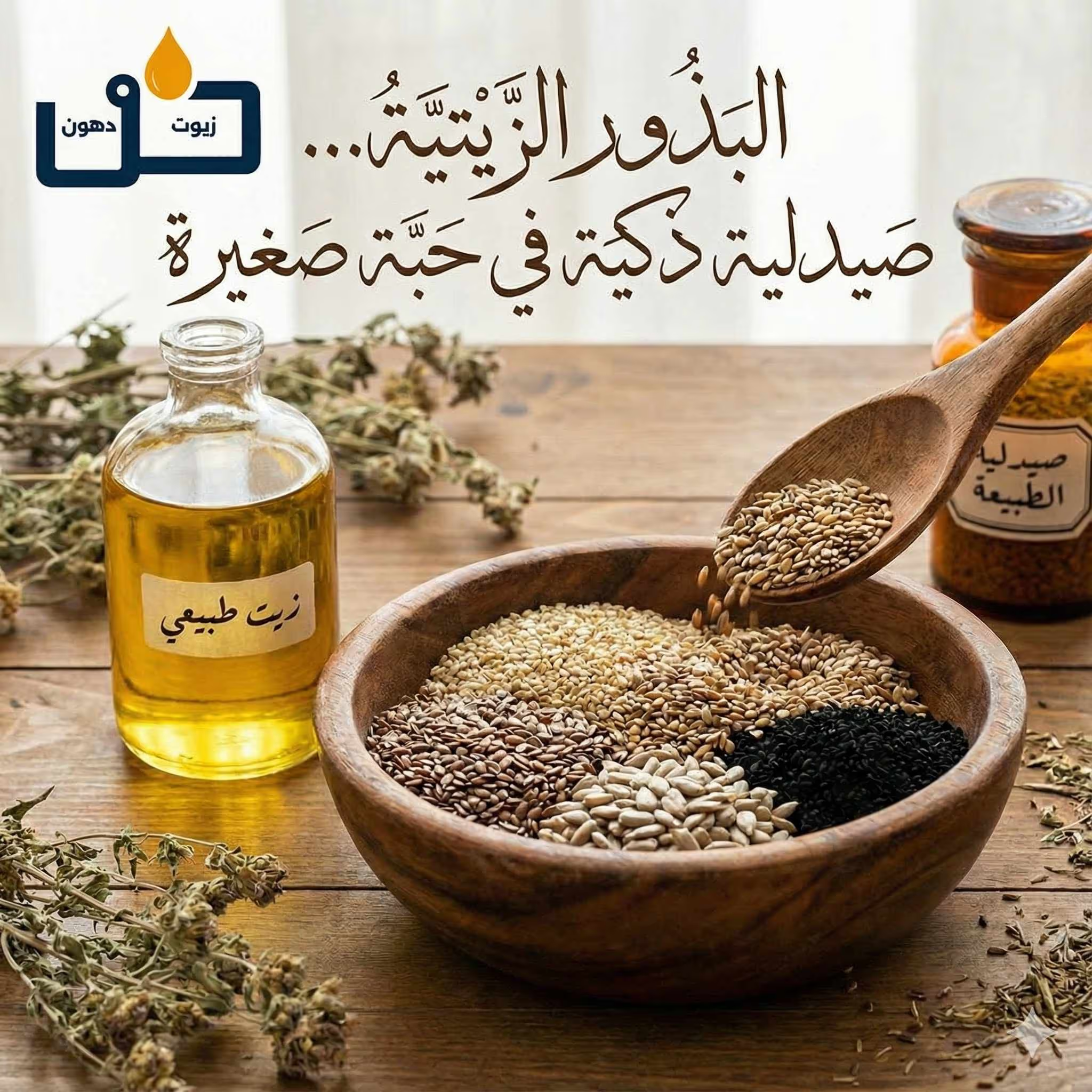
The value of seed oils is not only in their fat, but also in a range of accompanying compounds that give them a unique health effect, including:
The combination of these elements makes seed oils a smart ingredient in any diet that supports health from the cell level to the heart and brain.
Oilseeds are not rigid grains that we use for decoration only. They are A micro-organism It keeps inside it a plant embryo that breathes slowly and performs simple vital operations. The seed shell acts as a “protective capsule” that encapsulates a concentrated store of oils, proteins, carbohydrates, vitamins and minerals, all of which were created primarily to feed the fetus inside.
Therefore, storing these seeds in good ventilation, moderate temperature, and low relative humidity is not a luxury, but a necessity to maintain their vitality and the quality of their nutritional ingredients.
When we see sesame or nigella seeds scattered on the surface of baked goods, this is not just a decoration. The seed's natural capsule still protects its internal components. With moderate roasting in time and temperature, we not only maintain their value, but they can improve: some antioxidants increase, and “Maillard reaction products” are formed that give the distinctive roasted flavor and aroma.
Thus, the oilseeds on the surface of the bread turn from small silent grains... into flavor capsules and nutritional benefit in every bite. 🌿✨
Cold pressed virgin seed oils are ideal for use in: Salads, dressings, and cold dishesBecause it retains its full nutritional value without exposure to heat.
But some of the more stable oils — Like sesame oil — It can also be used in light cooking and over medium heat without significant loss of value, making it a versatile food item.
Codex Alimentarius (Codex Alimentarius) It is a joint international body between the World Health Organization (WHO) and the Food and Agriculture Organization (FAO). It is a global reference for approved dietary oils.
The most prominent oilseeds adopted by the Codex Authority are:
It is one of the most important sources of vegetable oils used globally in nutrition and the food industry.
🔸 Can children eat seeds and oils?Yes, but in small quantities, and with the grinding or crushing of seeds for the little ones, taking into account food allergies.
🔸 Should I grind flax seeds and nigella seeds?
🔸 What's the right amount per day?
Oilseeds — such as sesame, flax, sunflower, nigella and pumpkin seeds — are not just a nice addition to food, they are An integrated food system It combines healthy fats, proteins, minerals, vitamins, and antioxidants.
Incorporating them into your daily diet wisely can help to:
It really is nature's pharmacy in a small pill. 🌿✨
“Today try adding a spoonful of sesame oil to your dish... “" But what oil do you use the most in your kitchen?”