 Advertise
Note: This article was AI-translated from Arabic and is currently under manual review. The author is not responsible for any translation errors. Please refer to the original Arabic text for the most accurate and authoritative information.
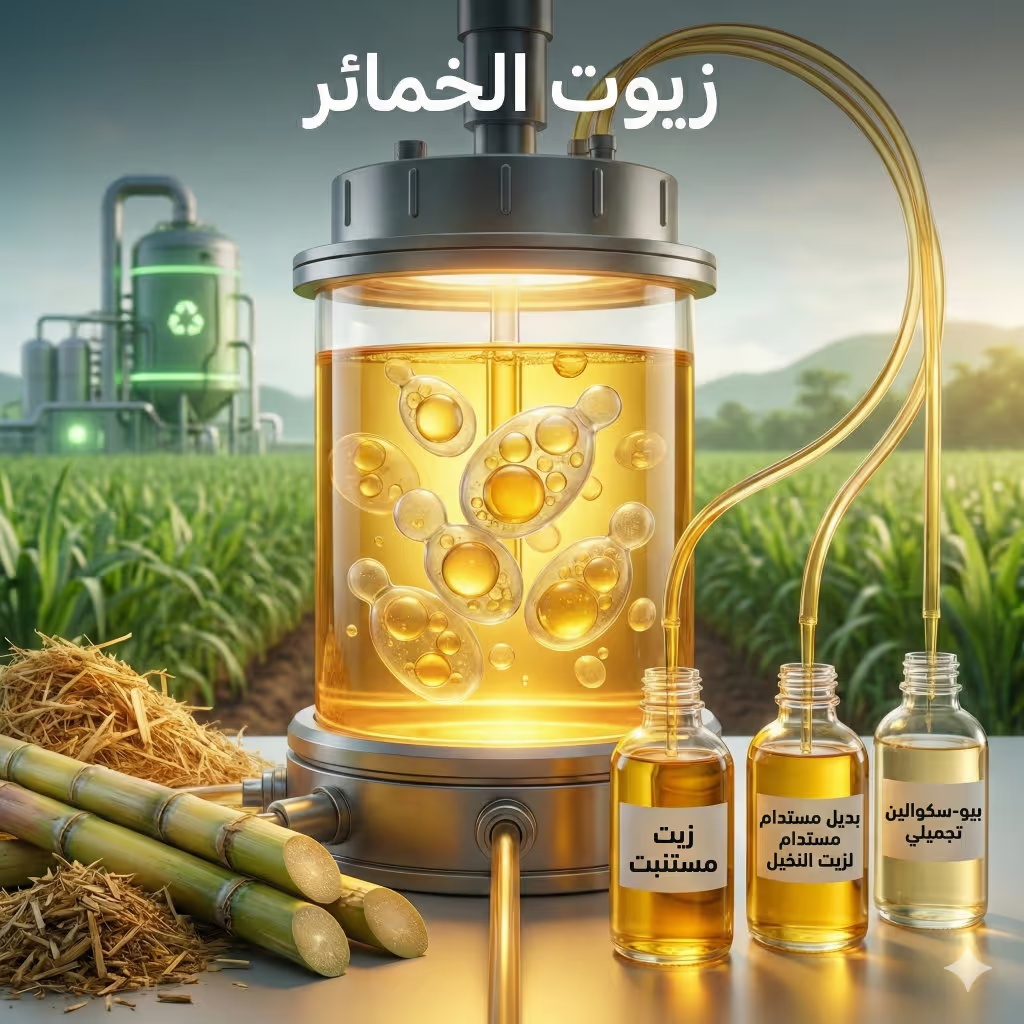
Have you ever come across the terms "lab-produced oils" or "yeast oils"? While the concept might seem unfamiliar to some, yeast plays a pivotal role that extends beyond traditional food industries. This article highlights the fermentation process as a future alternative in oil and fat production, and how yeast can be bioengineered to be a sustainable substitute for vegetable oils.
Let's start by defining yeast: it is a single-celled living organism belonging to the kingdom of fungi. These organisms feed on sugars as a primary energy source, producing carbon dioxide and alcohol through the fermentation process when sufficient moisture and heat are available.
Specific strains of oleaginous yeasts, such as Yarrowia lipolytica, have the ability to convert sugars into oils and store them within their cells. This occurs through a mechanism known as "stress induction" or altering the cell's metabolic pathway:
The process might seem smooth and straightforward at a laboratory scale, but the real challenge lies in scaling it up to industrial production. While lab experiments offer easy control over variables, industrial operation presents challenges related to production volume, process stability, and resource consumption efficiency.
The Food and Sustainability DilemmaFermentation traditionally relies on sugar sources such as sugarcane, beet, and starch (after enzymatic hydrolysis). This is where the sustainability issue arises: using food sources to produce fuel or oils.Therefore, the industrial sector is currently moving towards utilizing agricultural waste (such as sugarcane bagasse and corn cobs) as a carbon source, by pre-treating them and then enzymatically hydrolyzing them to produce fermentable sugars, which achieves both economic and environmental viability.
Fermentation and microbial growth processes are carried out in large bioreactors, where operating parameters are precisely controlled to ensure process stability:
In aerobic processes, oxygen is a critical factor; as its deficiency leads to reduced production, while good air distribution contributes to improved reaction efficiency.
After the fermentation process is complete, yeast cells become rich in lipids and more viscous. The harvesting and oil extraction phase then begins using one of the following methods:
The oil then undergoes processes Refining traditional methods to remove any impurities before bottling.

American and international companies have already started launching products based on this technology:
The production cost of these oils remains high compared to traditional oils. For example, Zero Acre Farms oil currently sells for between $25 and $30 per bottle (470 ml), making it 5 to 10 times more expensive than corn and soybean oils, placing it in a price category comparable to the finest olive oils. However, like any emerging technology, costs are expected to gradually decrease with expanded production and advancements in processing techniques.
The biggest challenge for "fermentation oils" currently is their high economic cost. However, this technology also offers a radical solution to the problem of land consumption. Producing fats in bioreactors frees up vast areas currently used for oilseed crops, allowing them to be repurposed for growing food crops that are more critical for global food security.