Advertise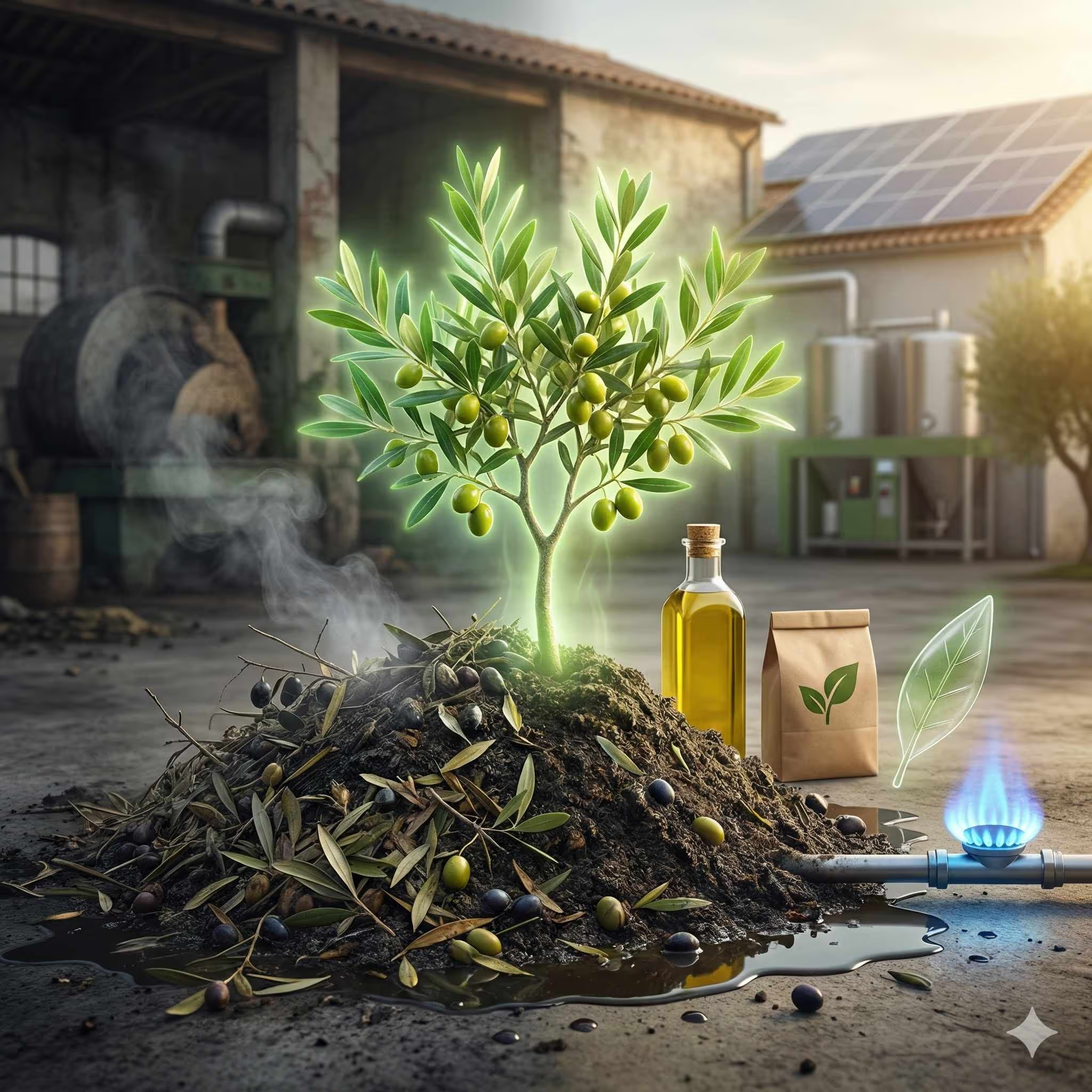
Note: This article was AI-translated from Arabic and is currently under manual review. The author is not responsible for any translation errors. Please refer to the original Arabic text for the most accurate and authoritative information.
When I went with a group of Spanish friends to visit my friend, Professor/ Saleh Al-Omari – owner of a large company specializing in olive oil pressing (Al-Baraka) – I found him busy with his team, brainstorming how to dispose of the pressing waste.
I asked him to explain the issue of waste (pomace, leaves, small branches, and vegetative water), which causes significant environmental pollution. He then launched into a highly productive discussion. During the conversation, my Spanish friends brought up a recent European project known as OLinWASTE as a promising solution to this problem.
The BIOIND research group is working on extracting biologically active compounds from waste using environmentally friendly technologies (such as pressurized water and filtration membranes). These extracts, rich in polyphenols and sugars, are used in plant growth promotion experiments in collaboration with Sapienza University.
After the research phase concludes, the OLinWASTE model will be generalized to producers in Egypt and worldwide, contributing to the achievement of EU climate goals and making olive oil production more environmentally friendly and value-added.
My friend, Professor Saleh Al-Omari, was very pleased with this discussion, which opened the door of hope for transforming olive pressing waste from a burden into a benefit, and for adding value to the pressing process.