 Advertise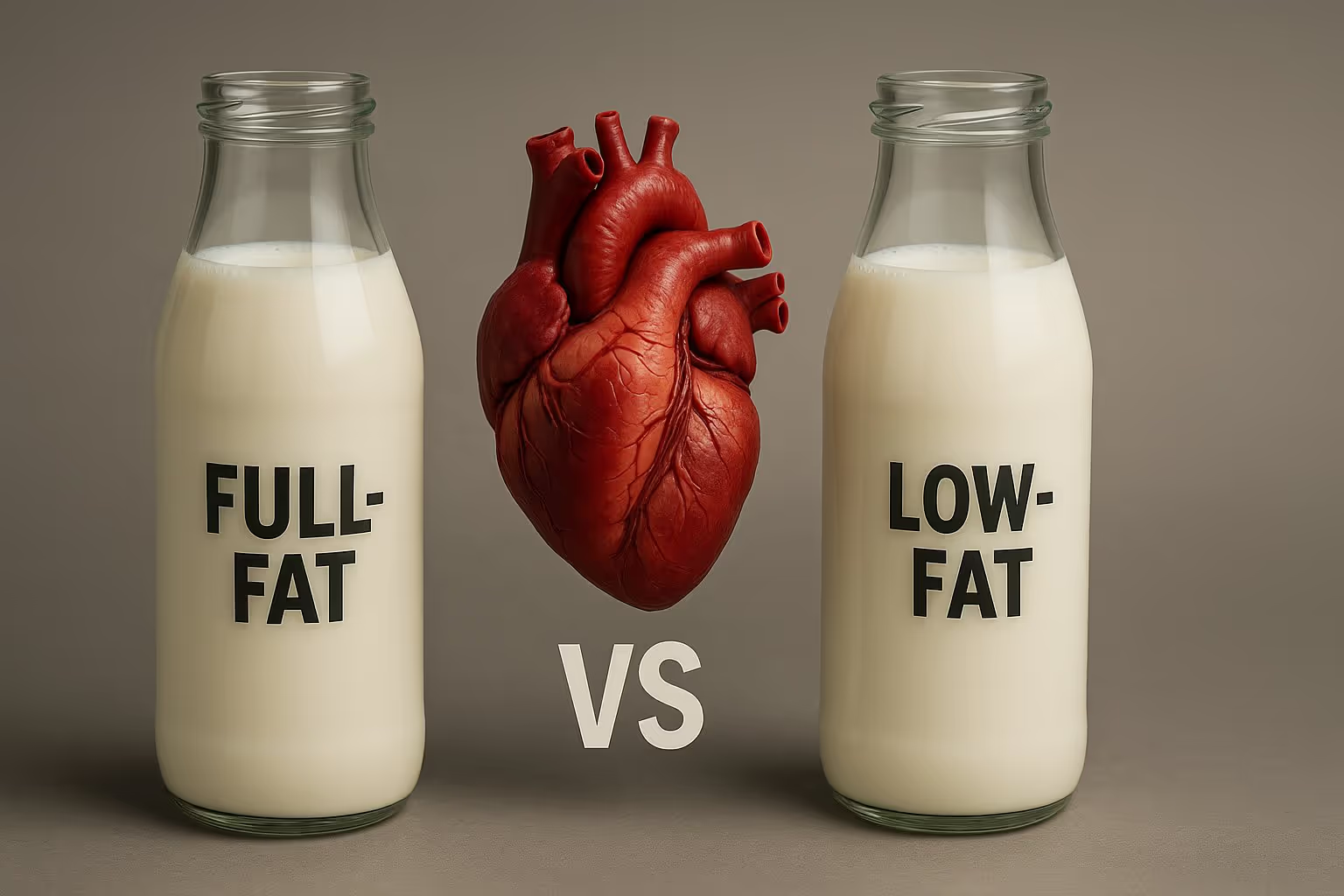
Note: This article was AI-translated from Arabic and is currently under manual review. The author is not responsible for any translation errors. Please refer to the original Arabic text for the most accurate and authoritative information.
A decades-long study has revealed how healthy whole milk and low-fat milk are, and researchers have concluded that one is safer for the heart.
Experts analyzed health data spanning three decades and found that the level of fat in milk affects the risk of death from heart disease.
The study published in The American Journal of Clinical Nutrition Data were used from three cardiovascular health examinations conducted between 1974 and 1988.
Researchers in Norway followed the data of 73,860 people, with an average age of 41 years, over 33 years and recorded 26,393 deaths, including 8,590 deaths due to cardiovascular diseases.
They found that those who drank whole milk had a higher risk of death than those who drank low-fat milk.
The researchers were able to make this comparison because of a unique historical context. In the seventies, most people in Norway drank whole milk, but by the eighties more were drinking low-fat milk, which made it possible to study the long-term health effects of both types.
Those who drank the most milk in the study had a 22% increase in the risk of death from any cause and a 12% increase in the risk of death from cardiovascular disease compared to those who drank the least amount.
But further analysis revealed that whole milk in particular is driving this increase in the risk of death.
When comparing whole milk to low-fat milk and adjusting the results based on the amount of consumption, researchers found that eating low-fat milk was associated with an 11% lower risk of death and a 7% lower risk of cardiovascular disease compared to whole milk.
Results remained stable even after excluding premature deaths or participants with pre-existing diseases.
However, it was found that low-fat milk drinkers were mostly women, highly educated, and non-smokers, compared to full-fat milk drinkers who were often current smokers.
The study authors concluded that:
“The association of milk consumption with cardiovascular disease and death for any cause varies depending on the type of milk. There were positive associations for whole milk, while low-fat milk was associated with a slight reduction in the risk of ischemic heart disease and death from any cause when compared to whole milk.”
These results are in line with the current advice of the British National Health Service (NHS). The Authority states that most fats in milk and dairy products are saturated fats, which when eaten in large amounts may contribute to weight gain. A diet rich in saturated fats can lead to high levels of cholesterol in the blood, which increases the risk of heart attacks or strokes.
Source: Independent