 Advertise
Note: This article was AI-translated from Arabic and is currently under manual review. The author is not responsible for any translation errors. Please refer to the original Arabic text for the most accurate and authoritative information.
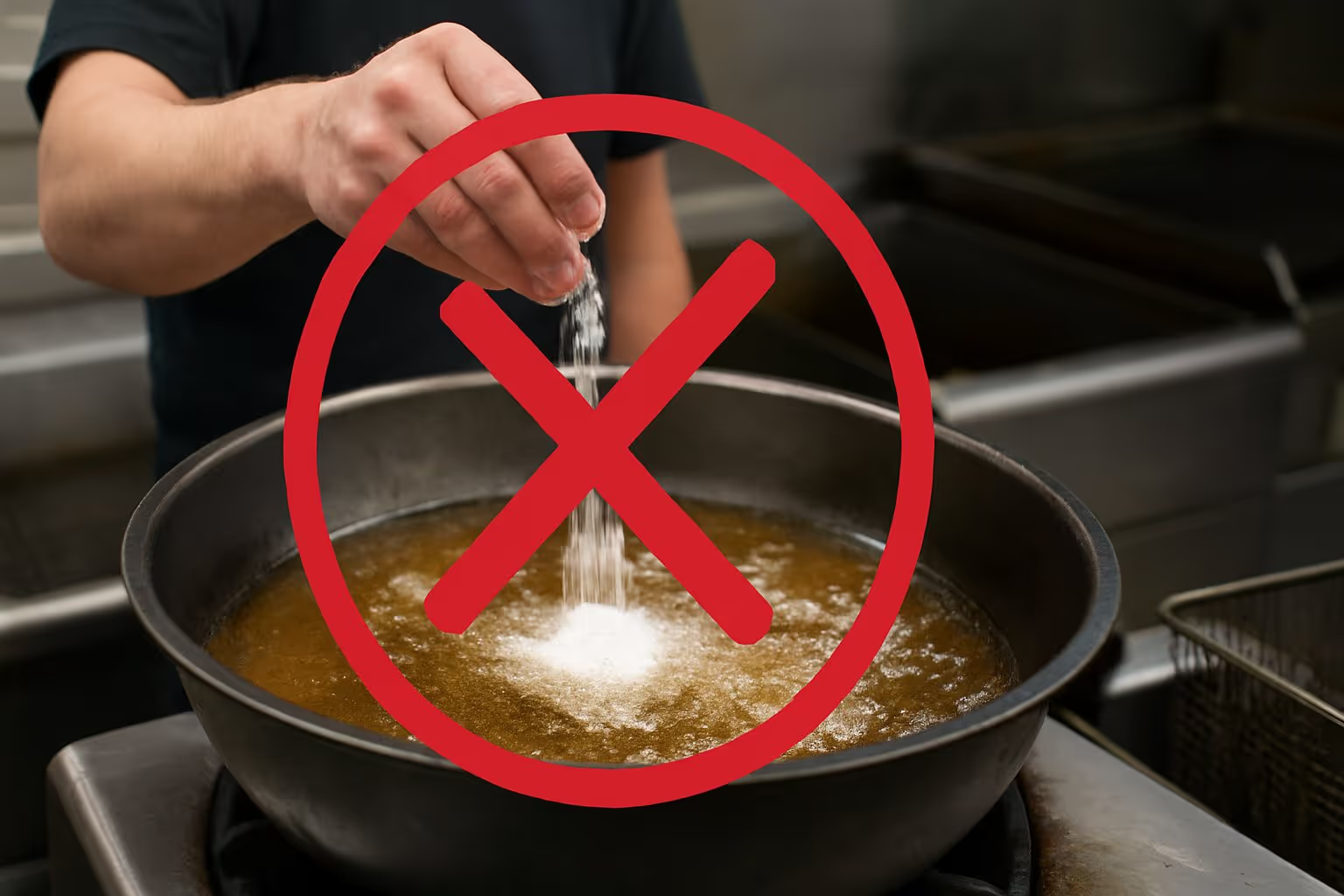
Despite the widespread method of purifying frying oil by adding starch or flour dissolved in water, which gives the oil a clearer appearance, the scientific fact confirms that this treatment does not restore the oil to its original properties and does not remove harmful compounds resulting from repeated heating.
Frying oil is an essential ingredient in every kitchen, but its frequent use leads to discoloration and the formation of compounds that may harm health. One of the traditional methods used to extend its life is to add starch or flour dissolved in water. This method helps absorb some impurities and improve the clarity of the oil, but does not remove harmful substances or restore its natural properties.
When starch or flour solution is added to hot oil, its particles bind to impurities and food debris, settling down. With filtration, the oil becomes purer in color. However, research, including reports from the Food and Agriculture Organization (FAO) and the U.S. Food and Drug Administration (FDA), confirms that this process only improves shape, while total polar compounds, aldehydes, and trans fats remain in the oil, which are harmful to health.
The answer is: completely no. With each heating, the smoking point of the oil decreases, and the production of carcinogenic compounds such as acrylamide increases, even if the oil appears clear. Therefore, the World Health Organization (WHO) recommends not reusing frying oil more than two or three times and disposing of it when you notice a change in color, smell, or viscosity.
The DFG and BfR German recommendations for quality control of frying and roasting oil also specify that:
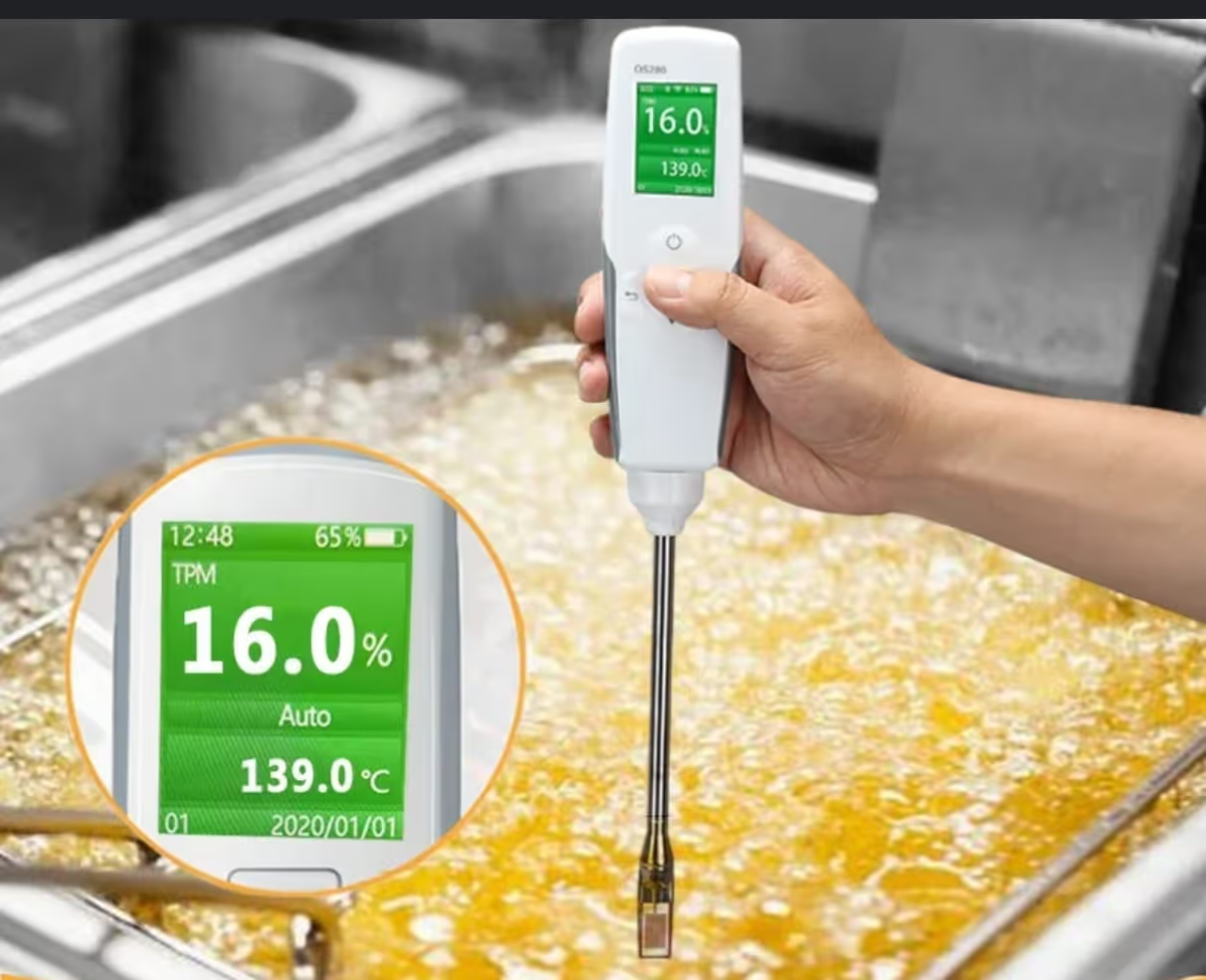
• The percentage of total polar substances (TPM) should not exceed a maximum of 24-27%.
• The percentage of ternary polymers resulting from thermal oxidation does not exceed 10-16%.
• The oil should be preserved without a strange smell or taste, and should have an acceptable color, not very dark and not sticky.
• It is necessary to stop using oil if there is excessive foam or noticeable smoke at the usual frying temperature.
These standards are applied in many European countries to ensure the quality and safety of oils used in commercial frying and restaurants.
• Do not exceed 180°C during frying.
• Drain the oil after each use with a fine strainer.
• Store the filtered and filtered oil in a glass jar and store it in the refrigerator for the next use. Half a lemon can be added to the oil while storing it as a source of natural antioxidants. As long as its condition is still good, you can add some fresh oil to it before the new use.
• Do not mix old oil with new oil if the used oil shows any manifestations that lead to the importance of stopping the use of oil and getting rid of it.
• Choose oils with a high smoke point such as refined palm olein oil or a mixture of olein oils with sunflower or soy oil so that the percentage of linolenic acid (omega-3) does not exceed 2% (recommended by the American Heart Association.
According to Resolution No. (1) of 2023 issued by the National Food Safety Authority, oils and fats used in frying are considered unfit for human consumption if the percentage of total polar compounds (TPM) exceeds 25% of the weight of the oil, or if the percentage of free fatty acids exceeds 1.25% (calculated as oleic acid). The decision also prohibits adding any materials to improve the appearance of used oil, such as starch or flour, for reuse in cooking or frying processes in order to protect public health and prevent risks resulting from the deterioration of oils.
Article 4 of the resolution obliges food establishments to safely dispose of these oils by contracting with licensed companies to transport and recycle waste, while keeping records showing the quantities of oils delivered. It is worth mentioning that violations of these controls may subject establishments to legal accountability.
Accordingly, treating used oils with homemade methods such as starch or flour does not return them to their original state and does not make them safe to use if they exceed the allowed chemical limits, which confirms the importance of disposing of them properly after repeated use.
The starch or flour method may improve the appearance of frying oil, but it does not guarantee its health safety. The best solution is to moderate the reuse of oil and follow proper frying practices to protect health.