 Advertise
Note: This article was AI-translated from Arabic and is currently under manual review. The author is not responsible for any translation errors. Please refer to the original Arabic text for the most accurate and authoritative information.
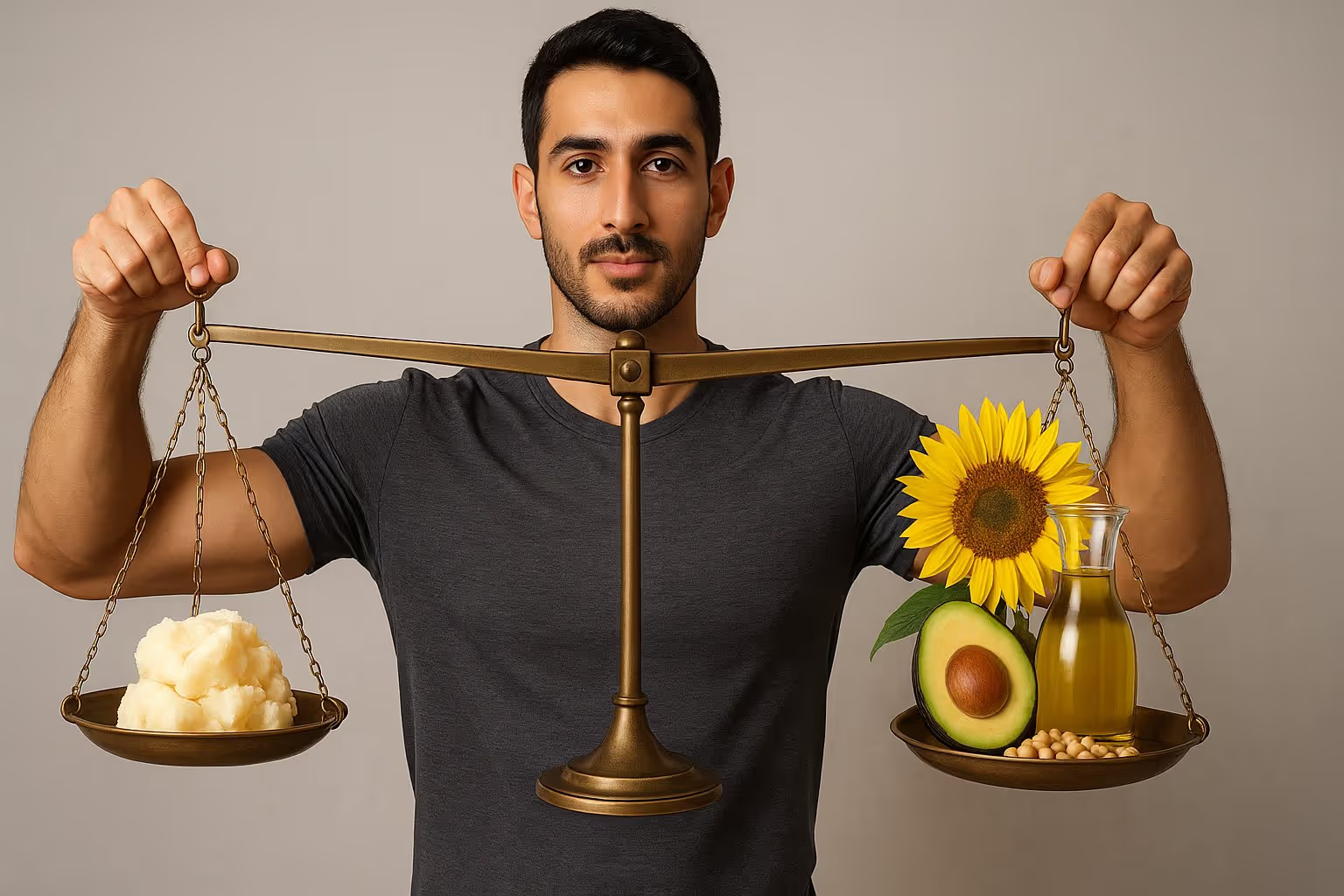
Between excessive fatigue and excess that deprives you of your energy, fat balance is one of the secrets to heart health and body vitality. Calculated doses of healthy fats may make the difference between an active day and a body full of diseases. Find out how to make fat your friend rather than your enemy.
In a world where the pace of life is accelerating and where fast foods and high-fat meals are on our tables, food awareness becomes a necessity rather than a luxury. Fat, despite its importance as a source of energy and supporting the absorption of essential vitamins A, D, E, and K, turns from a beneficial element to a serious burden if we exceed the recommended health limits.
Studies show that excessive intake of fats, especially saturated and trans fats, leads to:
• High levels of bad cholesterol (LDL).
• Increased risk of cardiovascular disease.
• accumulation of fat in the liver.
• Overweight, obesity and related chronic diseases such as type 2 diabetes and joint problems.
Lethargy and poor mental focus may also be the result of excessive consumption of unhealthy fats and fast prepared meals.
Science has proven that balance is the secret. Following a diet that provides 25-35% of calories from fat (8-10% saturated acids, 10-12% monounsaturated, 10% polyunsaturated), while keeping the majority of unsaturated fats, reduces health risks, supports heart efficiency, and promotes body activity and vitality.
Balance means:
• Mix liquid oils rich in mono- and polyunsaturated acids such as olive oil, corn oil and sunflower oil.
• Use limited amounts of natural solid fats such as palm oil, coconut oil, butter, or pure ghee to meet the body's needs for saturated acids without excess.
1. Use fat in moderation in cooking and preparation.
2. Diversify fat sources between vegetable and animal.
3. Read food labels and avoid products that contain “hydrogenated fat” or “Trans fat.” (Note that partial hydrogenation, which is the source of trans fatty acids, has been prevented)
4. Replace deep frying with grilling, steaming, or fast cooking.
5. Practice regular physical activity to burn excess and improve circulation.
Fat is not the enemy, but excess is the danger. When we choose the quantity and quality, fat becomes part of the recipe for a healthy life rather than one of the reasons for its decline. In the context of balance, another more precise and specialized level is the balance between polyunsaturated fatty acids, especially omega-3 and omega-6, which is vital for heart, immune and brain health. We will publish a special article on this topic very soon, God willing.