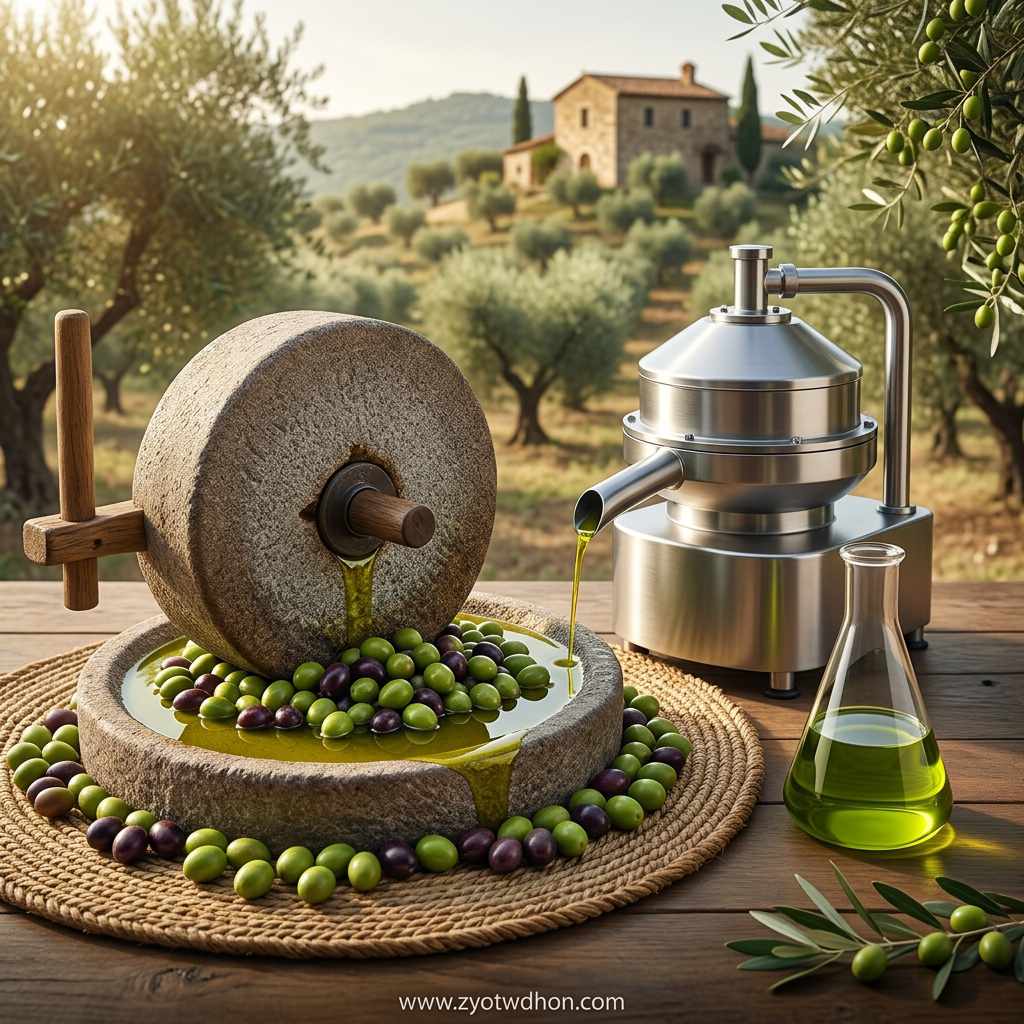
Olive oil is one of the most important natural oils in terms of nutritional and medicinal value, extracted from olives using mechanical pressure or centrifugation systems. The quality of the resulting oil varies depending on the extraction method (cold or hot) and the stage at which the oil is extracted (such as the first press). In this study, we review in detail the technical differences, advantages, standards, and modern trends.
Difference Between Cold Press and Hot Press
- Cold Pressed: Cold pressing is carried out without heating the olives or exposing them to temperatures exceeding 27°C. The primary objective of this method is to preserve vital components within the oil, such as antioxidants (polyphenols), vitamins, and natural flavors. The resulting oil is extra virgin olive oil, characterized by a distinct fruity taste and a pure golden-green color. This method does not use any solvents or chemical processes and is exceptionally healthy and nutritious.
- Hot Pressed: In this method, the olive paste is heated or high temperatures are used during extraction (from 35 to 50°C or higher). Heat increases the amount of oil extracted, but reduces oil quality in terms of taste, aroma, and nutritional value. It often produces lower quality oil, sometimes requiring subsequent refining to improve its properties. This method is used for industrial purposes or to extract oil from the residues of the first press.
Meaning of First Cold Press
The term "first press" refers to the initial oil extraction process from olives using mechanical pressure, without the use of heat. This process is usually performed in traditional mills or advanced centrifugation systems at temperatures not exceeding 27°C.
The oil resulting from this process is considered of the highest quality and is often classified as "extra virgin olive oil." It contains the highest concentration of antioxidants and natural aromatic compounds.
In modern systems, olives are not actually "pressed," but rather the oil is separated via centrifugation; nevertheless, the term "first cold press" is still used for marketing and commercial purposes to indicate high quality.
Olive Oil Quality Standards
A set of chemical and sensory standards determines olive oil quality according to the International Olive Council (IOC):
- Extra Virgin Olive Oil: Free acidity must be less than or equal to 0.8%, free of sensory defects, characterized by a clear fruity flavor, and a balanced bitter and pungent taste. It undergoes no chemical treatment.
- Virgin Olive Oil: Free acidity must be less than or equal to 2.0%. It may contain minor sensory defects such as a fermented or unripened taste.
- Refined Olive Oil: Oil that has undergone chemical and thermal refining processes to remove impurities and odors. Acidity content does not exceed 0.3%, but it has a neutral taste without distinct flavors.
Latest Pressing and Processing Technologies
- Three-Phase Centrifugation: This technology relies on separating oil, water, and solids in three separate steps. Used in most modern mills, it produces pure, high-quality oil. Its drawbacks include consuming larger amounts of water and producing wastewater that requires environmental treatment.
- Two-Phase Centrifugation: A more efficient technology than the three-phase system, separating oil from the paste without adding extra water, making it eco-friendly and superior in quality. It is widely used in Europe today.
- Enzymatic Extraction: A technology based on adding natural enzymes to the paste to break down cell walls, facilitating efficient oil extraction without affecting quality. This technology is still under research and development in several centers.
- Supercritical CO₂ Extraction: Used in pharmaceutical and fragrance industries, and can be applied to olive oil for pure extraction free of heat and solvents. However, it is costly and not yet commercially widespread for olives.
Olive Oil Cold Press Production Steps (SOP)
- Sorting and Cleaning: The process begins by sorting olive olives to remove leaves and impurities, followed by washing with clean water.
- Crashing: Fruits (including pits) are crushed using crushers or mills to obtain olive paste.
- Malaxation: The paste is stirred in special vessels at a temperature not exceeding 27°C for 30 to 45 minutes to agglomerate the oil droplets inside the paste.
- Separation: Oil is separated from remaining components using centrifugation, without adding heat or solvents.
- Filtration or Storage: The oil is filtered to remove remaining solid particles if any, then packaged in sealed, dark tanks or bottled directly.
Sensory Quality Standards (Required Sensory Traits)
- Fruity: Refers to oil extracted from ripe or semi-ripe olives. The fruity taste must be distinct, potentially carrying hints of fresh grass or green apple.
- Bitter: Resulting from health-beneficial polyphenol compounds. It should be balanced and not excessive.
- Pungency: A stinging sensation in the throat upon tasting, serving as an indicator of oil freshness and high antioxidant content.
- Sensory Defects: Such as fermented, musty, or metallic tastes, indicating poor storage or delayed pressing, and should not be present in high-quality oil.
Packaging, Storage, and Marketing Recommendations
- It is preferred to package oil in dark glass or metal containers to protect it from light.
- Oil should be stored in a cool, dark place at temperatures below 20°C.
- Exposure of oil to air and moisture must be avoided.
- The terms "first cold press" and "extra virgin" should only be used when standards are fully met.
- Marketing can be enhanced through organic certifications or international quality standards such as ISO 22000 or HACCP.
Note
Olive oil produced via the first cold press is the best health-wise and commercially, targeting consumers seeking quality, flavor, and nature. Other methods like hot pressing or refining are used to increase production volumes usually at the expense of quality. Modern trends in olive oil extraction focus on minimizing waste, preserving bioactive compounds, and reducing environmental impact, thereby enhancing the success prospects of specialized projects in this field.
 Advertise