Advertise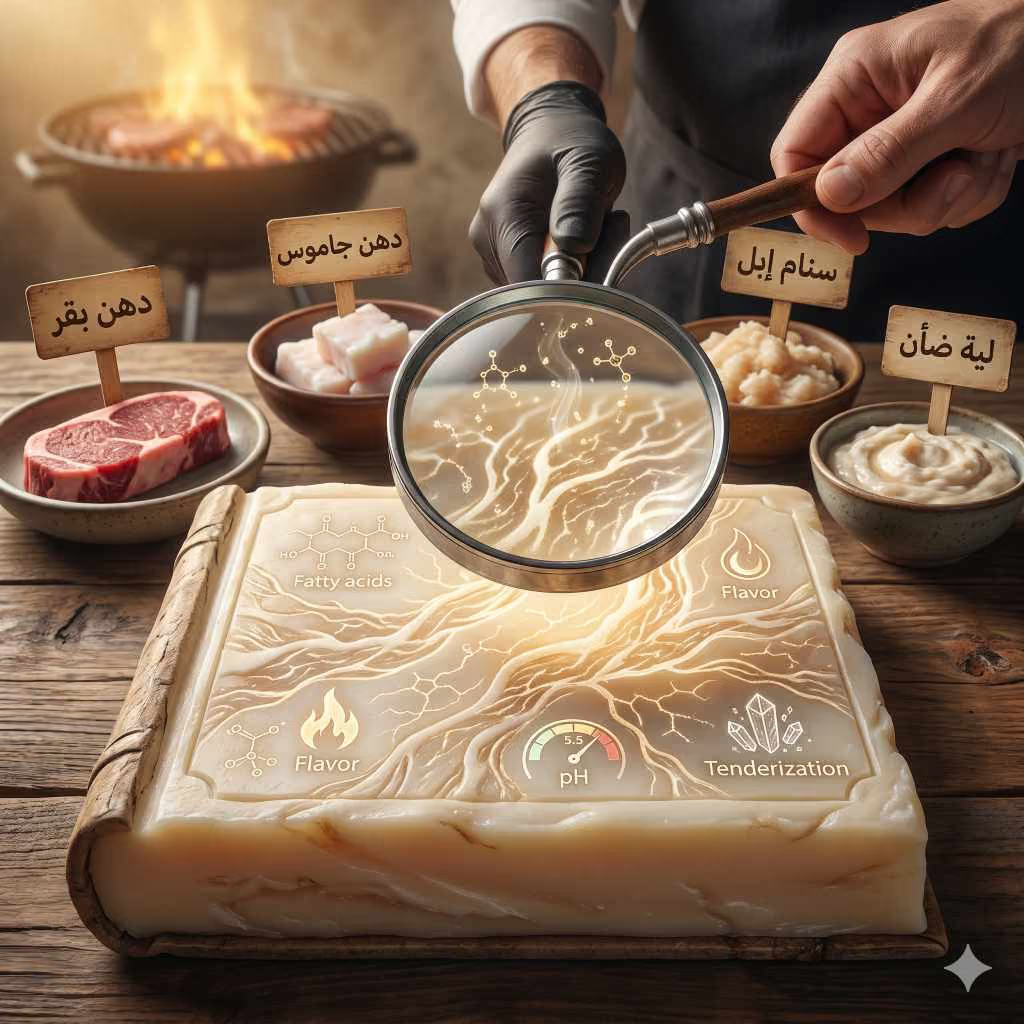
Note: This article was AI-translated from Arabic and is currently under manual review. The author is not responsible for any translation errors. Please refer to the original Arabic text for the most accurate and authoritative information.
Imagine an open kitchen in one of the most luxurious restaurants of a global hotel chain, where diners of different nationalities and cultures sit at the tables; some prefer lean meat, some seek luxurious marbling, some are drawn to the flavor of lamb, and others cautiously taste camel meat for the first time.
At the heart of this scene, a professional chef stands before a cut of beef selected with an expert eye. He doesn't dwell on the red color alone, nor on the size or price of the cut; instead, he approaches the delicate white lines that weave through the muscle like secret maps, then tells his team:
"The secret to flavor is not in the meat alone, but in this intricate white network you see."
Then he places a piece of camel meat beside it, smiling as he says: This is the champion of leanness, but it only reveals its secrets to those who understand its nature in cooking. Next, he presents a piece of lamb, its fat appearing more prominent, aromatic, and distinctive. Amidst the varying tastes of the diners at the tables, the chef was reading a complete story in the "book of fat": stored energy, latent flavor, a vital function, and a nutritional and industrial signature that differs from one animal to another.
The fat that some view as mere excess "grease" is, in fact, an extremely important component in understanding meat quality. It is an energy store, a thermal insulator, a crucial source of flavor, and a major factor in tenderness and juiciness. Furthermore, its location within the carcass tells part of the animal's story: its type, breed, diet, age, condition before slaughter, and how the carcass was handled afterward.
And so begins our scientific journalistic journey; from beneath the carcass's skin to deep within the muscle fibers, and from traditional cooking tables to international hotel kitchens and meat technology laboratories, to understand why red meat quality cannot be judged without first reading its fat map.
Beef fat is one of the essential vital components in a bovine carcass. Its role is not limited to being merely an energy store; it extends to multiple physiological, technological, and sensory functions. It participates in insulation, protection, and metabolic regulation within the animal, and after slaughter, it transforms into an influential element in meat characteristics regarding flavor, tenderness, juiciness, and stability during storage and cooking.
Animal fats are not all alike; beef fat differs in its composition and properties from buffalo fat, and camel fat differs in its distribution and function from lamb fat, which has a distinctive flavor. Moreover, the fat within a single carcass is not of one type; there is subcutaneous fat, intermuscular fat, intramuscular fat (also known as marbling), and visceral fat around the internal organs. Each type has its own location, role, and nutritional or industrial value.
In this article, we will explore beef fat from a simplified scientific perspective, combining the sciences of oils and fats, meat technology, and food safety. We will review the distribution of fat in the carcass, its chemical composition, its biological functions, and its impact on meat quality, along with a practical comparison between beef, buffalo, camel, and lamb fats, offering a practical insight to help both specialists and consumers gain a deeper understanding of this often-misjudged component.
Fat is not an enemy of health if it is understood, chosen wisely, and used correctly, nor is it an absolute advantage if it exceeds its limits or is poorly handled; rather, it is one of the keys to quality, and no discussion of red meat is complete without it.
| What We See in the Fat | What Does It Tell Us? | Its Importance to Consumer and Industry |
|---|---|---|
| Color | Diet, type, and condition of the fat | An initial visual indicator of quality |
| Firmness | Fatty acid composition and melting point | Affects cooking and processing |
| Marbling | Distribution of fat within the muscle | Important for tenderness, flavor, and grilling |
| Odor | Freshness or the onset of rancidity | An important indicator of safety and acceptability |
| Location of the fat | Its function and appropriate use | Cooking, processing, rendering, or exclusion |
Beef fat is not randomly distributed within the carcass; rather, it appears in different anatomical locations, each with a specific function, value, and impact on meat quality. Understanding these locations helps butchers, chefs, processors, and consumers comprehend the nature of each cut and choose the appropriate way to handle it.
Subcutaneous fat is located between the skin and muscles, acting as a thermal insulator and an external protective layer in live animals. After slaughter, a suitable layer of this fat helps reduce surface dehydration of the meat during chilling, provided that handling and storage operations are carried out correctly.
The color of this fat can range from white to varying shades of yellowish. A slight yellowish tint in the fat of some cattle does not necessarily indicate a defect; it can be linked to the animal's diet of green forage rich in carotenoids. However, an unnatural color accompanied by a rancid odor or an unappealing appearance is an indicator that warrants caution.
This type of fat is found between different muscle groups, appearing as layers or fatty seams between the muscles. Intermuscular fat contributes to the overall juiciness sensation after cooking, but its sensory value does not equal that of marbling (intramuscular fat) found within the muscle itself.
In food processing, this fat can be beneficial in some ground or processed meat products, provided its proportion is controlled and it is free from undesirable odors or signs of oxidation.
This is the "crown jewel" in many premium meat grading systems. It appears as fine white streaks or flecks within the muscle tissue and is globally known as Marbling.
The more balanced and finely distributed the marbling is within the muscle, the more it contributes to improved tenderness, juiciness, and flavor, especially in cuts intended for grilling or dry cooking. During cooking, part of this fat gradually melts, giving the meat a richer and smoother mouthfeel.
However, marbling is not desired to the same extent for all uses; a patient needing to reduce calories or fat might prefer leaner meat, while fine dining restaurants seek higher degrees of marbling in specific cuts.
Visceral fat is found around internal organs such as the kidneys, heart, and intestines. It is often firmer and has a higher melting point compared to some subcutaneous or intramuscular fats. It is used in certain food and industrial applications after separation and purification, but it is not always the best choice for direct use in gourmet cooking due to its sensory and functional properties.
| Type of Fat | Its Location in the Carcass | Its Function in the Animal | Its Importance After Slaughter |
|---|---|---|---|
| Subcutaneous fat | Between the skin and muscles | Insulation and protection | Protects the meat surface and reduces drying |
| Intermuscular fat | Between muscle masses | Filling gaps and facilitating movement | Contributes to juiciness and some processing applications |
| Intramuscular fat | Within the muscle fibers | A fine energy reserve | The most important source of tenderness, flavor, and marbling |
| Visceral fat | Around the viscera | Protecting organs and storing energy | Suitable for some industrial and food uses after processing |
Beef fat primarily consists of triglycerides, which are the main form of fat storage in the animal's body, along with smaller amounts of phospholipids, cholesterol, fat-soluble vitamins, and some minor compounds responsible for color, flavor, and oxidative stability.
Beef fat should not be reduced to merely "saturated fat"; it is a mixture of saturated, monounsaturated, and polyunsaturated fatty acids, whose proportions vary depending on breed, age, feeding regimen, and the fat's location in the carcass.
| Fatty Acid | Scientific Notation | Nature | Significance |
|---|---|---|---|
| Palmitic acid | C16:0 | Saturated | Contributes to the firmness and texture of the fat |
| Stearic acid | C18:0 | Saturated | A long-chain acid with a relatively different dietary behavior from some other saturated acids |
| Oleic acid | C18:1 | Monounsaturated | Contributes to the softness of the fat and improves some of its sensory properties |
| Linoleic acid | C18:2 | Polyunsaturated | An essential fatty acid present in relatively limited proportions in ruminant fats |
| Linolenic acid | C18:3 | Polyunsaturated | One of the omega-3 acids, its presence affected by the feeding regime |
| Conjugated linoleic acid | CLA | A natural derivative in ruminant fats | Its proportion rises relatively with certain grazing and feeding systems |
Ruminant fat contains proportions of natural trans fatty acids resulting from biohydrogenation in the rumen, which differ in nature and origin from industrial trans fats produced by partial hydrogenation of vegetable oils. Nevertheless, moderation in the consumption of animal fats remains important within a balanced diet.
In addition to fatty acids, beef fat contains other important compounds, including cholesterol, phospholipids, and fat-soluble vitamins such as A, D, E, and K, in proportions that vary depending on diet and tissue. It also contains color and flavor compounds, which may include carotenoids in some cases, especially in grazing animals.
During cooking, many aromatic compounds are formed as a result of reactions between fats, proteins, and reducing sugars, which are among the most important reasons for the distinctive flavor of cooked red meat.
| Component | Its Presence in the Fat | Effect |
|---|---|---|
| Triglycerides | The largest component | Source of energy and texture |
| Saturated fatty acids | Relatively high | Increase firmness and melting point |
| Monounsaturated acids | Clearly present, especially oleic | Improve softness and sensory character |
| Polyunsaturated acids | Lower than in vegetable oils | More susceptible to oxidation |
| Cholesterol | Natural in animal fats | Requires dietary moderation |
| Carotenoids and vitamins | Vary according to diet | Color, nutritional value, and natural antioxidants |
Fat in an animal's body is not an inert tissue, but a vital organ with multiple functions that go beyond energy storage.
Meat quality is not a single attribute, but a system that includes tenderness, juiciness, flavor, color, storage stability, nutritional value, and the suitability of the cut for the cooking method. Fat plays a significant role in all these characteristics.
An appropriate amount of intramuscular fat contributes to improved tenderness, especially when distributed as fine marbling. Marbling fats melt during cooking and contribute to a perception of softness, and also reduce the sensation of dryness during chewing.
However, tenderness does not depend on fat alone; it is also affected by the animal's age, muscle type, amount of connective tissue, aging degree, enzyme activity after slaughter, and cooking method.
Fat is one of the greatest reservoirs of flavor in meat. During cooking, complex interactions occur between fats, proteins, and reducing sugars, forming aromatic compounds responsible for the distinctive aroma and taste of meats. This is why the flavor of beef differs from lamb, camel, or buffalo, not solely due to protein, but because of variations in fat composition, volatile compounds, and the unique fatty acid ratios characteristic of each type.
Fat contributes to the sensation of juiciness, especially when it's intramuscular rather than just on the edges. While very lean meat might be suitable for those looking to reduce calories, it requires careful cooking to prevent it from becoming dry or tough.
In many global markets, marbling is considered a sign of quality, especially in premium grilling meats. However, consumer preferences vary from one culture to another; some prefer highly marbled meat, while others prefer lean red meat. This highlights the importance of understanding the market and the intended use; not every high-fat cut is always superior, nor is every low-fat cut always inferior.
| Attribute | Role of the Fat | Sensory Result |
|---|---|---|
| Tenderness | Melts within the muscle during cooking | Easier chewing and a softer texture |
| Juiciness | Gives a sense of moisture and fullness | Less dry meat |
| Flavor | Produces aromatic compounds during cooking | A richer, deeper taste |
| Appearance | Marbling gives an attractive appearance | Higher market acceptance |
| Stability | Affected by oxidation and storage | May improve or deteriorate depending on handling |
The method of slaughter and the handling of the animal before and after slaughter are crucial factors in meat and fat quality. It's not enough for the carcass to come from a good animal or an excellent breed if the animal was subjected to severe stress, or if the bleeding, chilling, and handling processes were improperly executed.
Islamic slaughter (Zabihah) involves slaughtering a permissible animal with a sharp instrument, ensuring rapid blood drainage, in accordance with known Islamic regulations. From a technological perspective, calm slaughter, reduced stress, efficient bleeding, cleanliness of the slaughter site, and rapid hygienic post-slaughter handling are all factors that help improve meat quality and reduce the likelihood of defects.
Scientifically, it's important to emphasize that meat quality is not determined by a single factor, but by a complete system that begins with the animal's treatment before slaughter, continues through efficient slaughter and bleeding, then chilling, cutting, packaging, storage, and transport, until the meat reaches the consumer.
Blood is a rich medium of water, proteins, and iron, and its excessive retention in tissues can contribute to sensory, oxidative, and microbial problems. Iron associated with certain blood compounds can catalyze fat oxidation reactions, accelerating the development of undesirable odors if storage is poor.
However, the efficiency of bleeding does not depend solely on the slaughter method, but is also influenced by the skill of the slaughterer, the animal's condition, the degree of stress, the method of suspension, the speed of bleeding, the cleanliness of the abattoir, and the speed of chilling.
In some global systems, stunning is used before slaughter for purposes related to animal welfare and worker safety, and its effects can vary depending on the type, intensity, and control of the stunning method. However, sharp manual slaughter according to religious regulations, with animal welfare and efficient bleeding, can achieve high quality if performed within a well-controlled hygienic system.
The most important scientific principle here is: Reducing pre-slaughter stress, achieving efficient bleeding, maintaining hygiene, and rapid, controlled chilling are the keys to meat and fat quality, regardless of the slaughter system.
After slaughter, muscle begins to transform into meat through a series of biochemical changes. Among the most important of these changes is a decrease in acidity, or pH value, resulting from the conversion of muscle glycogen into lactic acid.
In normal meat, the pH value gradually decreases from near-neutral to a more acidic range, often around 5.4 to 5.8 after post-slaughter changes are complete. This range is typically associated with acceptable quality in terms of color, tenderness, and relative stability.
However, if the animal experiences severe stress before slaughter, a significant portion of glycogen may be depleted pre-slaughter. Consequently, insufficient lactic acid is produced post-slaughter, and the pH value remains high. This can lead to a defect known as DFD, or Dark, Firm, and Dry meat.
It is dark-colored, firm meat with a relatively dry surface, often associated with a high ultimate pH. This type of meat may be less appealing to consumers, have a shorter shelf life, and be more susceptible to certain microbial growth issues if not properly stored.
| Condition | pH after approx. 24 hours | Indication |
|---|---|---|
| Normal, well-handled meat | 5.4 – 5.8 | Normal color, good quality, better stability |
| Moderate stress or suboptimal handling | 5.8 – 6.0 | Medium quality requiring monitoring |
| Severe pre-slaughter stress (DFD) | Often above 6.0 | Dark color, shorter shelf life, higher susceptibility to problems |
Fat oxidation is one of the primary causes of quality deterioration in meat and fats during storage. The problem is exacerbated by poor refrigeration, increased exposure to air and light, the presence of oxidation catalysts like iron, and a high proportion of unsaturated fatty acids.
Rancidity is an undesirable change in the odor and taste of fat resulting from oxidation or hydrolysis. It may begin subtly, unnoticed by the average consumer, then develop into a distinct, off-putting odor that affects the acceptability of the meat or fat.
Malondialdehyde, or MDA, is a product of fat oxidation and is used in laboratory analyses as an indicator of the degree of oxidation, especially in tests like TBARS. However, MDA values vary depending on the sample type, storage duration, temperature, measurement method, and the presence of natural or added antioxidants. Therefore, a single number should not be treated as an absolute rule; rather, it should be understood within its experimental context.
| Factor | Its Effect | How to Mitigate It |
|---|---|---|
| High temperature | Accelerates oxidative reactions | Rapid, controlled cooling |
| Exposure to air | Increases oxidation | Suitable packaging and reduced oxygen |
| Light | Promotes degradation | Storage in suitable packaging or locations |
| Blood and iron residues | Promote oxidation | Proper bleeding and hygienic handling |
| Long storage | Increases accumulation of oxidation products | Respecting the shelf-life period |
| Repeated reheating | Accelerates degradation | Avoiding repeated heating and cooling |
Animal fats are not all the same; each type has its unique sensory, chemical, and technological characteristics. Understanding these differences helps in selecting appropriate cooking, processing, and storage methods.
| Property | Beef Fat | Buffalo Fat | Camel Fat | Mutton Fat |
|---|---|---|---|---|
| Color | White to pale yellow | Usually white | White to creamy | White to creamy |
| Firmness | Medium to high | Relatively high | Variable depending on location | Relatively high |
| Marbling | Medium to high depending on the breed | Usually lower than specialized cattle | Often limited | Variable and may be noticeable |
| Flavor | Distinctively meaty | Relatively lighter | Distinctive and may tend toward lightness | Strong and distinctive |
| Melting point | Medium to high | Relatively high | Variable | Relatively high |
| Best Uses | Grilling, processing, and general cooking | Cooking and processing | Slow, moist cooking | Traditional cooking and grills |
Beef fat offers a good balance of texture, flavor, and usability. With proper marbling, beef provides excellent tenderness and flavor, especially in cuts prepared for grilling or dry cooking.
Buffalo fat is often white and can be relatively firmer. Buffalo meat may have less marbling than some beef cattle breeds specifically raised for meat production, but it holds significant nutritional and economic value and requires appropriate cooking and processing methods to highlight its quality.
Camel fat has distinct characteristics, particularly the hump serving as a significant fat reserve. Camel meat is often leaner within the muscles, which is why it requires moist or slow cooking methods to prevent dryness, especially in older animals.
It has a strong and distinctive flavor due to specific fatty compounds, including some branched-chain fatty acids. While this flavor is appealing to some consumers, it can be quite pungent for others. Therefore, lamb fat requires careful management in cooking, seasoning, and storage.
| Type | Sensory and Technological Signature |
|---|---|
| Beef fat | A balance of flavor, tenderness, and global acceptance |
| Buffalo fat | Whiteness, firmness, and important processing value |
| Camel fat | Environmental specificity and usually less intramuscular fat |
| Mutton fat | Strong flavor and a clear traditional identity |
Animal fats have extensive uses when properly separated, purified, and handled hygienically. They are not merely a byproduct or waste, but a raw material that can be intelligently managed.
Not every high-fat cut of meat is good, nor is every low-fat cut poor quality. The right choice depends on the intended use, health considerations, and cooking method.
| What You See | What Does It Mean? | The Appropriate Decision |
|---|---|---|
| Fine intramuscular marbling | Higher tenderness and flavor | Suitable for grilling |
| White or creamy fat with no odor | Usually natural fat | Acceptable |
| Light yellow fat in beef | May be associated with pasture feeding | Acceptable if there is no odor |
| Very dark and dry meat | Possible high pH or pre-slaughter stress | Requires caution |
| Rancid odor or sticky surface | Degradation or poor handling | Rejected |
The future won't be about eliminating fat, but about understanding and managing it. The modern industry is moving towards producing meat with targeted specifications: less fat for those seeking calorie reduction, higher marbling for luxury restaurants, and improved fat composition through better nutrition and care.
Beef fat in red meat is not a marginal detail, nor merely a white layer removed by the consumer's knife or debated by chefs. It is a complete language, through which specialists can discern the animal's history, the quality of its nutrition, handling methods, and the suitability of the cut for cooking or processing.
Subcutaneous fat protects, intermuscular fat contributes to juiciness, and visceral fat is suitable for specific uses, while intramuscular marbling is the crown jewel of quality in many luxury cooking meats.
But science doesn't advocate for idolizing fat or demonizing it. Instead, it calls for understanding it: When is it an advantage? When does it become a burden? How do we protect it from oxidation? And how do we choose the right type for health, cooking, and processing?
Between the fat of cattle, buffalo, camels, and sheep, the characteristics vary, and the profiles differ. Therefore, the conscious consumer doesn't just ask: How much does a kilo cost? Instead, they ask: What type of animal is it? What does the fat look like? What is the purpose of this cut? And how should I handle it in cooking?
Ultimately, the golden rule remains:
"Whoever masters reading fat holds the key to meat quality. And whoever manages it well adds flavor, value, safety, and economy to food."
Beef fat isn't just the white we see on the edge of a cut of meat; it's a complete scientific story that begins in the pasture, passes through the slaughterhouse, culminates over the kitchen flame, and then reveals its truth in tenderness, flavor, and consumer satisfaction.
To view the data presented in the article as graphics, click here