 Advertise
Sacha inchi oil: a vegetable oil rich in linolenic acid (omega-3) extracted from the seeds of the sacha inchi plant, added to the Codex Standard CXS 210 in the 2024 amendment.
Plukenetia volubilis L.
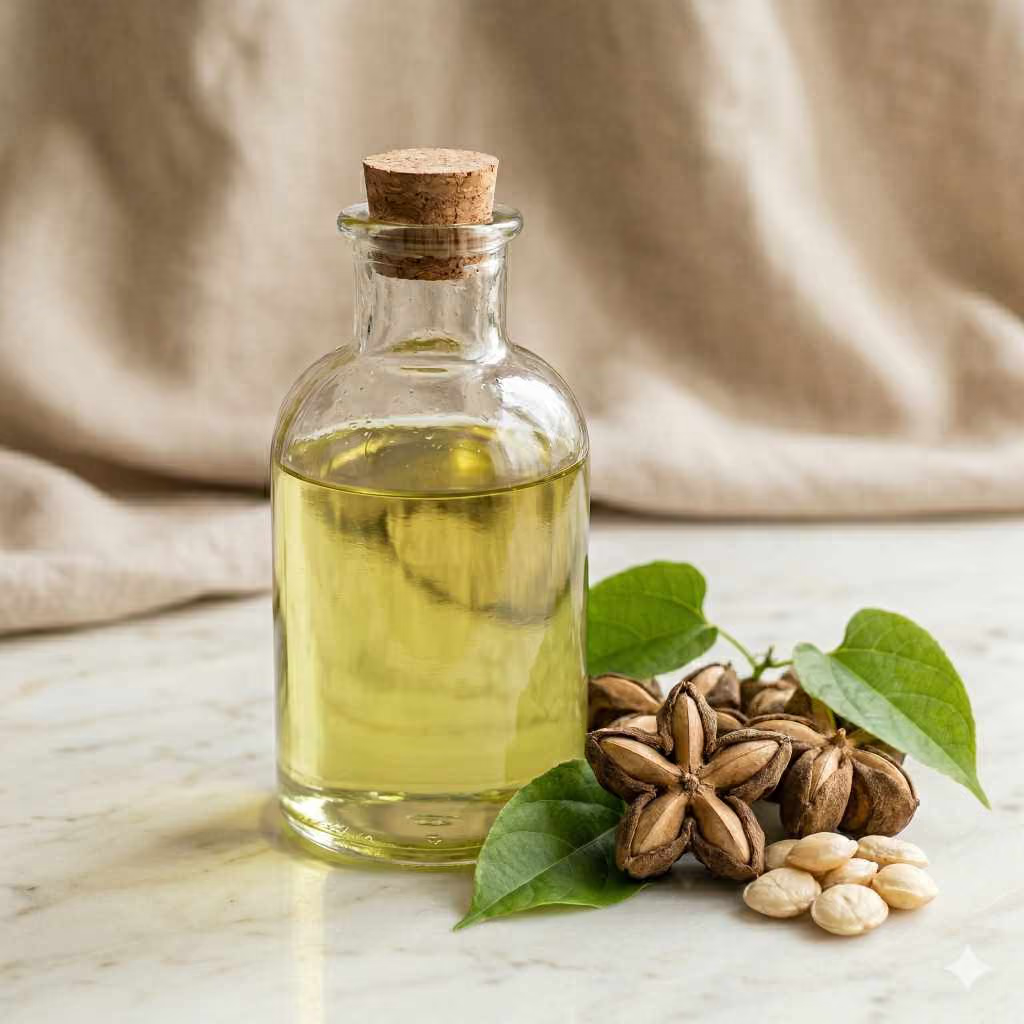
Sacha inchi oil (also known as the Inca peanut or Inca nut oil) is a vegetable oil extracted from the seeds of the sacha inchi plant Plukenetia volubilis, a climbing plant of the Euphorbiaceae family that grows in the Amazon rainforest. The seeds contain 38-49% oil by weight, usually cold-pressed to preserve the high omega-3 content. It is one of the richest vegetable oils in alpha-linolenic acid (omega-3).
The plant is native to the Amazon rainforests of Peru, Ecuador, and Colombia, where indigenous peoples have used it for thousands of years. Peru leads global oil production and export by a large margin, with an annual production estimated at about 1,200 tons of seeds, concentrated in the San Martín region. In recent years cultivation has spread to Asian countries such as China, Thailand, Vietnam, and Laos to meet growing demand.
Sacha inchi oil has a unique composition among vegetable oils, dominated by alpha-linolenic acid (omega-3) at 36-50%, followed by linoleic acid (omega-6) at 32-43%. This makes it one of the rare oils where the omega-6:omega-3 ratio is below one (about 0.8:1), unlike most vegetable oils. It also contains a very high proportion of gamma-tocopherol, delta-tocopherol, and antioxidants, and a high iodine value reflecting its high degree of unsaturation.
Detailed USDA-FAS production data is not available for sacha inchi oil because it is not given a standalone customs line (classified under "other vegetable oils," HS code 1515.90, or under "other oilseeds"), making accurate measurement of its global trade difficult. The market is characterized by small specialty volumes and high sensitivity to quality and freshness. Sacha inchi oil was officially added to the Codex Alimentarius standard CXS 210 in the 2024 amendment.
Sacha inchi oil is used as a premium culinary oil added cold to salads and dishes (frying is not recommended due to its heat and oxidation sensitivity), and in dietary supplements as a plant-based alternative to marine omega-3. It is also widely used in cosmetics and skin and hair care for its moisturizing properties and content of essential fatty acids and antioxidants.
HS Code
1515.90
Oil percentage in the seed/fruit
38-49% (seed)
Oil yield/hectare
Omega-6:Omega-3
0.8:1 (omega-3 rich)
This oil conforms to the Codex Alimentarius standard for named vegetable oils, CXS 210-1999, which specifies fatty acid composition, and quality and authenticity criteria. The following cards present the specification for each variety of this oil.
Sacha inchi oil is derived from the seeds of the sacha inchi plant (Plukenetia volubilis L.).
Oleic acid (Omega-9)
6.0-11.7
Linoleic acid (Omega-6)
32.0-43.4
Linolenic acid (Omega-3)
36.2-50.0
Palmitic acid
3.6-4.8
Stearic acid
2.6-4.0
Lauric acid
n.d.
Erucic acid
n.d.-0.1
Total saturated
Total monounsaturated
Total polyunsaturated
Iodine value
182-205
Vitamin E (mg/kg)
1683-2240
Caproic acid (C6:0): n.d.
Caprylic acid (C8:0): n.d.
Capric acid (C10:0): n.d.
Lauric acid (C12:0): n.d.
Myristic acid (C14:0): n.d.
Palmitic acid (C16:0): 3.6-4.8
Palmitoleic acid (C16:1): n.d.-0.1
Margaric acid (C17:0): n.d.-0.1
Heptadecenoic acid (C17:1): n.d.
Stearic acid (C18:0): 2.6-4.0
Oleic acid / Omega-9 (C18:1): 6.0-11.7
Linoleic acid / Omega-6 (C18:2): 32.0-43.4
Linolenic acid / Omega-3 (C18:3): 36.2-50.0
Arachidic acid (C20:0): n.d.-0.1
Gadoleic acid (C20:1): n.d.-0.4
Eicosadienoic acid (C20:2): n.d.-0.1
Behenic acid (C22:0): n.d.-0.1
Erucic acid (C22:1): n.d.-0.1
Docosadienoic acid (C22:2): n.d.
Lignoceric acid (C24:0): n.d.
Nervonic acid (C24:1): n.d.
Sterols (% of total):
Cholesterol: n.d.-1.0
Brassicasterol: n.d.-0.1
Campesterol: 6.6-7.8
Stigmasterol: 23.4-27.0
Beta-sitosterol: 51.6-56.9
Delta-5-avenasterol: 4.3-8.7
Delta-7-stigmastenol: n.d.-0.3
Delta-7-avenasterol: n.d.-0.7
Other sterols: n.d.
Total sterols (mg/kg): 2080-2480
Tocopherols and tocotrienols (mg/kg):
Alpha-tocopherol: 3.0-7.0
Beta-tocopherol: n.d.-3.0
Gamma-tocopherol: 1040-1370
Delta-tocopherol: 640-860
Alpha-tocotrienol: n.d.
Gamma-tocotrienol: n.d.
Delta-tocotrienol: n.d.
Total tocopherols and tocotrienols (mg/kg): 1683-2240
Relative density: 0.920-0.930 (20°C)
Apparent density (g/mL): —
Refractive index: 1.478-1.482
Saponification value: 185-196
Iodine value: 182-205
Unsaponifiable matter (g/kg): ≤ 5
Melting point: —
δ¹³C ratio: —