
Lang
Rice bran oil: a vegetable oil extracted from the bran produced by milling rice. A comprehensive reference covering specifications, fatty acids, production, and uses.
Oryza sativa L.
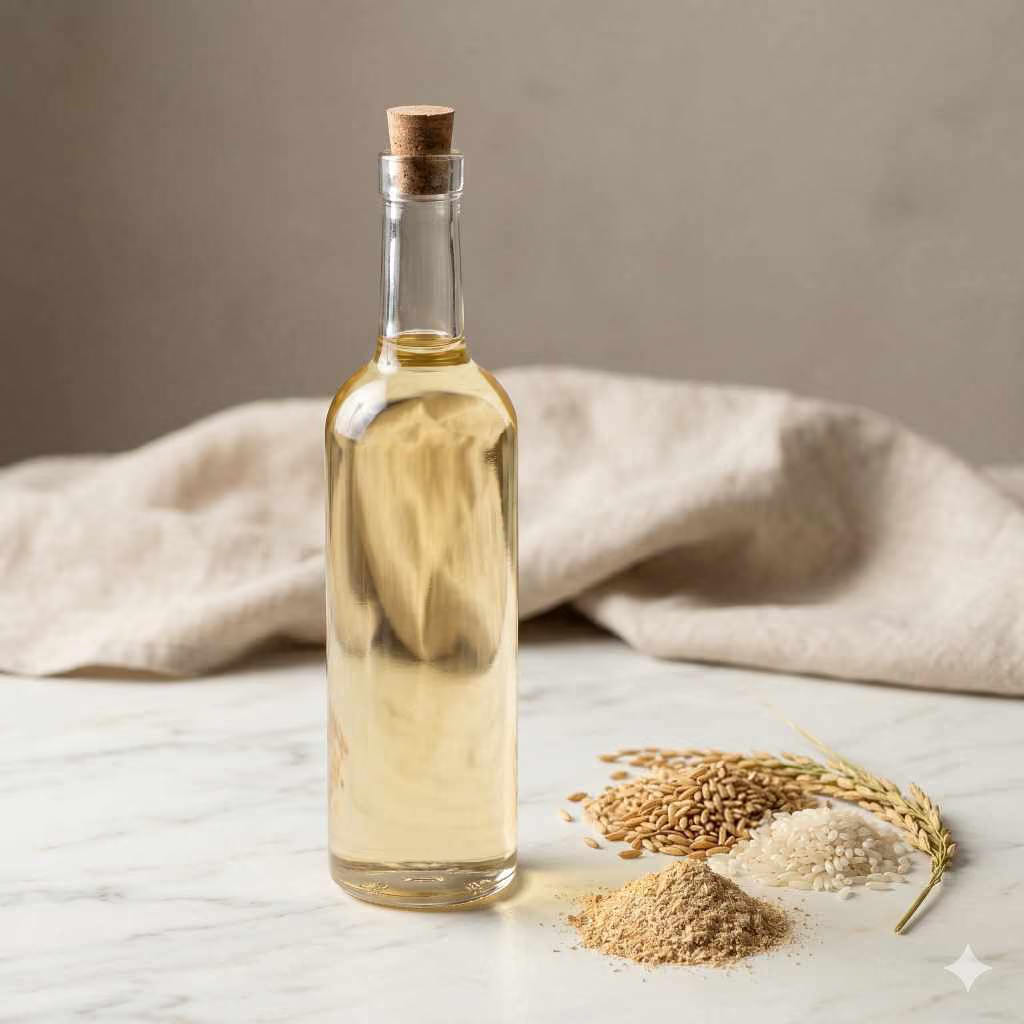
Rice bran oil is a vegetable oil extracted from the bran produced by milling the grains of rice Oryza sativa L., and is a by-product of the rice industry. The bran (the outer layer of the brown rice grain) contains 18-22% oil by weight, extracted by solvent extraction followed by refining. The industry's challenge is that the bran oxidizes quickly and must be processed within 24-48 hours of milling to halt the lipase enzymes.
Rice has been used in Asia for two thousand years, but the commercial manufacture of rice bran oil began in the twentieth century in Japan, India, and Thailand. Today India, China, and Japan lead its production, and its use is gradually expanding worldwide as a "healthy" oil.
Rice bran oil has a very balanced composition: 42% oleic acid, 36% linoleic acid (omega-6), and 20% palmitic acid, with an omega-6:omega-3 ratio of 21:1, better than most seed oils. The oil's unique distinction is its content of gamma-oryzanol (γ-Oryzanol), a mixture of ferulates and sterols with antioxidant properties, along with other compounds unique to rice. It has a very high smoke point (up to 254°C).
USDA-FAS data are not available for rice bran oil production, as it is a specialty oil, but India is considered the world's leading producer, followed by Thailand, Japan, and China. Production is tied to the scale of the rice-milling industry, since the bran is a by-product. The oil is governed by Codex Alimentarius standard CXS 210-1999.
Rice bran oil is used in deep frying in Asian cuisines (especially Japanese tempura), and in the making of sweets and baked goods. Industrially, it goes into cosmetics and skin products as a moisturizer thanks to oryzanol, and oryzanol is extracted from it as a dietary supplement and cholesterol-lowering medication.
HS Code
1515
Oil percentage in the seed/fruit
18-22%
Oil yield/hectare
—
Omega-6:Omega-3
21:1
This oil conforms to the Codex Alimentarius standard for named vegetable oils, CXS 210-1999, which specifies fatty acid composition, and quality and authenticity criteria. The following cards present the specification for each variety of this oil.
Rice bran oil (rice oil) is derived from the bran of rice (Oryza sativa L.).
Oleic acid (Omega-9)
38.0-48.0
Linoleic acid (Omega-6)
21.0-42.0
Linolenic acid (Omega-3)
0.1-2.9
Palmitic acid
14.0-23.0
Stearic acid
0.9-4.0
Lauric acid
n.d.-0.2
Erucic acid
n.d.
Total saturated
14.9-31.0
Total monounsaturated
38.0-49.3
Total polyunsaturated
21.1-44.9
Iodine value
90-115
Vitamin E (mg/kg)
191-2349
Caproic acid (C6:0): n.d.
Caprylic acid (C8:0): n.d.
Capric acid (C10:0): n.d.
Lauric acid (C12:0): n.d.-0.2
Myristic acid (C14:0): n.d.-1.0
Palmitic acid (C16:0): 14-23
Palmitoleic acid (C16:1): n.d.-0.5
Margaric acid (C17:0): n.d.
Heptadecenoic acid (C17:1): n.d.
Stearic acid (C18:0): 0.9-4.0
Oleic acid / Omega-9 (C18:1): 38-48
Linoleic acid / Omega-6 (C18:2): 21-42
Linolenic acid / Omega-3 (C18:3): 0.1-2.9
Arachidic acid (C20:0): n.d.-0.9
Gadoleic acid (C20:1): n.d.-0.8
Eicosadienoic acid (C20:2): n.d.
Behenic acid (C22:0): n.d.-1.0
Erucic acid (C22:1): n.d.
Docosadienoic acid (C22:2): n.d.
Lignoceric acid (C24:0): n.d.-0.9
Nervonic acid (C24:1): n.d.
Sterols (% of total):
Cholesterol: n.d.-0.5
Brassicasterol: n.d.-0.3
Campesterol: 11.0-35.0
Stigmasterol: 6.0-40.0
Beta-sitosterol: 25.0-67.0
Delta-5-avenasterol: n.d.-9.9
Delta-7-stigmastenol: n.d.-14.1
Delta-7-avenasterol: n.d.-4.4
Other sterols: 7.5-12.8
Total sterols (mg/kg): 10500-31000
Tocopherols and tocotrienols (mg/kg):
Alpha-tocopherol: 49-583
Beta-tocopherol: n.d.-47
Gamma-tocopherol: n.d.-212
Delta-tocopherol: n.d.-31
Alpha-tocotrienol: n.d.-627
Gamma-tocotrienol: 142-790
Delta-tocotrienol: n.d.-59
Total tocopherols and tocotrienols (mg/kg): 191-2349
Relative density: 0.910-0.929
Apparent density (g/mL): —
Refractive index: 1.46-1.473
Saponification value: 180-199
Iodine value: 90-115
Unsaponifiable matter (g/kg): ≤ 65
Melting point: —
δ¹³C ratio: —