
Lang
Hazelnut oil: a vegetable oil extracted from the kernel of the hazelnut tree's fruit. A comprehensive reference covering specifications, fatty acids, and uses.
Corylus avellana L.
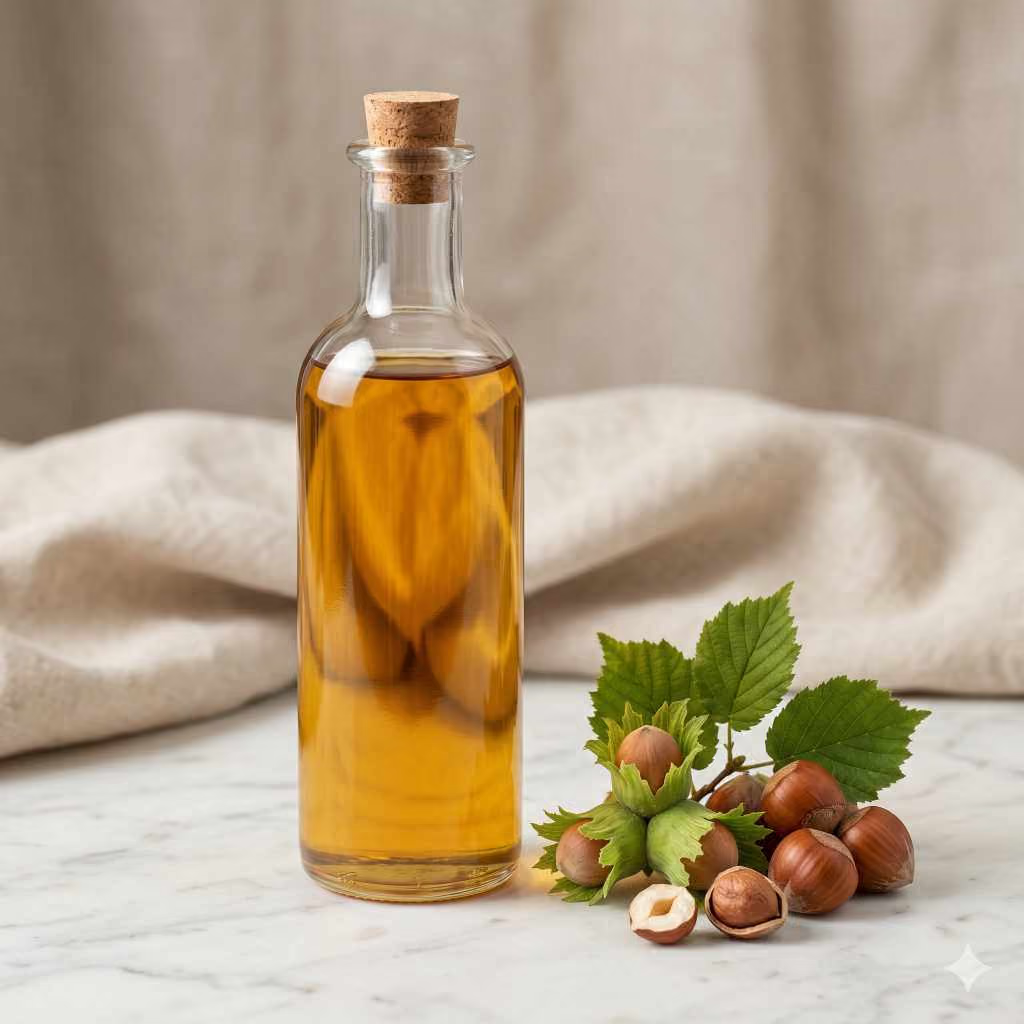
Hazelnut oil is a vegetable oil extracted from the kernel of the fruit of the hazelnut tree Corylus avellana L., also known as "Turkish almond oil" in some regions. The kernel contains 60-65% oil by weight, a very high proportion that makes hazelnut one of the best oil sources. It is extracted by cold pressing for the high-quality virgin oil that retains the distinctive hazelnut flavor, or by solvent extraction followed by refining for industrial uses.
The hazelnut tree is native to the Black Sea region and Asia Minor, where it has been cultivated for more than 5,000 years. Turkey leads global production by a wide margin (about 70% of world production), followed by Italy (especially the Piedmont region), Azerbaijan, Georgia, Chile, and the United States. The concentration of production in the Black Sea region makes global hazelnut prices very sensitive to climate fluctuations and Turkish output.
Hazelnut oil has a very high content of oleic acid (75-83% omega-9), followed by linoleic acid (10% omega-6) and palmitic acid (5-7%). The omega-6:omega-3 ratio is about 75:1. The oil is distinguished by its high content of vitamin E (higher than olive oil), phytosterols, and squalene. It has a rich, distinctive hazelnut flavor and a deep golden color, and good resistance to oxidation thanks to its content of natural antioxidants.
USDA-FAS data are not available for hazelnut oil production, as it is a specialty luxury oil. Most hazelnuts are consumed as nuts in sweets and chocolate, and a small portion is converted into oil. Global oil production is concentrated in Turkey, Italy, and France, and remains relatively small in volume and high in price. The oil is governed by Codex Alimentarius standard CXS 210-1999.
Hazelnut oil is used in food in salads, fine sauces, sweets, and baked goods, in preparing hazelnut-flavored biscuits and cakes, and as a luxury addition to Italian and French desserts. Industrially, it goes into high-end cosmetics and skin care for its moisturizing and antioxidant properties. It is also used in making fine chocolate (especially Italian) to enhance hazelnut flavor.
HS Code
1515
Oil percentage in the seed/fruit
60-65%
Oil yield/hectare
—
Omega-6:Omega-3
75:1
This oil conforms to the Codex Alimentarius standard for named vegetable oils, CXS 210-1999, which specifies fatty acid composition, and quality and authenticity criteria. The following cards present the specification for each variety of this oil.
Hazelnut oil is derived from the kernel of hazelnut fruit (Corylus avellana L.).
Oleic acid (Omega-9)
74.2-86.7
Linoleic acid (Omega-6)
5.2-18.7
Linolenic acid (Omega-3)
n.d.-0.6
Palmitic acid
4.2-8.9
Stearic acid
0.8-3.2
Lauric acid
n.d.
Erucic acid
n.d.-0.1
Total saturated
Total monounsaturated
Total polyunsaturated
Iodine value
81-95
Vitamin E (mg/kg)
200-600
Caproic acid (C6:0): n.d.
Caprylic acid (C8:0): n.d.
Capric acid (C10:0): n.d.
Lauric acid (C12:0): n.d.
Myristic acid (C14:0): n.d.-0.1
Palmitic acid (C16:0): 4.2-8.9
Palmitoleic acid (C16:1): n.d.-0.5
Margaric acid (C17:0): n.d.-0.1
Heptadecenoic acid (C17:1): n.d.-0.1
Stearic acid (C18:0): 0.8-3.2
Oleic acid / Omega-9 (C18:1): 74.2-86.7
Linoleic acid / Omega-6 (C18:2): 5.2-18.7
Linolenic acid / Omega-3 (C18:3): n.d.-0.6
Arachidic acid (C20:0): n.d.-0.3
Gadoleic acid (C20:1): n.d.-0.3
Eicosadienoic acid (C20:2): n.d.
Behenic acid (C22:0): n.d.-0.2
Erucic acid (C22:1): n.d.-0.1
Docosadienoic acid (C22:2): n.d.
Lignoceric acid (C24:0): n.d.
Nervonic acid (C24:1): n.d.-0.3
Sterols (% of total):
Cholesterol: n.d.-1.1
Brassicasterol: n.d.
Campesterol: 3.0-6.2
Stigmasterol: n.d.-2.0
Beta-sitosterol: 76.45-96.0
Delta-5-avenasterol: 1.0-5.1
Delta-7-stigmastenol: n.d.-4.3
Delta-7-avenasterol: n.d.-1.6
Other sterols: n.d.
Total sterols (mg/kg): 1200-1800
Tocopherols and tocotrienols (mg/kg):
Alpha-tocopherol: 100-420
Beta-tocopherol: 6-12
Gamma-tocopherol: 18-194
Delta-tocopherol: n.d.-10
Alpha-tocotrienol: n.d.
Gamma-tocotrienol: n.d.
Delta-tocotrienol: n.d.
Total tocopherols and tocotrienols (mg/kg): 200-600
Relative density: 0.898-0.915 (20°C)
Apparent density (g/mL): —
Refractive index: 1.468-1.473 (20°C) / 1.456-1.463 (40°C)
Saponification value: 188-198
Iodine value: 81-95
Unsaponifiable matter (g/kg): ≤ 15
Melting point: —
δ¹³C ratio: —