
Lang
Babassu oil: a vegetable oil extracted from the kernel of the babassu palm fruit. A comprehensive reference covering specifications, fatty acids, and uses.
Orbignya spp.
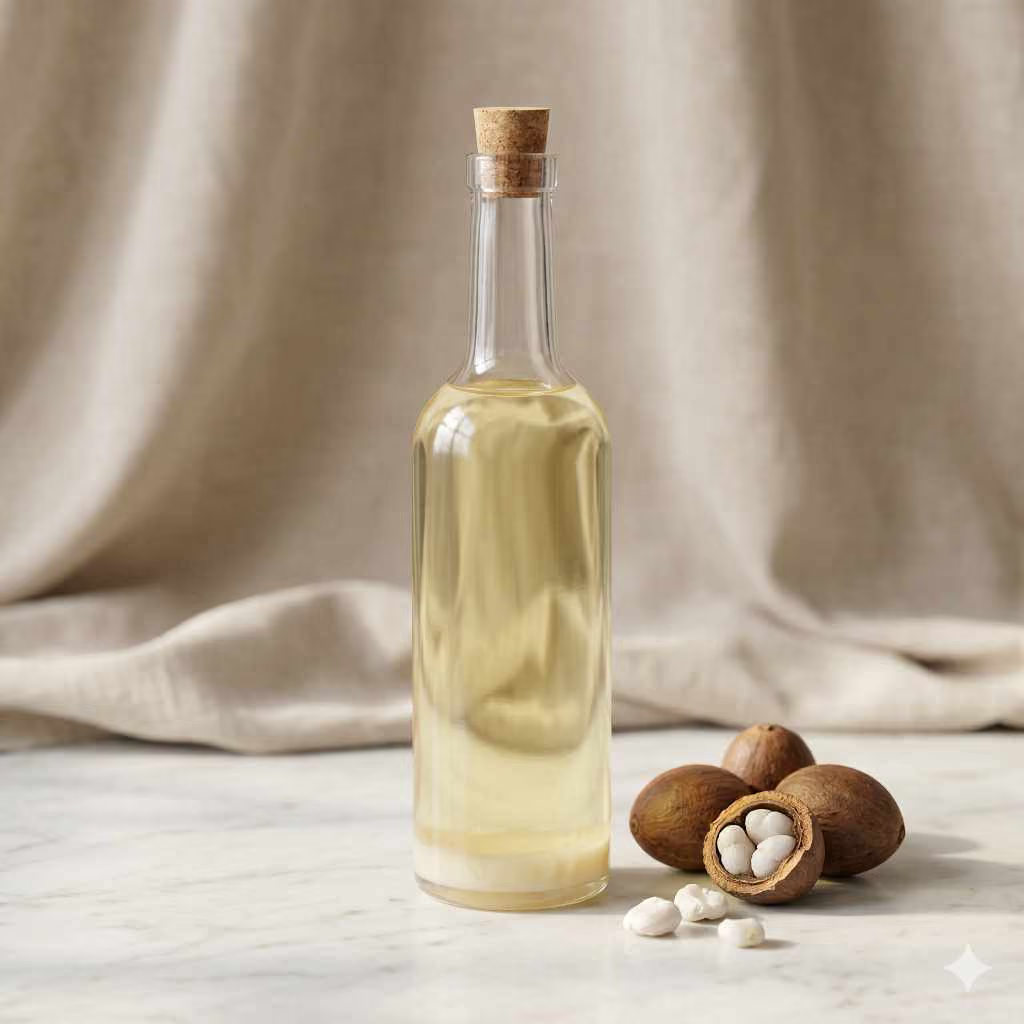
Babassu oil is a vegetable oil extracted from the kernel of the fruit of the babassu palm Orbignya spp. (most importantly Orbignya phalerata), a wild palm that grows naturally in the tropical forests of the Amazon in northeastern Brazil. The kernel contains 60-70% oil by weight, one of the highest proportions among palms. It is extracted by mechanical pressing followed by refining, and is considered a specialty vegetable oil of local economic importance.
Babassu trees inhabit the wild Brazilian forests in the states of Maranhão, Piauí, and Tocantins, where the fruit is traditionally gathered by women (known locally as "babassu breakers" — Quebradeiras de Coco), and it is a primary source of income for hundreds of thousands of families in northeastern Brazil. The tree is not cultivated commercially on a large scale, and the industry relies on wild gathering from the wild trees.
Babassu oil has a composition very similar to coconut oil: 50% lauric acid (C12:0), 20% myristic acid (C14:0), 11% palmitic acid, and 10% oleic acid. The predominance of medium-chain saturated acids (MCT) makes it solid at room temperature (melting at 22-26°C), resistant to oxidation, and possessing unique foaming properties. It does not contain essential fatty acids (omega-3 or omega-6) in significant amounts.
USDA-FAS data are not available for babassu oil production because it is a highly specialized oil with limited geographic production in Brazil. Annual Brazilian production ranges between 10-50 thousand tons and relies on wild gathering. The babassu industry is considered a model for sustainable development in the Amazon. The oil is governed by Codex Alimentarius standard CXS 210-1999.
Babassu oil is used in Brazil in food as a substitute for coconut oil in local cuisine, and in the making of baked goods and sweets. Industrially, it goes into the making of soap and detergents (for its ability to form abundant foam), cosmetics, shampoo, and skin creams, and into the making of industrial dairy fats and chocolate fillings as an alternative to palm kernel oil. It is also used in making candles and biofuel locally.
HS Code
1513
Oil percentage in the seed/fruit
60-70%
Oil yield/hectare
—
Omega-6:Omega-3
—
This oil conforms to the Codex Alimentarius standard for named vegetable oils, CXS 210-1999, which specifies fatty acid composition, and quality and authenticity criteria. The following cards present the specification for each variety of this oil.
Babassu oil is derived from the kernel of the fruit of several varieties of the palm Orbignya spp.
Oleic acid (Omega-9)
9.0-20.0
Linoleic acid (Omega-6)
1.4-6.6
Linolenic acid (Omega-3)
n.d.
Palmitic acid
5.2-11.0
Stearic acid
1.8-7.4
Lauric acid
40.0-55.0
Erucic acid
n.d.
Total saturated
Total monounsaturated
Total polyunsaturated
Iodine value
10-18
Vitamin E (mg/kg)
60-130
Caproic acid (C6:0): n.d.
Caprylic acid (C8:0): 2.6-7.3
Capric acid (C10:0): 1.2-7.6
Lauric acid (C12:0): 40.0-55.0
Myristic acid (C14:0): 11.0-27.0
Palmitic acid (C16:0): 5.2-11.0
Palmitoleic acid (C16:1): n.d.
Margaric acid (C17:0): n.d.
Heptadecenoic acid (C17:1): n.d.
Stearic acid (C18:0): 1.8-7.4
Oleic acid / Omega-9 (C18:1): 9.0-20.0
Linoleic acid / Omega-6 (C18:2): 1.4-6.6
Linolenic acid / Omega-3 (C18:3): n.d.
Arachidic acid (C20:0): n.d.
Gadoleic acid (C20:1): n.d.
Eicosadienoic acid (C20:2): n.d.
Behenic acid (C22:0): n.d.
Erucic acid (C22:1): n.d.
Docosadienoic acid (C22:2): n.d.
Lignoceric acid (C24:0): n.d.
Nervonic acid (C24:1): n.d.
Sterols (% of total):
Cholesterol: 1.2-1.7
Brassicasterol: n.d.-0.3
Campesterol: 17.7-18.7
Stigmasterol: 8.7-9.2
Beta-sitosterol: 48.2-53.9
Delta-5-avenasterol: 16.9-20.4
Delta-7-stigmastenol: n.d.
Delta-7-avenasterol: 0.4-1.0
Other sterols: n.d.
Total sterols (mg/kg): 500-800
Tocopherols and tocotrienols (mg/kg):
Alpha-tocopherol: n.d.
Beta-tocopherol: n.d.
Gamma-tocopherol: n.d.
Delta-tocopherol: n.d.
Alpha-tocotrienol: 25-46
Gamma-tocotrienol: 32-80
Delta-tocotrienol: 9-10
Total tocopherols and tocotrienols (mg/kg): 60-130
Relative density: 0.914-0.917 (25°C)
Apparent density (g/mL): —
Refractive index: 1.448-1.451
Saponification value: 245-256
Iodine value: 10-18
Unsaponifiable matter (g/kg): ≤ 12
Melting point: —
δ¹³C ratio: —