 Advertise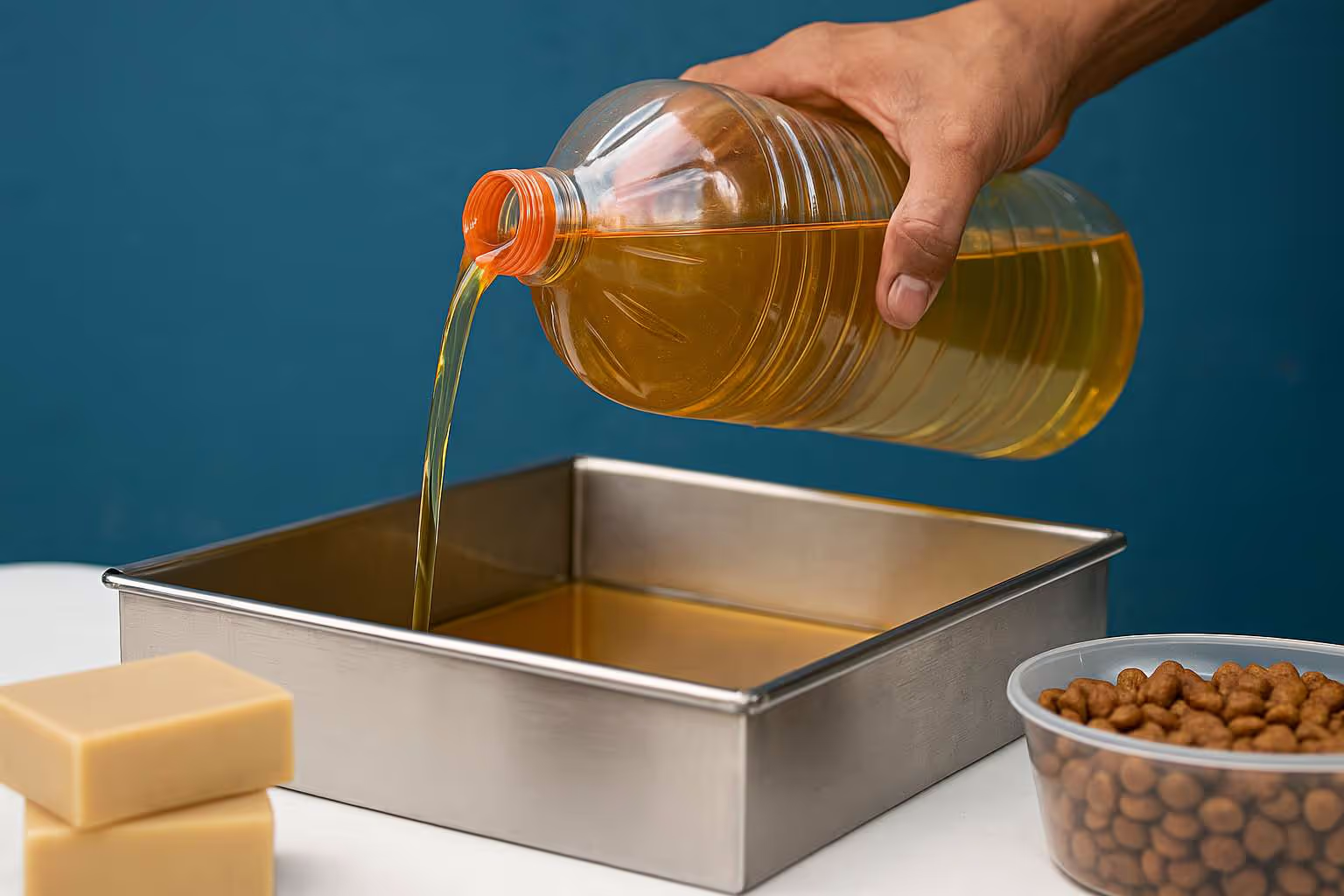
An environmental success story from Honduras, led by people under 30
At a time when the world faces mounting challenges around waste and pollution, a group of young people in Honduras decided to turn used cooking oil — one of the biggest sources of household and commercial pollution — into a green, sustainable business opportunity.
Hugo Daniel Chávez, a project manager at the non-governmental organisation Sustenta Honduras, saw used cooking oil as an opportunity to make useful products such as soap and dog food.
As Chávez explains:
"We have a lot of businesses and household practices that generate waste, so we're trying to transform this waste and give it a second life."
Across Latin America, millions of tonnes of cooking oil are consumed every year, used to fry popular foods such as chicken, plantain and potatoes. With the widespread habit of reusing oil multiple times — particularly in Honduras, which has a large black market for used cooking oil — health risks are rising due to toxic compounds that form through repeated heating.
When cooking oil is disposed of improperly, such as being poured down drains or dumped by roadsides, it causes serious environmental damage, including contamination of groundwater and freshwater supplies and damage to crops that entire local communities depend on.
In response to these challenges, Sustenta developed a model built on the circular economy, buying used oil from shops and restaurants at a price of between 2.50 and 3.50 lempiras per pound (£0.08 to £0.11), before processing it at a factory in the city of Comayagua to produce soap and dog food.
The oil is transformed through a chemical process known as saponification, in which the oil or fat is mixed with an alkaline substance to produce natural soap. A single bar of soap sells for 15 lempiras (£0.45), and the project generates monthly revenue of more than 106,000 lempiras (over £3,000) — before operating costs.
In May 2024, Sustenta signed a contract with Walmart's Mexico and Central America division, securing a steady supply of used oil and fat from all Walmart-affiliated businesses.
As chief executive Ricardo Pineda explains:
"We needed a reliable supply so we could scale up production — otherwise we'd quickly run short of oil because of the black market."
He adds:
"We hope to eventually sell our products — such as soap and dog food — inside Walmart stores themselves, so that partners can see the value of recycled waste and embrace the concept of the circular economy."
The project won the 2023 Youth4Climate Energy Challenge award, worth $20,000, as part of a global initiative led by the Italian government and the United Nations Development Programme. It has also received support from the Dutch embassy, which described the project as "an innovative, workable solution that creates green jobs and empowers women and young people."
The Sustenta team is made up entirely of people under 30, with an average age of 23.
As Pineda says:
"We started as a group that was tired of the traditional ways big institutions deal with environmental issues. We don't just want to talk — we want to create real solutions."
He adds:
"Next to our factory there's a water treatment plant, and we use the water they can't treat in our cooling system — an integrated model for making the best use of resources."
While some environmental movements in the region rely on direct confrontation with mining and energy projects and anti-corruption campaigns, project coordinator Paola Acevedo believes both types of environmental activism are complementary.
"We focus on solutions, while others fight on the front lines. Both approaches matter."
Summary:
The Sustenta project stands as an inspiring model for how waste can be turned into genuine economic opportunity, demonstrating young people's ability to drive environmental and economic change through innovation and teamwork.