 Advertise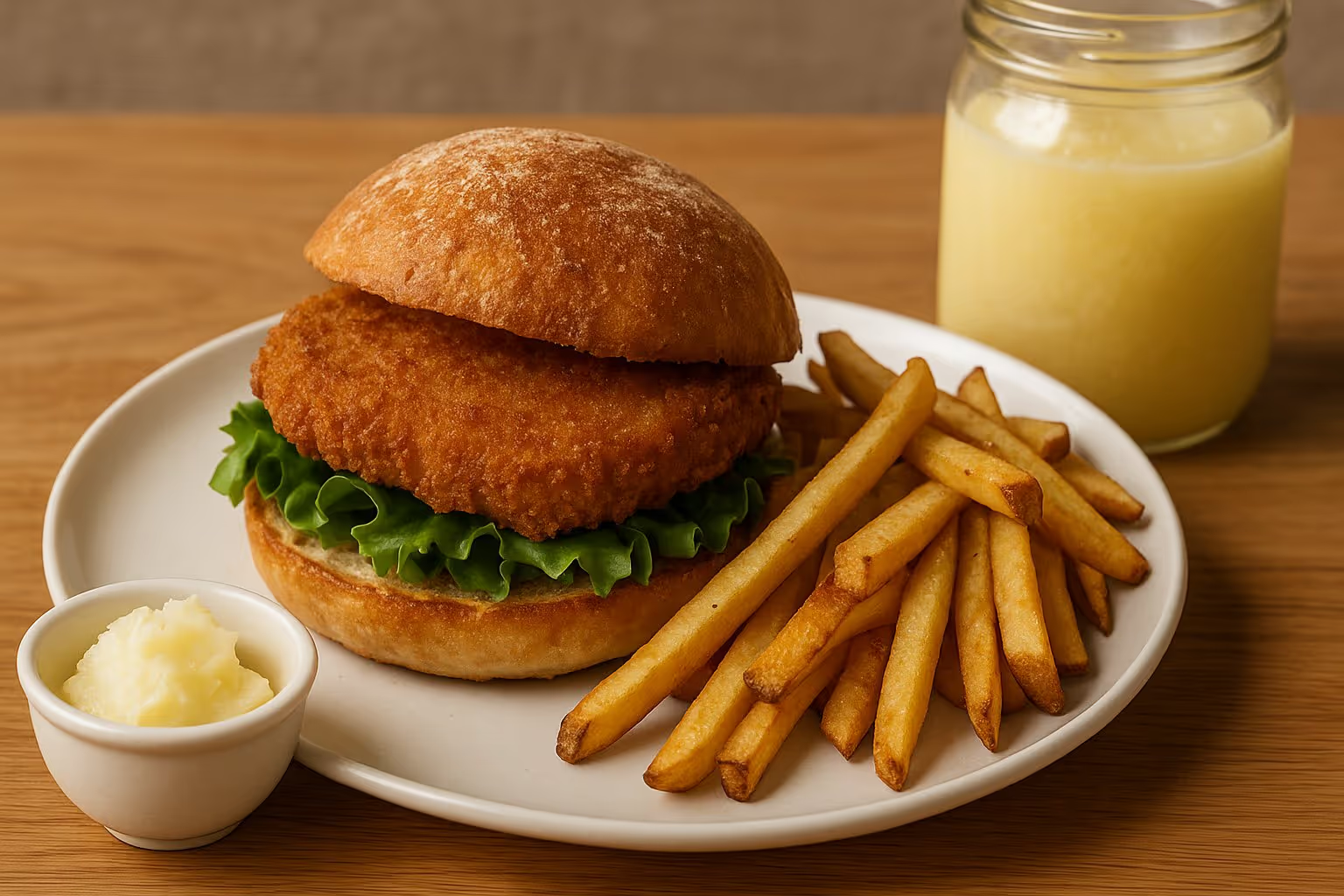
More restaurants are announcing that they are moving away from seed oils. In this political moment, what does that really mean?
By Jaya Saxena, a reporter at Eater.com and editor of The Best American Food and Travel Writing series.
When Peter Phillips was planning his new sandwich shop, Masi, in Astoria, Queens, with his partner, he wanted the restaurant to feel homemade in both form and content. Bread is baked daily, potatoes are cut in-house, and everything is fried in beef tallow.
Phillips said the choice felt like a natural extension of what they were making, with an emphasis on natural ingredients. That is why it made sense for the restaurant’s promotional message to focus on this approach: on Instagram, they note that the dough is natural, frying is done in beef tallow, and there are “no seed oils.”
A year ago, the phrase “seed oils” was not widely understood by many consumers. It refers to oils such as canola, corn, sunflower, and others extracted from plant seeds. These are often the neutral oils used in recipes because they do not add a strong flavor.
Although some oils such as sunflower oil can be cold-pressed, most commercial oils sold in stores are produced using heat and chemical solvents.
As with the low-fat trend of the 1990s or the carbohydrate concerns of the early 2000s, seed oils have become a major food anxiety. Websites and apps now help users find seed-oil-free restaurants, and some US states have considered labeling rules related to seed oils.
Concern about seed oils is linked to their high levels of omega-6 fatty acids, which critics say may contribute to inflammation. Consumption of these fatty acids increased in the United States during the twentieth century, particularly with the spread of soybean and canola oils from the 1980s onward.
Phillips said using beef tallow is not necessarily about claiming a health benefit, but about flavor and a sense of naturalness. For him, the phrase “seed-oil-free” communicates that the restaurant does not use cheap industrial ingredients.
In the broader political context, however, “seed-oil-free” has become a signal for an entire wellness lifestyle, though meanings differ from person to person. Some may read it as a health choice, while others may connect it with political movements such as Make America Healthy Again.
Organizations such as the American Heart Association and Harvard Medical School do not view omega-6 as a major danger, but some chefs and restaurant owners have chosen to abandon seed oils based on personal health experiences.
In some restaurants, this approach is integrated into a broader message about organic ingredients and high-quality sourcing.
The movement gained political momentum after public comments by Robert F. Kennedy Jr., who argued that seed oils are among the most harmful ingredients in the food supply and promoted a return to beef tallow for frying.
Seed oils have also become linked with broader wellness and conspiracy narratives. Even when chefs deny any political motivation, it can be difficult to separate cooking choices from political signals when these terms become symbols of wider movements.
Ultimately, personal cooking choices are not the issue. The problem begins when such choices become ideological symbols that deepen division instead of improving the food system for everyone.