 Advertise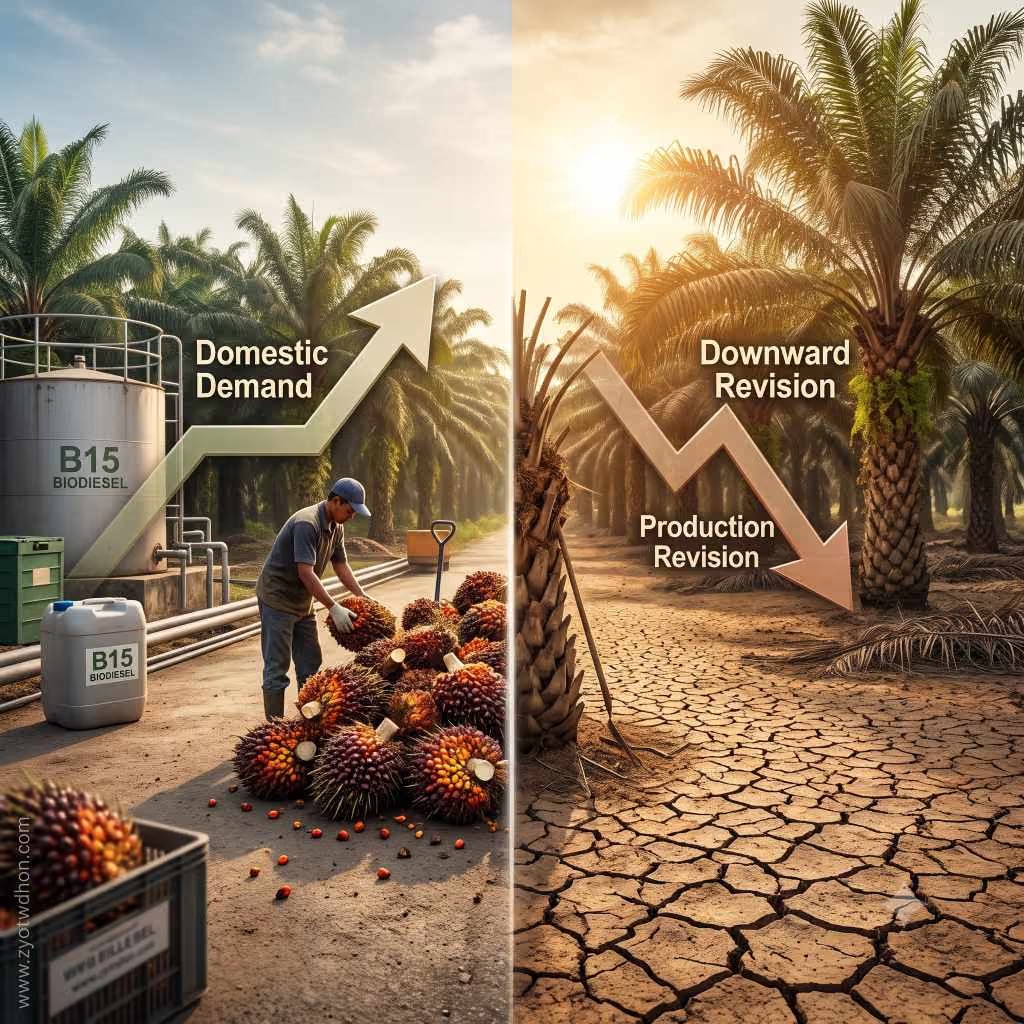
The United States Department of Agriculture (USDA) has adjusted its production forecast downward for Malaysia’s palm oil output during the 2026/27 marketing year, bringing the projected figure to 19.7 million tons. This reduction is primarily attributed to the anticipated onset of the El Niño weather phenomenon, which is expected to introduce prolonged dry climatic conditions stretching from June 2026 through the majority of 2027.
According to analysis provided by the USDA, these dry weather conditions are projected to negatively impact the yields of fresh fruit bunches (FFB). Because the overall productivity of oil palm trees typically demonstrates a delayed reaction to moisture-induced stress lasting several months, experts anticipate that the most significant drop in output will be observed during the third and fourth quarters of the specified marketing year.
Conversely, the USDA chose to increase its production estimate for the preceding 2025/26 marketing year, elevating it to 20 million tons. This marks an increase of 300 thousand tons over the previous baseline forecast, driven entirely by stronger-than-anticipated production volumes recorded during the opening eight months of that period.
Furthermore, the total oil palm planted area for the 2026/27 marketing year is now estimated to reach 5.16 million hectares, showing a slight increase from the 5.15 million hectares recorded the year before. This particular figure aligns closely with the data published by the Malaysian Palm Oil Board (MPOB) and remains effectively unaltered from the prior projections released by the USDA.
Despite the forecasted contraction in overall output, Malaysia's internal consumption of palm oil is expected to witness upward growth. The USDA estimates that domestic utilization will rise to 4.59 million tons during the 2026/27 marketing year, reflecting a substantial annual increase of 330 thousand tons. The primary catalyst behind this rising demand is the gradual implementation and rollout of the B15 biodiesel program, which officially commenced on June 1, 2026. Data sourced from the MPOB indicates that shifting from the B10 standard to B12 elevates annual palm oil demand by approximately 130 thousand tons, while the subsequent expansion to the B15 mandate contributes an additional 204 thousand tons to national consumption.
Source: UkrAgroConsult