 Advertise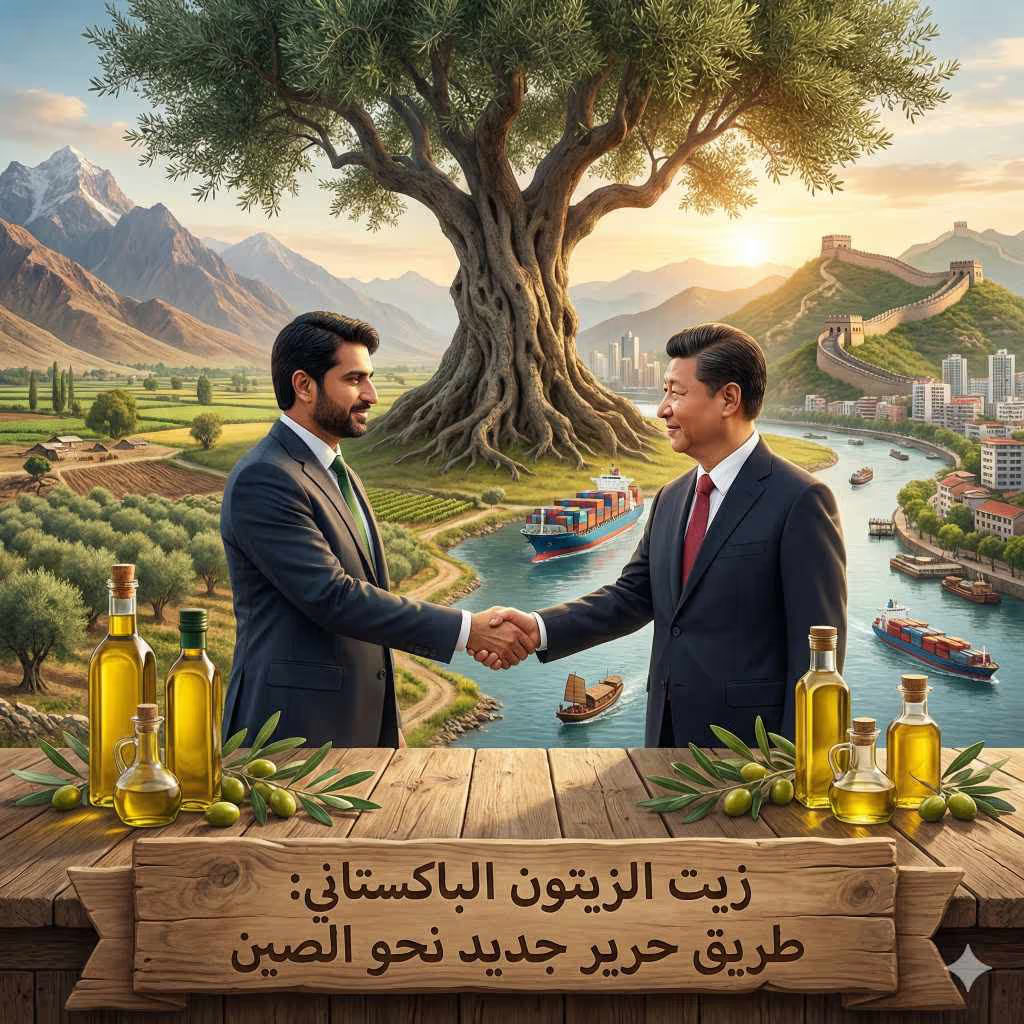
Pakistan's fledgling olive oil industry is stepping up efforts to attract Chinese partners, with local entrepreneurs pitching large-scale joint ventures that could create thousands of jobs and open a new export channel to one of the world's largest food markets.
Shaukat Rasool, founder of the internationally award-winning brand Loralai Olives, told Wealth Pakistan that his company is holding advanced talks to sign memorandums of understanding with Chinese firms, as Islamabad and Beijing deepen cooperation in high-value agribusiness.
"The recent Pakistan-China Agricultural Investment Conference was a great opportunity," Rasool said. "We are proposing to set up three major model olive farms spanning 3,000 acres, with total investment of around $20 million."
He explained that the proposed projects would create more than 3,000 direct jobs and, within six to seven years, produce olive oil worth between $18 million and $20 million annually, positioning Pakistan as a new competitive supplier in the global market.
Rasool noted that Chinese companies are a natural partner for Pakistan's olive ambitions, citing China's heavy reliance on imports and its growing, health-conscious middle class. China imports olive oil worth more than $300 million every year.
"Olive oil is medicine for a healthy life," he added. "China is the most populous country in the world, and people there have become increasingly health- and weight-conscious. Pakistan is perfectly positioned to meet their demand for olive oil."
He also said Pakistan offers clear commercial advantages for Chinese investors, including lower land costs and the logistics infrastructure developed under the China-Pakistan Economic Corridor (CPEC). "It's an ideal, mutually beneficial opportunity for Chinese companies to invest here," Rasool said.
Loralai Olives already has close ties with China through its supply chain: Rasool said all of the company's packaging materials and bottles are imported from China, while future cooperation could extend to olive oil extraction machinery, bottling plants and harvesting equipment.
Pakistani olive oil has already won international recognition. Loralai Olives drew global attention last year after winning a Silver Award at the New York International Olive Oil Competition (NYIOOC), beating out more than 1,200 brands from traditional olive-producing countries.
The NYIOOC is the world's largest and most prestigious competition for extra virgin olive oils, with awards based on quality, flavour, aroma and overall excellence. Rasool confirmed the company plans to compete internationally again this year.
While exports remain limited — concentrated mainly in Gulf markets — domestic demand is growing rapidly. Pakistan currently imports olive oil worth more than $12 million a year, but consumers are increasingly switching to locally produced brands, driven by international acclaim and growing awareness of olive oil's health benefits.
Industrial activity is also expanding notably, with more than 80 olive-related start-ups emerging across farming, processing and marketing, reflecting strong investor interest and long-term potential.
Olives can be grown across most of Pakistan, particularly in Balochistan, Khyber Pakhtunkhwa, and parts of Punjab and Sindh, including arid regions such as Cholistan and southern Punjab.
"Olives represent a fully integrated value chain," Rasool said. "It's not just about the oil — tea, cosmetics, medicines and many other value-added products can be produced as well."
For Rasool, international recognition was a turning point. "When we started, imported olive oil dominated the market and nobody wanted to buy our product. So we decided that global recognition was essential. When Pakistan made history at an international competition, it wasn't just the government that was proud — ordinary Pakistanis felt proud of the olive oil we produce."
With Chinese investors now showing interest in joint ventures, Pakistan's olive sector is positioning itself to become a new pillar of Pakistan-China economic cooperation, bringing together agriculture, health and trade in a high-growth partnership.
Source: cpecinfo