 Advertise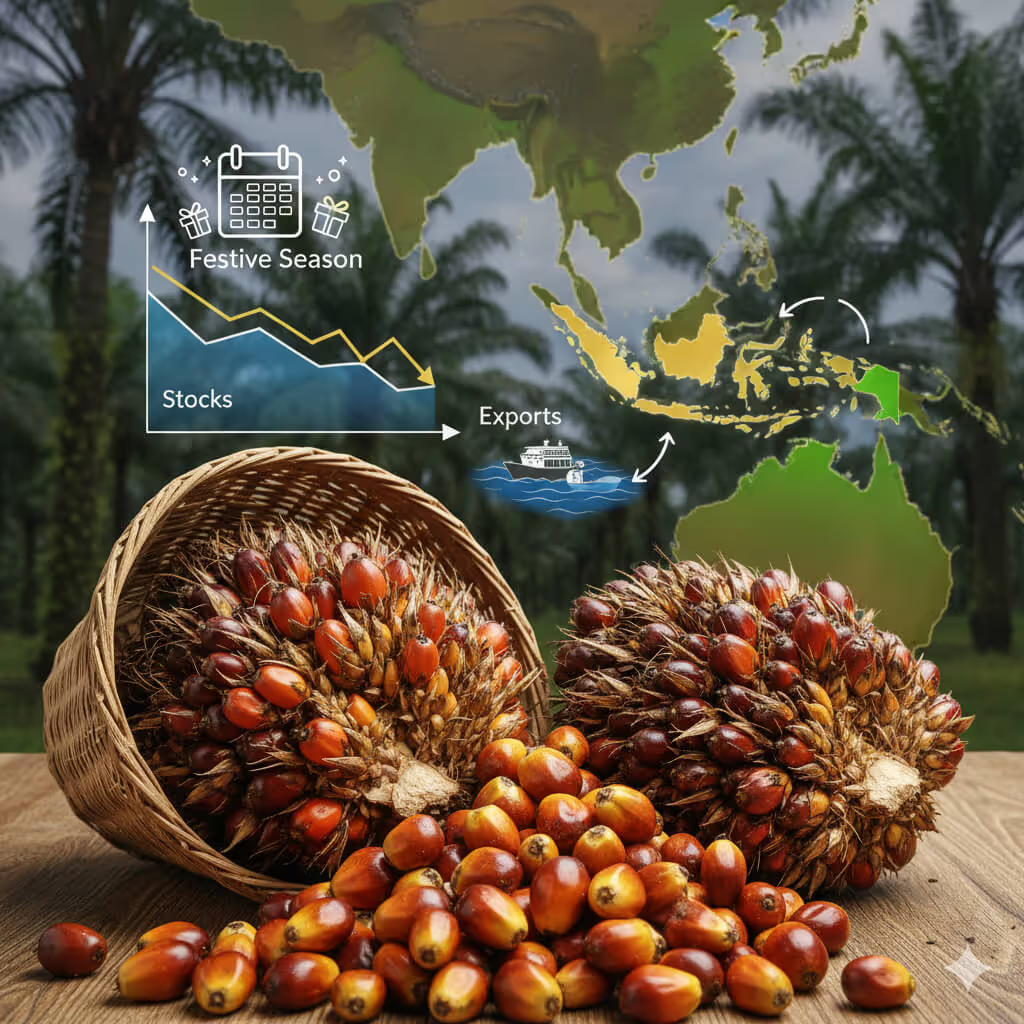
Malaysia’s palm oil stocks are expected to fall in the coming months and end the year at around 1.7 million metric tonnes, as a seasonal slowdown in production coincides with higher exports to meet festive-season demand, the industry regulator said.
The expected decline in stocks at the world’s second-largest palm oil producer after Indonesia could support benchmark futures, which have recently come under pressure from cheaper supplies of rival soybean oil.
Ahmad Parveez Ghulam Kadir, director-general of the Malaysian Palm Oil Board (MPOB), said on Monday: “Production is gradually slowing, and we expect exports to rise in the coming months because of festive-season demand.”
Malaysian palm oil production usually declines toward the end of the year after a strong third quarter.
MPOB data showed that Malaysia’s palm oil stocks rose by 4.18% month on month in August to 2.2 million tonnes, their highest level since December 2023.
Palm oil prices have come under pressure in recent weeks as a sharp decline in soybean oil prices made palm oil relatively more expensive. This prompted India, the largest palm oil buyer, to increase soybean oil purchases for the coming months.
Despite this, Kadir said palm oil prices are likely to remain stable in the coming months because of uncertainty over Indonesian supply.
He added that exports from Indonesia could be affected by the proposed implementation of the B50 biodiesel program and the government’s seizure of oil palm plantations.
Indonesia currently mandates 40% palm oil content in biodiesel and plans to raise it to 50% starting next year.
Earlier this month, Indonesia handed 674,178 hectares, or 1.7 million acres, of oil palm plantations to state-owned company Agrinas Palma Nusantara, bringing the total area transferred to the company to 1.5 million hectares, or 3.7 million acres.
Kadir said oil palm replanting in Malaysia is progressing slowly. To accelerate it, MPOB has urged the government to raise allocations to RM280 million for 2026, up from RM100 million this year.