 Advertise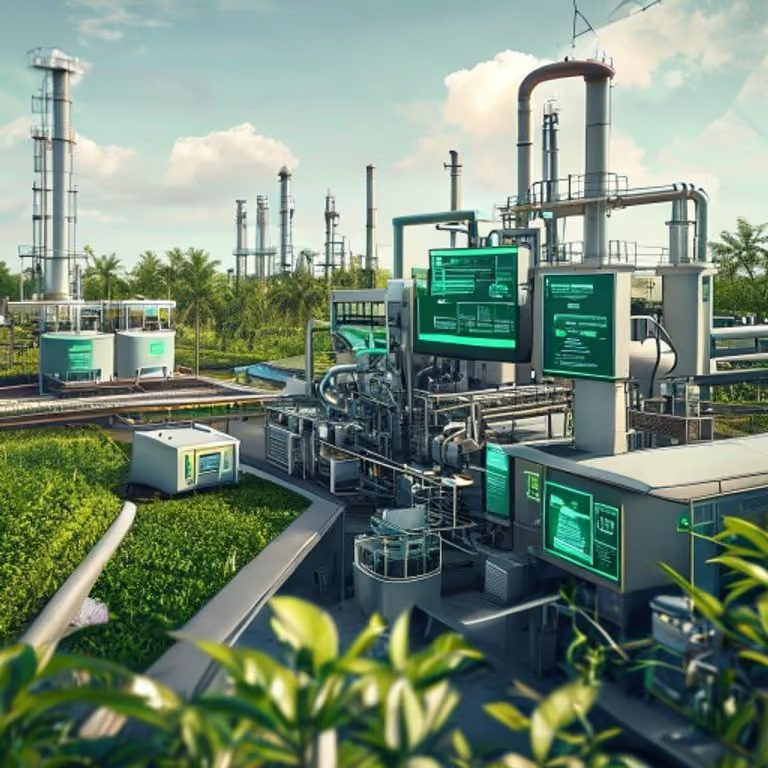
MELAKA – The Malaysian Plantation and Commodities Ministry is intensifying its efforts to integrate advanced digital technology, automation, artificial intelligence, and low-carbon solutions within the palm oil milling sector. This strategic push aims to significantly enhance productivity and reduce the industry's dependency on manual labor.
Datuk Razali Mohamad, Deputy Secretary-General for Plantation and Commodities, stated that this initiative will be executed through strengthened collaboration. Key partners include the Malaysian Palm Oil Board (MPOB), various regulatory agencies, and industry associations, notably the Southern Peninsula Palm Oil Millers Association (SPPOMA).
Mohamad emphasized that the palm oil milling sector must not only strive for improved operational efficiency but also rigorously adhere to increasingly stringent demands across several critical areas. These include sustainability, environmental protection, occupational safety, traceability, and compliance with international market standards, such as the European Union Deforestation Regulation (EUDR). He further noted that the ministry is committed to fully leveraging the practical experience and technical expertise of industry players in shaping policy formulation and refining the existing regulatory framework.
Speaking yesterday at SPPOMA's 42nd anniversary dinner in Ayer Keroh, where he represented Plantation and Commodities Minister Datuk Seri Dr Noraini Ahmad, Mohamad encouraged SPPOMA to utilize the annual industry dialogue sessions organized by the ministry as a platform to convey industry issues and proposals, as reported by Bernama.
Furthermore, Mohamad highlighted the ministry's positive reception of the industry's ongoing advancements in several innovative areas. These include methane capture, biogas power generation, BioCNG production, improved oil recovery techniques, process automation, and the development of value-added products derived from palm oil biomass. He affirmed that these innovations are pivotal for strengthening the circular economy, reducing carbon emissions, and bolstering the nation's energy security.
Source: The Star