 Advertise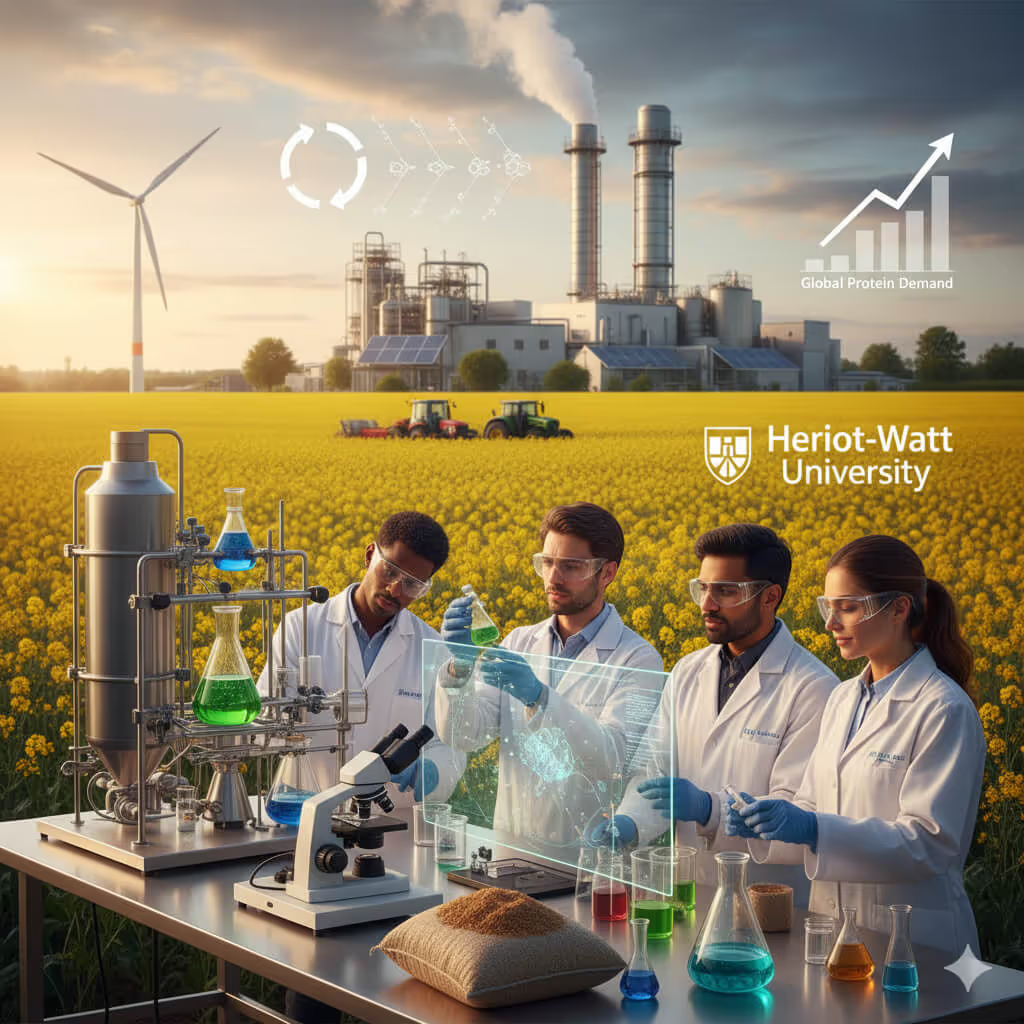
Researchers have developed a new method to extract high-quality protein from rapeseed by-products, saying the discovery could help meet rising global demand for protein.
Using environmentally friendly solvents, scientists at Heriot-Watt University have found a way to extract protein from the crop.
This means rapeseed meal, a by-product of rapeseed oil production currently used as animal feed, could become far more valuable and potentially provide protein for human consumption.
Global demand for protein is expected to double by 2050, driven by urbanisation and rising incomes in emerging economies.
Professor Stephen Euston, of Heriot-Watt University in Edinburgh, said: "Livestock farming produces high levels of greenhouse gases, creating a serious environmental challenge as demand for animal protein continues to grow."
He added: "We need alternative protein sources that don't cost the earth."
Professor Euston and his colleagues said rapeseed meal could be upgraded to unlock its potential.
He explained: "Rapeseed meal has been an underutilised resource, and converting it for human consumption would make a lot of sense – there's plenty of it available in Scotland, where farmers use rapeseed as a rotation crop, and the oil market has grown."
Professor Euston added: "It contains 28 to 45% protein, depending on the processing method, and most of this nutrient is not currently used for human consumption."
The team investigated whether natural deep eutectic solvents could be used to extract protein from rapeseed meal.
Rapeseed is often processed into oil.
Using computer simulations, they found that certain formulations were able to significantly boost protein yield.
However, obstacles remain before these techniques can be commercialised.
Professor Euston said: "Further research is needed into optimising both ingredient selection and species concentration to increase the yield and purity of the protein extracts."
He concluded: "But this is a step towards a more sustainable food system, where agricultural waste can be converted for human consumption."
The research was published in the journal Food Hydrocolloids.
Source: STV News