
Lang
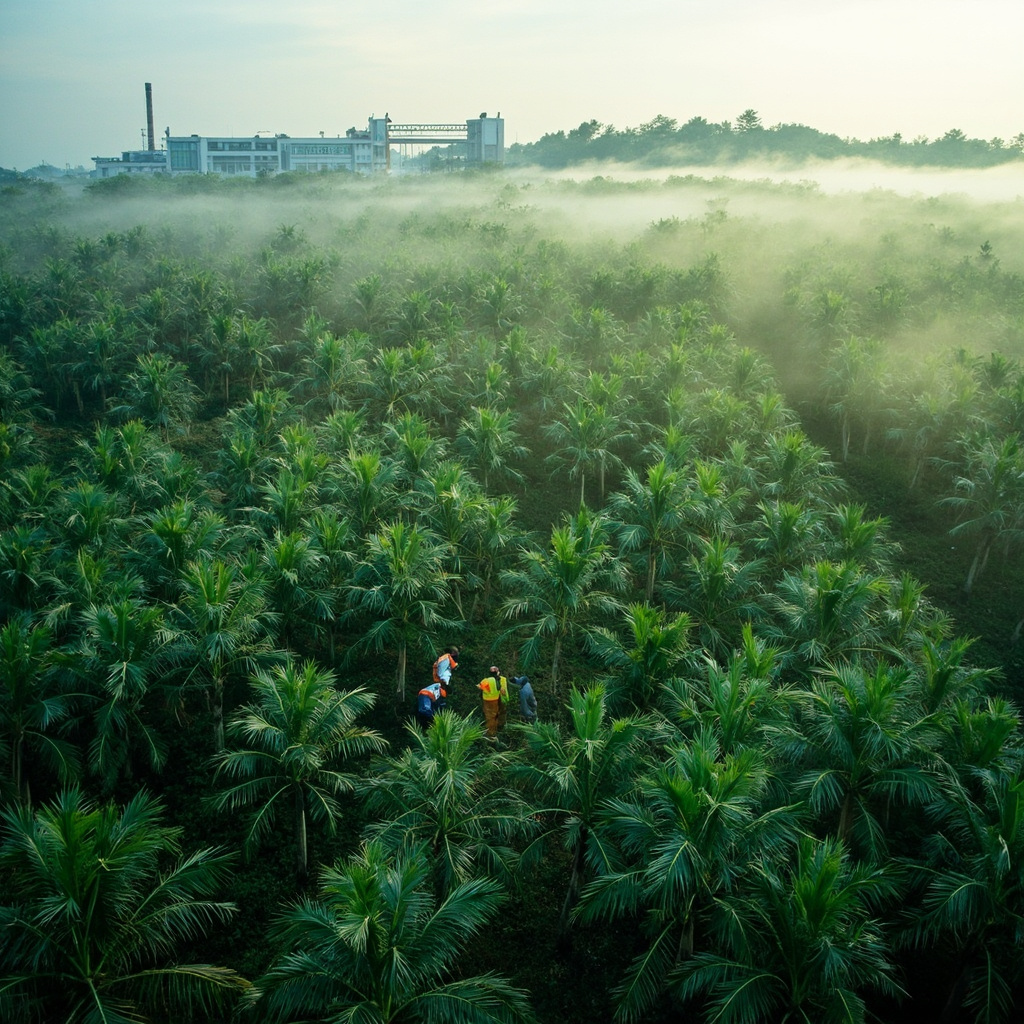
Johor Plantations Group (JPG), listed on Bursa Malaysia under the ticker KL: JPG, has marked a milestone in its corporate journey by securing its first-ever accolade at The Edge Malaysia ESG Awards 2026, winning in the 'Emerging Leader' category.
Reflecting on the recognition, the group said it takes the greatest pride in delivering on its sustainability commitments. In 2024, JPG issued the world's first sustainability-linked sukuk in the plantation sector, valued at RM1.3 billion. The group has also driven tangible environmental progress, achieving a 53% reduction in carbon emissions intensity against its 2012 baseline, reaching 72% renewable energy adoption, and attaining 100% plantation traceability.
Building on this momentum, JPG launched a RM200 million Series 2 Sukuk Wakalah-IMTN in August 2025. The issuance attracted a bid-to-cover ratio of close to five times and a final yield of 3.70%. The proceeds are channelled directly into shariah-compliant capital expenditure for the group's Integrated Sustainable Palm Oil Complex (iSPOC).
According to JPG Managing Director Mohd Faris Adli Shukery, the group's biggest challenge has been maintaining consistent environmental, social, and governance (ESG) standards across an increasingly complex supply chain. The share of externally sourced fresh fruit bunches (FFB) climbed to 28.66% in 2025, which compelled smallholders to meet stricter regulatory requirements, most notably the European Union Deforestation Regulation (EUDR). This emerged as one of JPG's principal ESG challenges.
Rather than excluding non-compliant suppliers, JPG chose to strengthen its smallholders and company-owned estates across traceability, mapping, and sustainable practices. The group achieved 100% traceability to plantation level by expanding polygon mapping and deploying satellite monitoring to enforce its No Deforestation, No Peat, and No Exploitation commitments.
Through its Smallholder Inclusion Programme (SIP), 390 smallholders obtained Roundtable on Sustainable Palm Oil (RSPO) certification by June 2026, supporting the group's 100% deforestation-free supply chain.
'Our experience affirms that supply chain integrity is best achieved through capacity-building, supporting smallholders to meet higher standards so they remain part of a traceable and competitive value chain, with certified market access and fair returns,' said Mohd Faris.
Looking ahead, the managing director cautioned that ESG adoption in Malaysia is likely to remain fragmented unless responsibility and investment are genuinely shared across the ecosystem. He called on the government and regulators to deliver clear, consistent, sector-specific policies, practical incentives, and aligned reporting requirements, particularly as Malaysia prepares to adopt International Financial Reporting Standards S1 and S2.
Financial institutions and investors, he added, can play a decisive role by directing capital towards credible, measurable sustainability plans, and by helping fund capital-intensive circular infrastructure. Consumers, meanwhile, should continue to support certified and traceable products.
Mohd Faris also urged the industry to co-invest in smallholder enablement. 'Without subsidised certification pathways, digital tools, and technical advisory, smaller players risk being squeezed out by mandates such as the EUDR, an outcome that would weaken the entire value chain rather than strengthen it,' he warned.
ESG has become central to JPG as the group stands at an inflection point, transitioning from a predominantly upstream producer into a fully integrated palm oil company. Going forward, Mohd Faris said JPG will focus on its decarbonisation roadmap and maintain its traceability standards with the aim of achieving full RSPO certification.
The next phase of the group's decarbonisation journey will centre on bringing an additional biomethane plant at Tereh in Kluang, Johor, into operation, while advancing the iSPOC in Sedili, Kota Tinggi, Johor, into a circular and fully integrated complex.
Mohd Faris added that JPG plans to launch a dedicated digital platform for its Smallholder Inclusion Programme to streamline compliance, with the ambition of certifying 100 additional RSPO smallholders by 2027 and lifting yields by 20% by 2028.
Source: The Edge Malaysia