 Advertise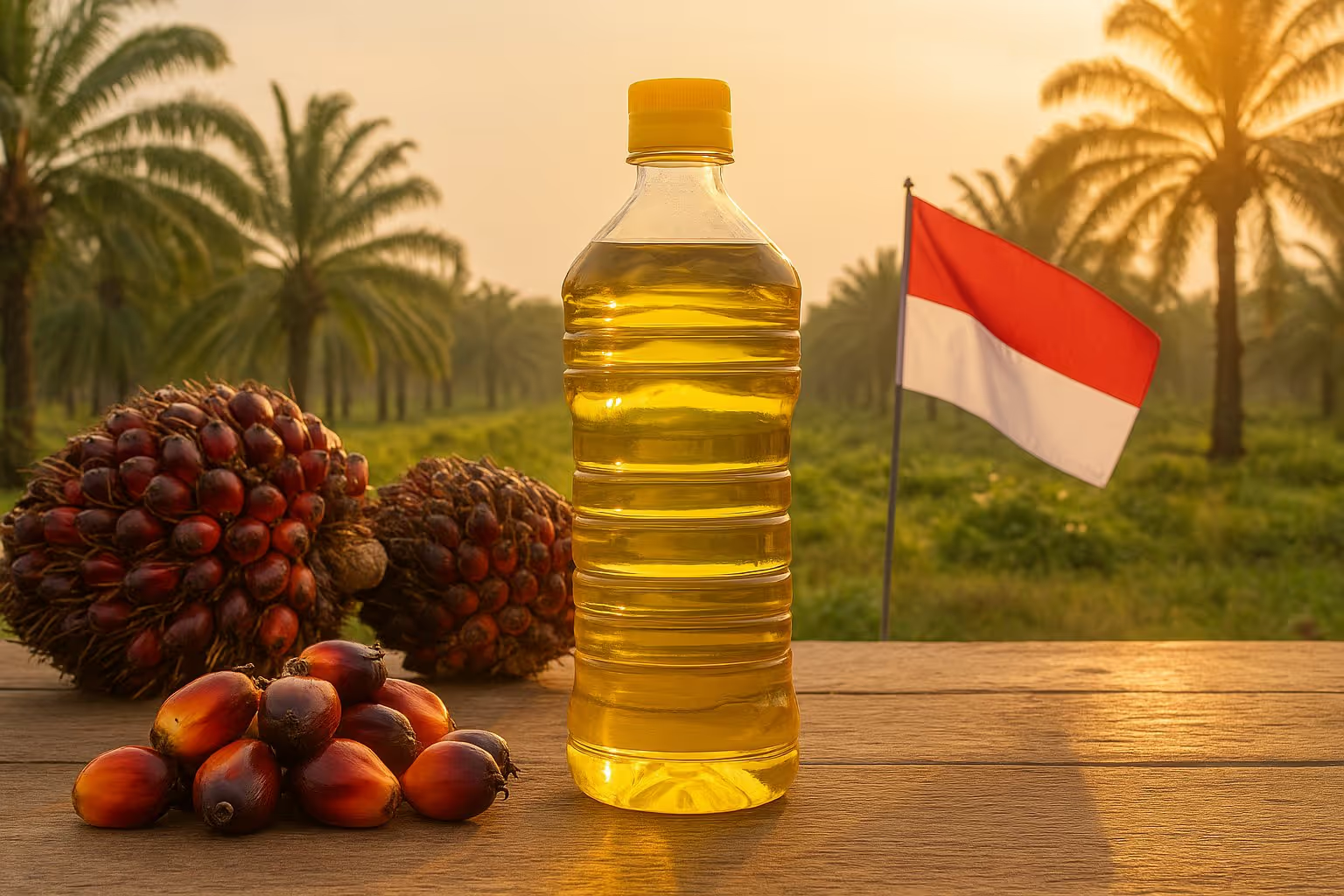
Crude palm oil (CPO) and its derivatives are expected to remain among Indonesia's top export revenue earners in the second half of 2025, driven by a series of positive developments — from the Indonesia-EU Comprehensive Economic Partnership Agreement (CEPA) to rising global prices.
Data from Indonesia's Central Statistics Agency (BPS) show that exports of crude palm oil and its derivatives reached 11 million tonnes in the first half of 2025, up 2.69% from 10.72 million tonnes in the same period last year. Export value jumped 24.81% to US$11.43 billion, compared with US$9.16 billion a year earlier, as the average global price of crude palm oil rose 22.21% to US$1,053.03 per tonne from US$861.65 per tonne.
Crude palm oil and its derivatives accounted for 8.91% of Indonesia's total non-oil and gas exports in the first half of 2025, ranking behind steel (10.74%) and coal (9.32%).
Eddy Martono, chairman of the Indonesian Palm Oil Association (GAPKI), said palm oil remains a key pillar of Indonesia's trade performance. He added: "Palm oil will continue to support non-oil and gas exports in the second half of this year, backed by Donald Trump's tariff cuts and the CEPA agreement with the EU."
However, Eddy noted that this positive sentiment does not necessarily translate into higher export volumes, since demand also depends on the performance of other vegetable oils. He said: "In 2024, palm oil prices were higher than sunflower oil and soybean oil, which pushed some importers to switch to other vegetable oils."
Tungkot Sipayung, executive director of the Palm Oil Industry Strategic Policy Institute (PASPI), said global crude palm oil prices have already surpassed US$1,000 per tonne this year, with the January–August average nearing that level — well above 2024 levels.
He added: "By the end of the year, global crude palm oil prices are likely to move towards US$1,100–1,200 per tonne." While he did not forecast a specific rise in export volumes for the second half, he stressed that higher prices would lead to a significant increase in the value of crude palm oil exports and its derivatives.
He also explained that Trump's tariff cuts and the EU-Indonesia CEPA agreement are among the most important positive factors for future exports: "These agreements open up markets for Indonesian palm oil. With free trade in place, even if the United States imposes a 19% tariff, exports to Europe could rise, with some of that volume re-exported to the US."
Tungkot noted that palm oil exports do not necessarily have to be shipped directly from Indonesia, as they can be re-exported via other countries. At the same time, domestic production is performing better than expected, which, combined with wider market access, boosts the chances of sustained strong export performance through the end of the year.
Source: Jakarta Globe