 Advertise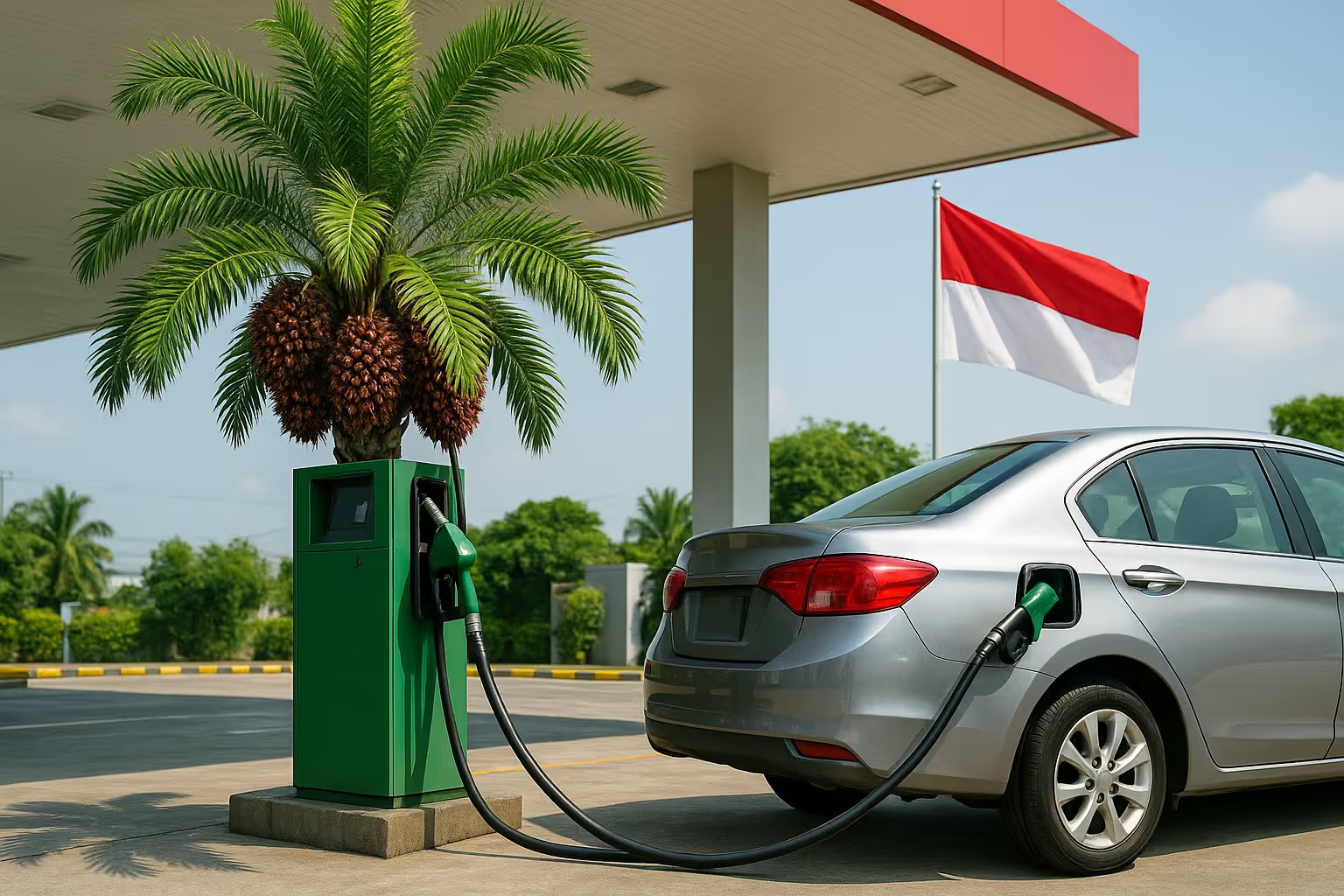
Indonesia has indicated it will push ahead with boosting its mandatory biodiesel blending programme at some point later in 2026, according to an energy ministry official, a move likely to ease immediate concerns over tight palm oil supplies in the world's largest producer of the commodity in recent years.
During road trials held in Deng, Central Java province, on 26 October 2022, different fuel samples containing 40% palm oil-based biodiesel were used to test whether vehicles could run efficiently on the blend, particularly in highland areas. The success of these trials could pave the way for diverting more domestic supply towards biofuel production and reducing exports.
Eniya Listiani Dewi, Director General of New and Renewable Energy, said preparations were continuing to raise the blending rate from 40% to 50% after January, but noted that safety tests, which take six to eight months, had not yet been scheduled.
Indonesia has long sought to position itself as a regional leader in blending palm oil with diesel to produce biofuel, aiming to strengthen energy security and reduce reliance on energy imports. However, palm oil production has stagnated in recent years due to ageing trees and slow replanting.
The country currently runs its "B40" programme, which mandates blending 40% palm oil-based biodiesel with diesel fuel sold at filling stations. This is expected to cut Indonesia's exports of the widely used oil by 7% to 27.5 million tonnes this year, according to the Indonesian Palm Oil Association.
Raising the programme to "B50" would require domestic biodiesel producers to add 4 million kilolitres of production capacity to the current 20 million kilolitres, according to the Indonesian Biofuel Producers Association. Dewi confirmed that some plants had already begun adding this capacity this year.
The government will also need to conduct road tests to confirm that vehicles can safely run on the higher biofuel blend, she added, noting that a timeline for these tests has not yet been set.
Source: Reuters