 Advertise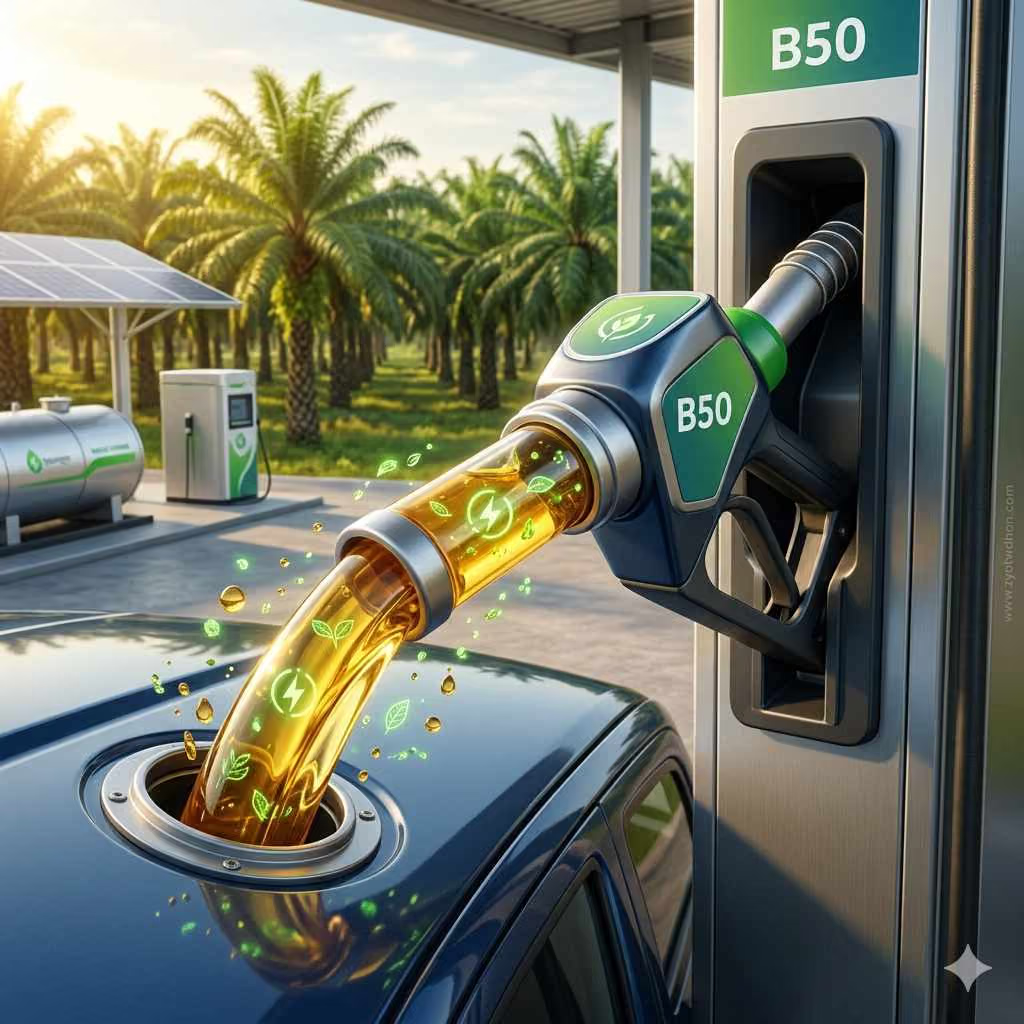
According to an economic expert, Indonesia is well-positioned to become a global leader in the implementation of high-blend biodiesel as it prepares to launch its B50 program in July 2026. This strategic initiative is expected to bolster the nation's energy autonomy and significantly minimize its reliance on foreign diesel imports.
Hendry Cahyono, an economist based at Surabaya State University (Unesa), highlighted that the upcoming mandatory adoption of B50—a fuel mixture consisting of 50 percent palm oil-based biodiesel—will place Indonesia far ahead of other nations currently utilizing lower-grade biofuel blends. Giving examples of regional practices, Cahyono pointed out that neighboring Malaysia enforces biodiesel blends between B10 and B20, while Thailand incorporates an approximate B20 standard. Meanwhile, various European nations generally limit their biodiesel integration to around 7 to 10 percent.
The economist elaborated on the economic advantages of the transition, stating that B50 adoption can drastically lower Indonesia’s energy import expenditures. By cutting down on imported conventional diesel, the policy is likely to enhance the country's overall trade balance and positively influence the domestic currency, potentially leading to an appreciation of the rupiah exchange rate. Government projections indicate that a successful B50 deployment could completely eliminate diesel imports, yielding foreign exchange savings of up to Rp157 trillion.
Cahyono deemed this ambitious financial target achievable, provided the Indonesian government has accurately measured and secured the raw material supplies, the manufacturing capacity of the local biodiesel sector, and the necessary financial frameworks. He added that the nationwide B50 mandate serves as a cornerstone project for bolstering national energy security, since it drives the consumption of locally produced fuels over external energy sources. Furthermore, if the industrial sectors successfully integrate B50 into their operations, the initiative could serve as a model blueprint for energy independence.
The implementation of this policy is also forecast to catalyze domestic industrial growth. It is expected to draw fresh capital investments, maximize the operational utilization of biodiesel manufacturing facilities, and trigger a positive economic multiplier effect across the palm oil plantation and processing industries.
Nonetheless, Cahyono emphasized that environmental sustainability must not be overlooked. He advised that the expanding demand for palm oil feeds must be managed via enhanced agricultural productivity and technological innovations rather than the expansion of plantation areas, which risks causing deforestation and worsening the country's carbon debt.
Source: ANTARA News