 Advertise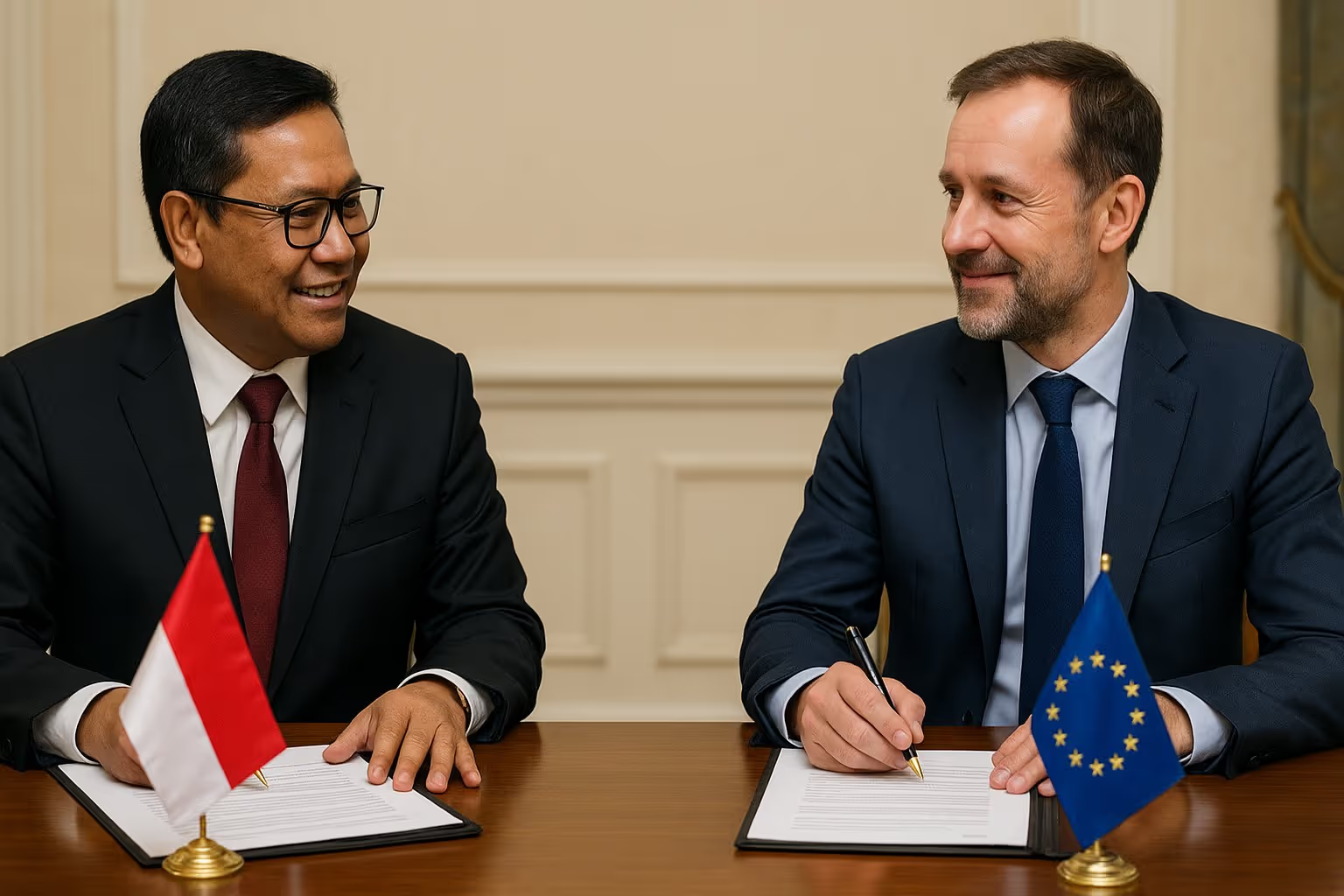
The Star reported that Indonesia's classification as a "standard risk" country under the EU Deforestation Regulation (EUDR) could present an opportunity for the country to secure a long-awaited free trade agreement with the European Union.
Businesses have viewed the classification as a positive signal that could boost exports of palm oil, coffee, cocoa and other commodities, according to a report published on 28 May.
Indonesian Trade Minister Budi Santoso said the EU's move came during the final round of talks on the Indonesia-EU Comprehensive Economic Partnership Agreement, which is expected to be concluded by the middle of this year, following negotiations that began in 2016.
He was quoted on 21 May as saying: "We are in the final stage, and the EU appears to have become more flexible as we near completion."
Indonesia is the world's largest palm oil producer and had voiced concerns over the EU law, which bans imports of commodities linked to deforestation after 2020 and requires traceability and geolocation data for regulated goods — rules that will apply to large companies from the end of this year.
According to a Reuters report published on 23 May, Indonesia was placed in the "standard risk" category, while only Russia, Belarus, North Korea and Myanmar were placed in the "high risk" category.
The EUDR's classification system aims to rank countries as low, standard or high risk in order to curb the EU's contribution to global deforestation, with lighter scrutiny applied to low-risk countries.
Environmental groups have criticised the decision to designate only four countries as "high risk", with a coalition of 40 NGOs warning the European Commission, in an open letter, that "jumping to conclusions risks politicising the classification process," according to the report.
While business groups welcomed Indonesia's exclusion from the "high risk" list, many parties said a "low risk" classification would have made due diligence easier and lowered export costs, particularly for smallholder producers, according to The Star.
Source: The Star