
Lang
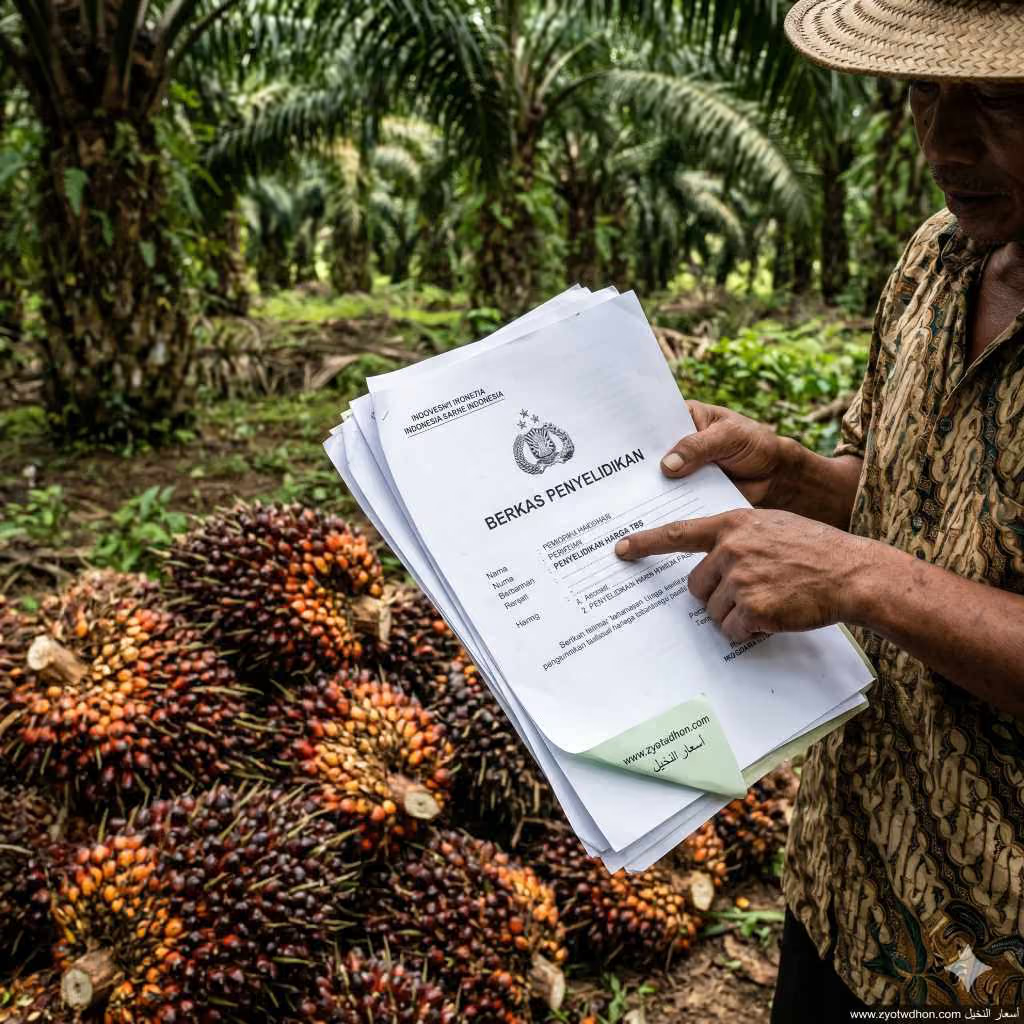
Indonesia's Agriculture Minister has directed the national police to open investigations into hundreds of palm oil companies accused of refusing to purchase fresh fruit bunches from smallholder farmers at the government-mandated minimum price, in a significant escalation of the government's intervention in the sector.
The directive follows weeks of complaints from farmer associations across key palm oil growing provinces, who reported that many large and medium-sized mills had either suspended purchases entirely or were offering prices well below the government-set floor price, citing uncertainty over the new export policy framework.
The Agriculture Minister stated that the refusal of mills to purchase farmers' produce at the mandated price constituted a violation of Indonesian agricultural law and would not be tolerated, emphasizing that protecting the income and livelihoods of the country's estimated 2.7 million smallholder palm oil farmers was a top government priority.
Industry representatives responded cautiously, arguing that mills had been forced to curtail purchases due to the genuine uncertainty over export rights and pricing under the new DSI framework, rather than any deliberate intent to harm farmers. They called on the government to urgently clarify the operational details of the new export system to allow mills to resume normal purchasing operations.
The situation has highlighted the complex and potentially contradictory pressures bearing down on the Indonesian palm oil sector, as the government simultaneously seeks to assert greater control over exports while also protecting the interests of millions of smallholder farmers whose livelihoods depend on stable and fair purchase prices for their produce.