 Advertise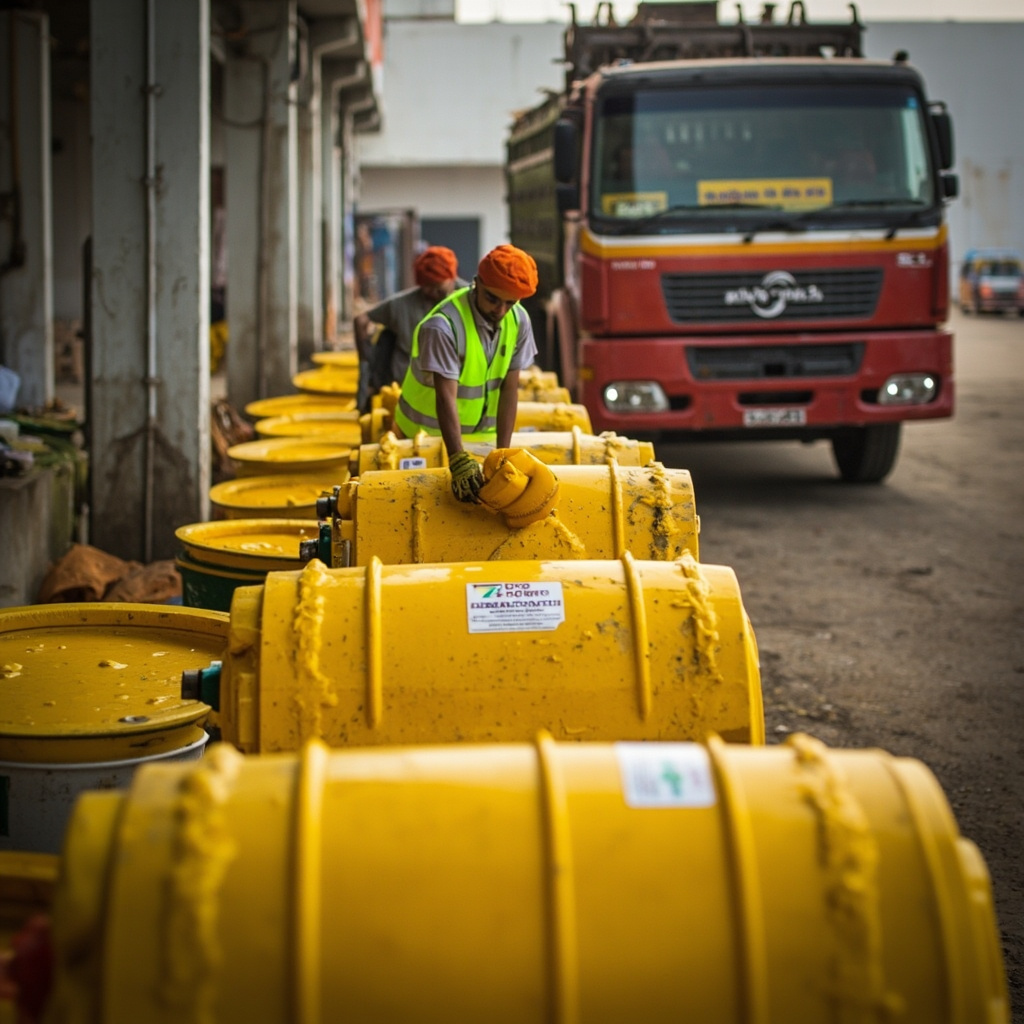
India's push to scale Sustainable Aviation Fuel (SAF) faces a critical domestic feedstock challenge, with approximately 94% of the country's Used Cooking Oil (UCO) supply remaining outside formal collection networks, according to industry analysis.
India generates an estimated 1.8 to 2.6 million tonnes of UCO annually, yet only between 110,000 and 156,000 tonnes—roughly 6%—is formally collected, leaving the overwhelming majority of this potential feedstock untapped. The country consumes approximately 29 to 30 million tonnes of edible oil each year, creating a substantial UCO resource base for SAF production.
The feedstock gap comes at a pivotal moment for global aviation. As the International Civil Aviation Organization (ICAO) strengthens the framework for aviation decarbonization, the Carbon Offsetting and Reduction Scheme for International Aviation (CORSIA) is set to enter its mandatory phase from 1 January 2027. SAF is emerging as a central pathway for international aviation to achieve measurable emissions reductions, supported by national mandates, global frameworks and industry action.
India's Ministry of Civil Aviation has recently reviewed national preparedness for SAF adoption and CORSIA compliance, reaffirming the government's commitment to building a robust SAF ecosystem. The review emphasized production, supply-chain development, certification, traceability and carbon accounting—signaling readiness to accelerate SAF deployment ahead of the 2027 deadline.
ICAO has set a global aspirational target for SAF and other cleaner aviation energies to deliver a 5% reduction in international aviation CO2 emissions by 2030. India has aligned with this through indicative SAF blending targets for international flights of 1% in 2027, 2% in 2028, and 5% by 2030. A 5% blend is estimated to require approximately 0.4 to 0.5 million tonnes of SAF annually. Based on ICAO lifecycle values, UCO-based HEFA (Hydroprocessed Esters and Fatty Acids) SAF can deliver an estimated 84% lifecycle emissions reduction compared with conventional jet fuel. At a 5% blend by 2030, India could achieve an estimated 4.2% lifecycle CO2 emissions reduction versus conventional jet fuel, assuming the SAF is produced through the UCO-based HEFA pathway.
However, UCO alone cannot meet India's SAF requirements. Diversification of feedstocks—including crop residues, bagasse, municipal waste, waste fats and oils, sustainable oilseeds and Power-to-Liquid (PtL) pathways—will be essential to support farmer incomes and broaden supply. Agricultural-residue SAF could generate an estimated USD 50+ million for approximately 300,000 farmers, supported by initiatives such as the Pradhan Mantri JI-VAN Yojana.
Beyond aviation, greater formalization of UCO collection could deliver wider economic and social benefits. Policy assessments indicate potential annual import savings of INR 20,000 to 30,000 crore, industry value creation of INR 10,000 to 20,000 crore, and possible public-health savings of INR 50,000 to 80,000 crore, subject to further techno-economic analysis.
The SAF Association has proposed a Used Cooking Oil Extended Producer Responsibility (EPR) framework to relevant government stakeholders. The framework covers mandatory collection targets, EPR certificates linked to verified recovery, registration of collectors and aggregators, digital traceability, and recognition of the last-mile collection workforce. The objective is to establish a transparent and traceable supply chain extending from kitchen and farm to refinery and certified SAF production.
'India is not short of feedstock; the opportunity is to build systems that can responsibly collect, verify and bring these resources into the SAF value chain. Feedstock mobilization deserves the same attention as technology, finance and offtake,' said Rohit Kumar, Secretary General of the SAF Association and CMAI.
He added: 'India's SAF programme will depend not only on technology, but on building credible and traceable feedstock supply chains. Connecting the kitchen and farm to the refinery can unlock important domestic resources for India's SAF transition.'
Byufuel currently collects UCO from food businesses across more than 70 Indian cities and supplies it to refineries through certified supply chains supported by digital chain-of-custody systems.
These issues will be central to discussions at the 2nd India SAF Conclave & Awards 2026, scheduled for 28-29 September 2026 at Bharat Mandapam, New Delhi, under the theme 'Powering the SAF Transition Together.' The event will convene participants from more than 25 countries, over 1,000 delegates, and 100+ speakers, including policymakers, airlines, SAF producers, refiners, technology providers, feedstock companies, investors, and international institutions. Discussions will cover feedstock, technology, sustainability, offtake, finance, CORSIA, certification, and international partnerships.
The SAF Association (SAFA) is India's leading not-for-profit industry body dedicated exclusively to advancing the Sustainable Aviation Fuel ecosystem through policy advocacy, industry collaboration, international partnerships, technology development, market development, and capacity building.
Source: malaysiasun.com