 Advertise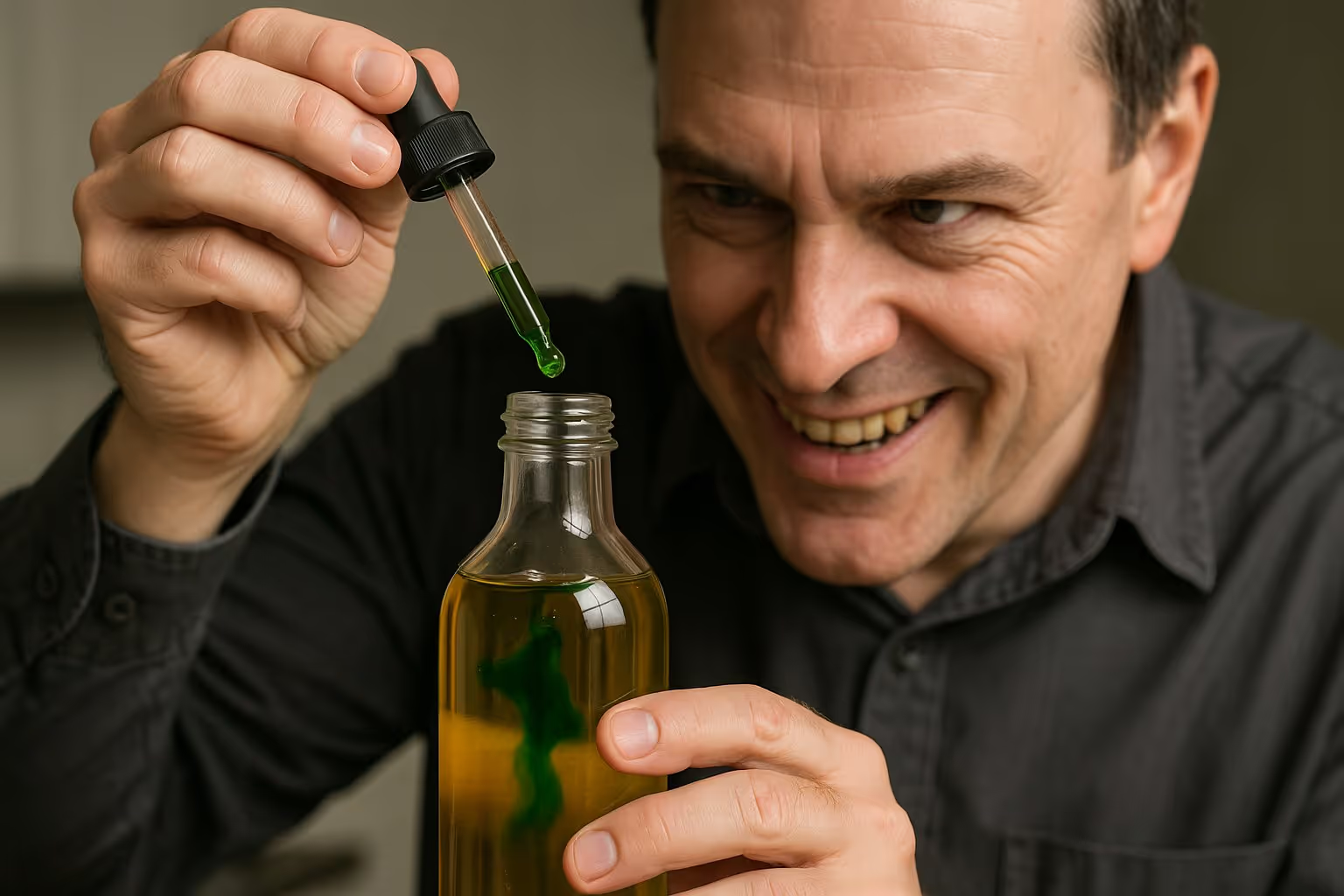
Why are olive oil fraud cases increasing, and can this dangerous trend be stopped?
Food fraud is rising globally. The 2025 Food Fraud Vulnerability Index showed a notable increase in criminal activity across different sectors.
While some products have avoided this criminal attention, others — especially olive oil — have become major targets.
Olive oil fraud cases continue to increase, with several reports emerging over the past year alone.
Recently, Portuguese authorities announced the seizure of more than 16,000 liters of cooking oils falsely marketed as olive oil, along with 82,000 fake labels.
Italian police also confirmed that they dismantled a criminal network that mixed low-quality oils with chemicals and sold them as extra virgin olive oil.
Such practices put consumer safety at risk and undermine protection systems such as PDO and PGI.
In a joint investigation involving Europol and 29 European countries targeting counterfeit or substandard food and drink, authorities dismantled 11 criminal networks, issued 104 arrest warrants, and identified 278 people for referral to judicial authorities.
The case, known as Operation OPSON XIII, included olive oil fraud, fake tuna, and expired food with falsified dates.
The sharp rise in olive oil prices has made the product attractive to fraudsters, increasing cases across Europe and globally.
Arsen Khachatouriants, chief executive of Arsenio, said a half-liter bottle of olive oil can sell for €20 to €70.
Fraudsters see this as an opportunity because simply adding an “olive oil” or “extra virgin olive oil” label can generate high profits.
Olive oil fraud is also difficult to detect.
Lorena Nelkin, head of health research at WellnessPulse, said food fraud methods have become more sophisticated, with some altering products at the molecular level, requiring expensive or currently unavailable technologies for detection.
Even simple forms of adulteration can pass unnoticed if the product looks normal.
For example, clear oils such as seed oils may be colored with chlorophyll for green tones and carotenoids for yellow tones to resemble olive oil.
Concerns are increasing over the potential health risks of adulterated olive oils, especially when chemicals are added to modify taste and color.
Italian health protection officials say food fraud is not only a commercial issue, but a serious risk to public health when products do not match what is stated on the label.
The olive oil sector, working with law-enforcement authorities, is increasing efforts to combat fraud.
In 2022, the European Union introduced new rules for checking olive oil compliance, along with methods for analysis.
Each member state is required to carry out a minimum number of annual checks covering labels and category classification.
The number of checks depends on consumption and export data.
Extra virgin olive oil is the most frequently inspected category because it accounts for the largest share of retail sales in Europe.
However, the presence of adulterated olive oil in the market shows that the system is still not fully secure and that additional measures are needed.
With olive oil prices at record levels and supplies at their lowest point in a decade, specialists warn that this type of fraud may continue to grow.
Source: FoodNavigator