 Advertise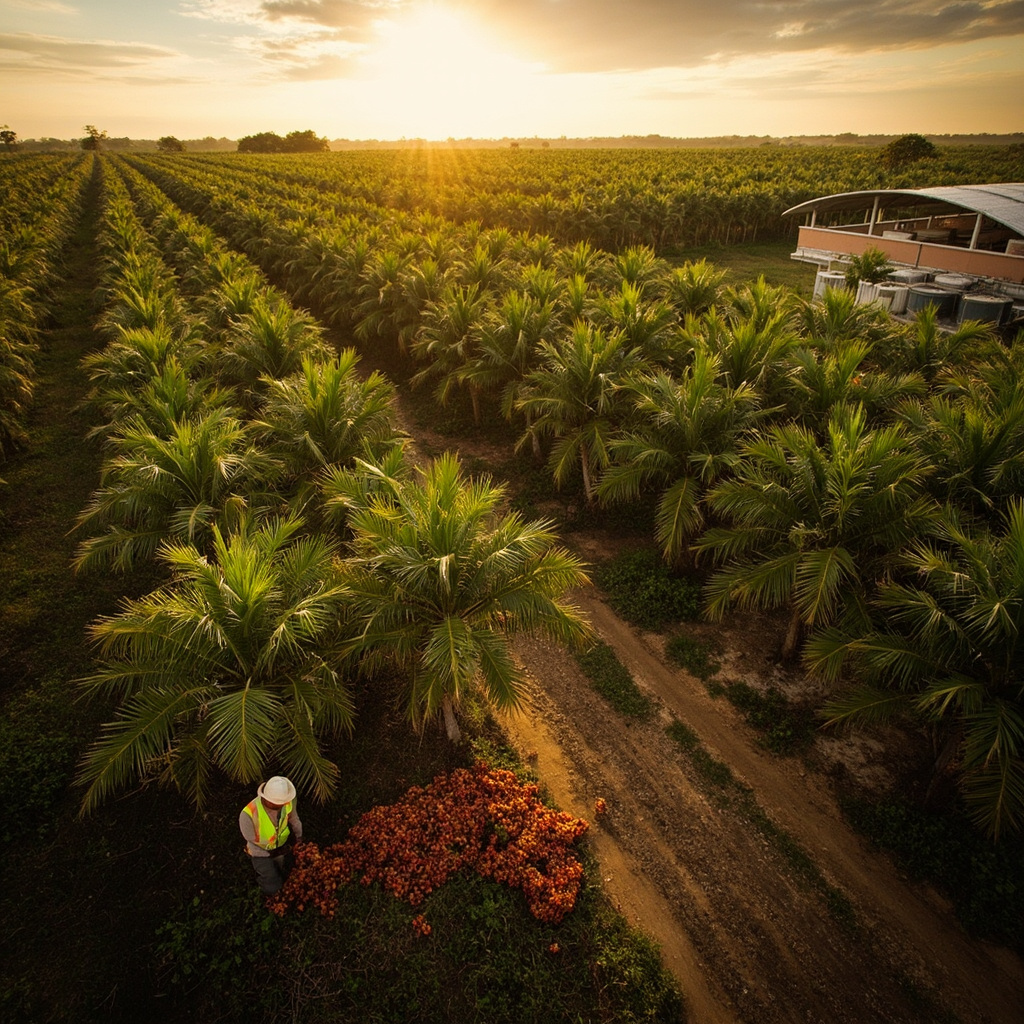
Shares of First Resources Ltd (ISIN: SG1W35938974) traded steadily on the Singapore Exchange as of September 20, 2026, with investors turning their attention to the company's most recently reported financial performance and the broader price environment for agricultural commodities. In the absence of a company-specific catalyst over the most recent trading sessions, market focus has shifted to the latest earnings backdrop and benchmark palm oil dynamics.
First Resources, headquartered in Singapore, derives the bulk of its revenue from the cultivation of oil palm and the production of crude palm oil and related products. Historical financial reports covering the company's latest reported fiscal year show revenue in the hundreds of millions of US dollars, with profitability closely tied to benchmark palm oil prices and operating efficiency across its plantations and mills. Revenue in that period grew compared with the prior year, supported by higher average selling prices and a recovery in planted-area yields relative to the previous reporting cycle.
In the most recent half-year or quarterly results available before September 20, 2026, the company's operating profit and net profit were significantly shaped by movements in palm oil futures and by foreign exchange rates. The latest reported margin profile shows an improvement in the operating margin compared with historical periods when palm oil prices were lower, illustrating the sensitivity of earnings to commodity cycles. Historical comparisons indicate that double-digit percentage increases in average realized palm oil prices have been accompanied by strong percentage growth in segment revenue and EBITDA, with cost control across harvesting and milling helping to preserve margins even as input costs rise.
The earnings outlook for First Resources remains tightly linked to global palm oil demand, regulatory developments on sustainability, and weather patterns influencing yields in Indonesia and other key production regions. Investors tracking the stock into September 20, 2026 are paying particular attention to how management handles replanting programmes and sustainability certification, given the direct impact of these factors on realized prices and on access to major consumer markets. When benchmark palm oil prices trade near the upper end of their historical range, the company typically generates stronger cash flow, which can support dividend distributions, debt reduction, or expansion capex.
Against this backdrop, analysts and portfolio managers continue to scrutinize the company's leverage metrics, including net debt to EBITDA, alongside equity measures such as return on equity over the latest reported fiscal year. Historically, periods in which net debt to EBITDA has trended lower and return on equity has improved have tended to coincide with higher valuation multiples for the stock. The latest available data prior to September 20, 2026 points to a balance sheet geared to the commodity cycle but managed to avoid excessive leverage, with management aiming to keep debt at a moderate multiple of cash earnings.
As of September 20, 2026, First Resources shares trade in Singapore dollars on their primary Singapore Exchange listing, with the price reflecting the company's exposure to palm oil prices and regional demand dynamics. Over the trailing 52-week period, the stock has moved within a range that maps closely onto changes in benchmark palm oil prices and shifts in investor sentiment toward agricultural commodities, with periods of strength when futures rise and corrections when concerns over demand or regulation emerge. The current level of the share price relative to its 52-week high and low offers investors a quick read on how much of the recent earnings cycle and commodity backdrop is already priced in.
Source: AD HOC NEWS