 Advertise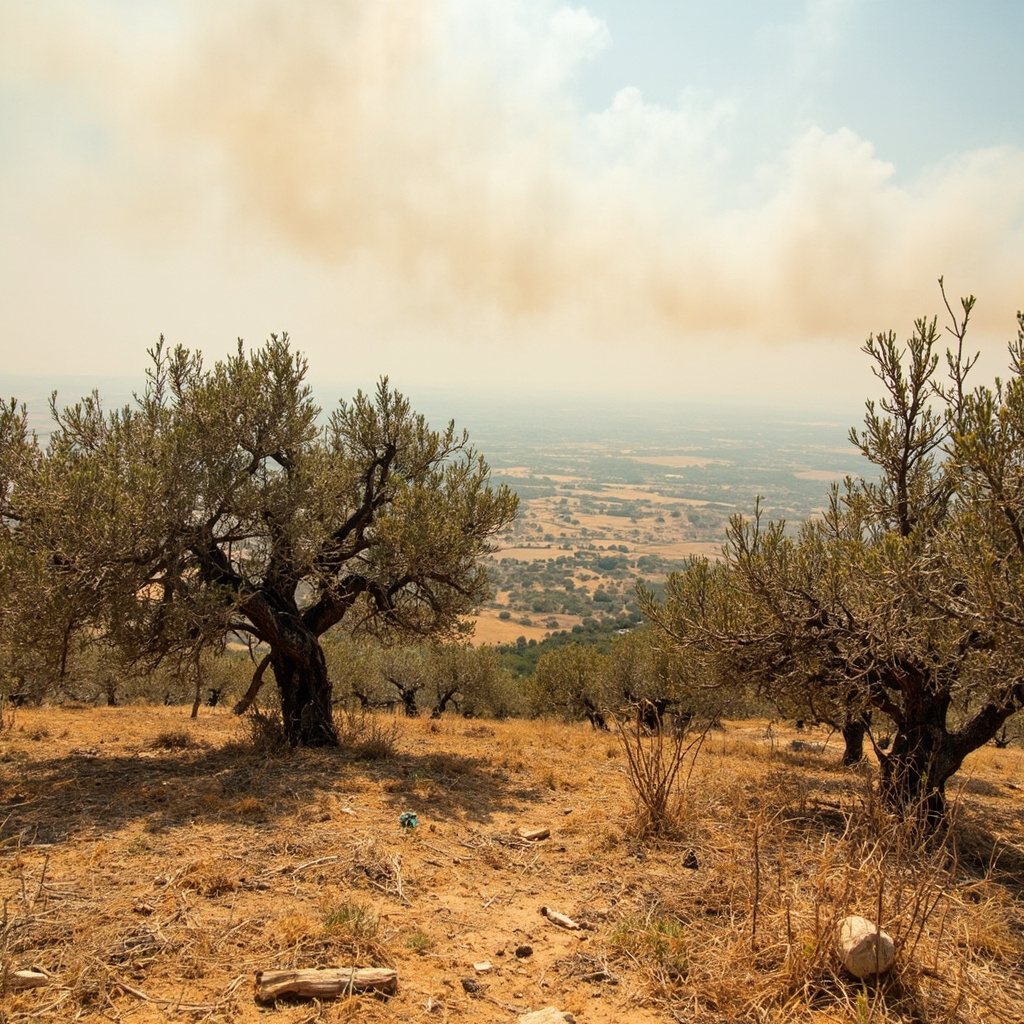
Extreme heat, prolonged drought, and widespread forest fires are causing significant damage to Europe's agricultural sector, foreshadowing a new surge in the price of olive oil and various other commodities as early as this autumn, as reported by Tovima.
Olive groves in Greece, Italy, and Portugal have borne the brunt of these conditions. Even plantations spared from direct fire are suffering negative impacts from smoke, ash, and deteriorating air quality. Elevated temperatures further exacerbate the spread of pests and diseases and hinder fruit formation.
Analysts observe that global olive oil prices have resumed an upward trend following a period of decline. Reduced marketable harvests and increased production costs are poised to accelerate this escalation. In the UK, the average price for a liter of Extra Virgin olive oil has already surpassed £7 (approximately 422 UAH).
Other crops are also feeling the effects of the adverse weather. France has lost thousands of tons of vegetables due to the heat, with production for salads, carrots, onions, garlic, and leeks potentially decreasing by almost half. Vineyards in key regions like Champagne, Bordeaux, and Burgundy have also been impacted, with this year's harvest anticipated to be about 10% lower than the previous year.
Spain's grain production forecast has been significantly cut from 24 million tons to just over 18.5 million tons. Concurrently, the European Commission has revised its harvest forecasts downwards for sunflower, corn, potatoes, and soybeans. Specifically, the corn production estimate has been reduced by 6%, and potatoes and soybeans by 3%.
However, the situation is not uniform across the continent. Romania, for instance, has benefited from increased rainfall, and Italy's wheat harvest has demonstrated greater resilience to the prevailing weather challenges.
Source: Novyny Agrarnoho Biznesu