 Advertise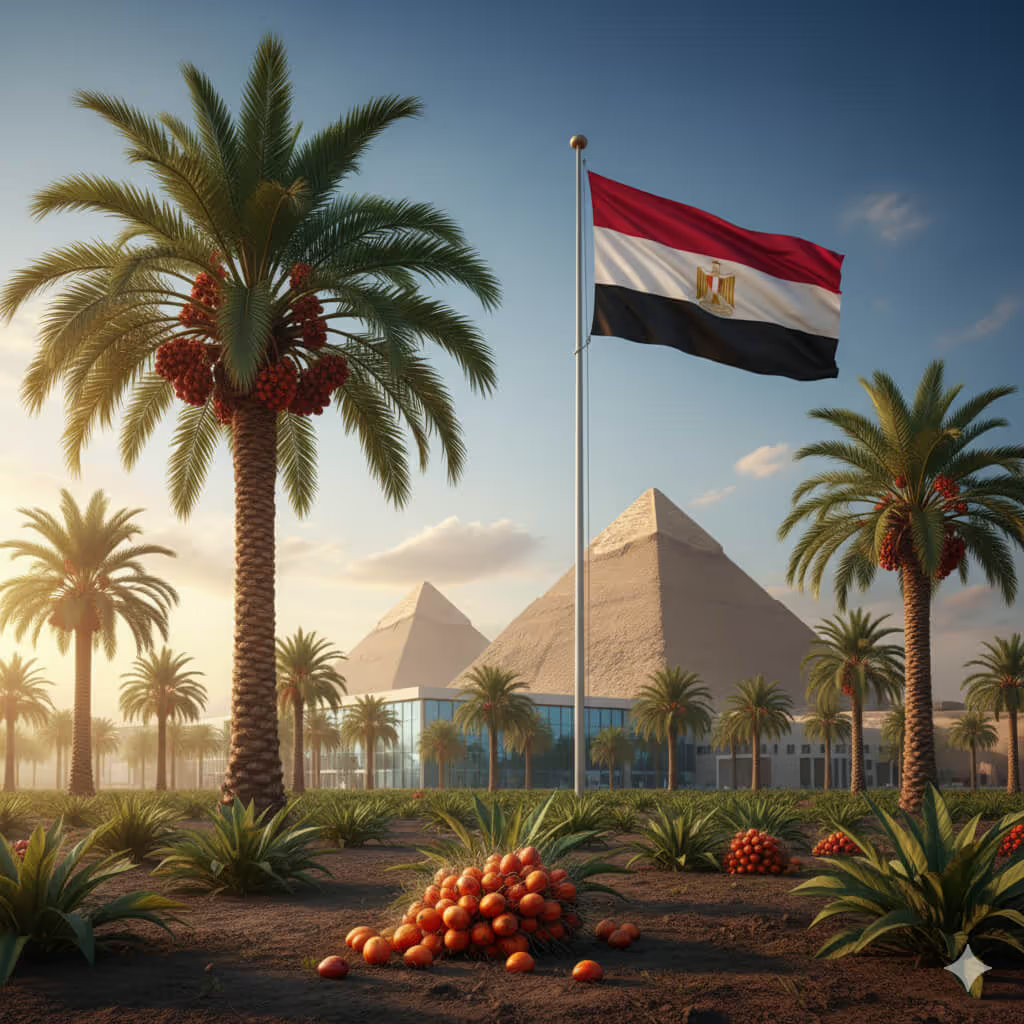
In a move aimed at reducing reliance on oil imports, Egypt’s Ministry of Agriculture and Land Reclamation has begun pioneering trials to cultivate oil palm, seeking to explore the feasibility of expanding its cultivation and benefiting from it on a wider scale.
This comes as Egypt imports most of its oil needs, while the current areas planted with oilseed crops do not meet domestic demand.
Scientific Trials to Study Oil Palm Adaptation
Dr. Ezz El-Din El-Abbasi, director of the Central Laboratory for Date Palm at the Agricultural Research Center, announced the start of planting a group of oil palm offshoots inside the laboratory’s land.
He explained that the aim of the initiative is to study how these offshoots respond to different weather conditions in Egypt.
El-Abbasi described the trial as unique, saying it represents an essential step to assess the ability of oil palm to adapt to global climate change.
He added that the study aims to measure the success rates of cultivation under changing climatic conditions, supporting goals to strengthen sustainable agricultural production.
He noted that the results of this research could open new horizons for oilseed crop cultivation and contribute to developing future agricultural strategies to confront climate challenges.
Why Is Egypt Moving Toward Oil Palm Cultivation?
The Ministry of Agriculture’s plan to expand oil palm cultivation is based on several strategic reasons, including:
Countries such as Indonesia and Malaysia are among the largest producers of palm oil, which represents a major source of national income. African countries such as Nigeria and Cameroon are also working to develop its cultivation to strengthen food security and reduce imports.
Expected Economic and Environmental Benefits
According to a report from the Central Laboratory for Date Palm, the main expected benefits from successful oil palm cultivation in Egypt include:
Source: Khas Masr