 Advertise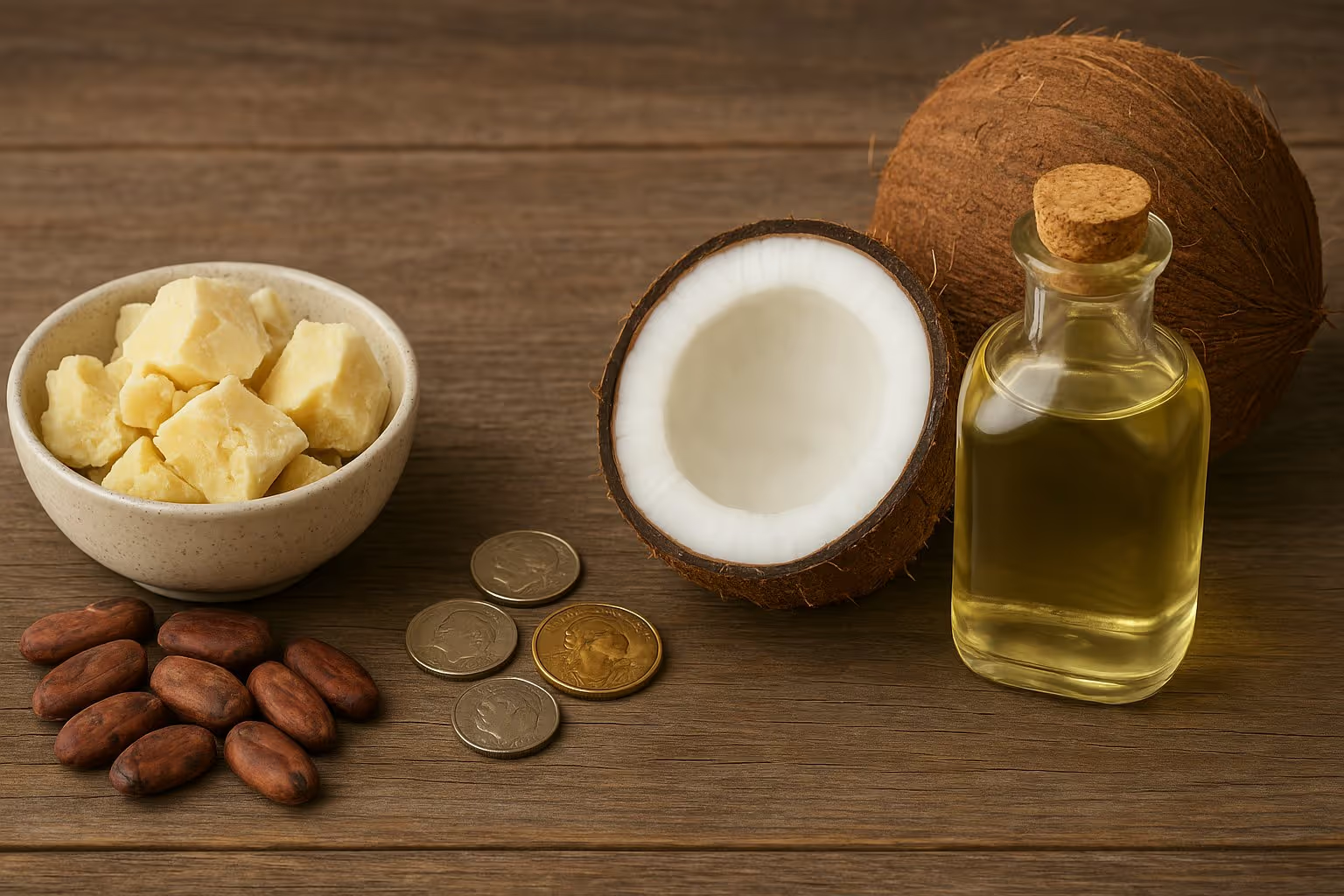
Although it remains a minor player in the vast global oils and fats market, coconut oil has seen dramatic price movements in recent months. Prices in the United States jumped to around 150 cents per pound in early April, up 127% from the five-year average, according to data published by Sosland Publishing.
Alex Norton, president of Beeson & Associates, Inc., said:
"Coconut oil has performed exceptionally well over the past few months as production from top exporters has declined while demand has remained steady."
Coconut oil is extracted from the inner flesh of the brown coconut and is used commercially across a range of food and industrial sectors, including baking and cosmetics. However, poor weather conditions in Indonesia and the Philippines — the world's largest coconut oil producers — have taken a toll on output. In its "World Agricultural Supply and Demand Estimates" oilseeds report released on 10 April, the US Department of Agriculture forecast global coconut oil production for the 2024-2025 season at around 3.65 million tonnes, down 6% from 3.9 million tonnes in 2023-2024. Demand, meanwhile, has continued to grow, helping drive US prices up 87% compared with the previous year.
One of the key drivers of demand has been the sharp rise in cocoa bean prices. In December, cocoa futures on the ICE exchange in the United States hit a record high of $12,931 per tonne, up 177% year-on-year. Although prices have since retreated from that peak, they remain supported by reports of crop shortfalls and grinding data showing continued strong demand for cocoa products.
To offset rising costs and protect profit margins, many chocolate and confectionery manufacturers have turned to reformulating their products with suitable substitutes. Coconut oil, with melting properties and mouthfeel similar to cocoa butter, is a well-known alternative. Despite its own price increases, coconut oil remains cheaper than cocoa butter. Since chocolate products typically contain around 30% cocoa butter, this cost gap is significant. US regulations also allow terms such as "chocolate-flavoured" or "chocolatey" to be used on packaging for products that use cocoa butter substitutes, enabling manufacturers to achieve a chocolate-like experience in compound products without relying entirely on cocoa.
Palm oil is also an accepted substitute for the chocolate industry, as it, like coconut oil, is a lauric fat with melting and mouthfeel properties similar to cocoa butter. However, palm oil prices also rose sharply in December, in tandem with the cocoa price spike. Although palm oil prices have begun to ease, concerns over weather-related production declines and falling stocks could keep prices supported. Palm oil's association with deforestation has also made many food companies — particularly those promoting clean-label or sustainable products — reluctant to adopt it as a substitute.
Despite coconut oil's popularity, expanding its production is no easy task, which is an additional factor supporting higher prices. As with oil palm, planting more coconut trees requires clearing forests and native vegetation in tropical regions.
Norton said:
"Growers can't simply add new acreage year to year in response to higher prices the way they can with field crops. Trees take several years to mature and begin producing. On top of that, environmental regulations and deforestation concerns make expansion difficult — and sometimes impossible."
With demand expected to remain strong and opportunities to expand production still limited, Norton said he does not expect prices to see a sharp reversal from their current upward trajectory.
Source: Supermarket Perimeter