 Advertise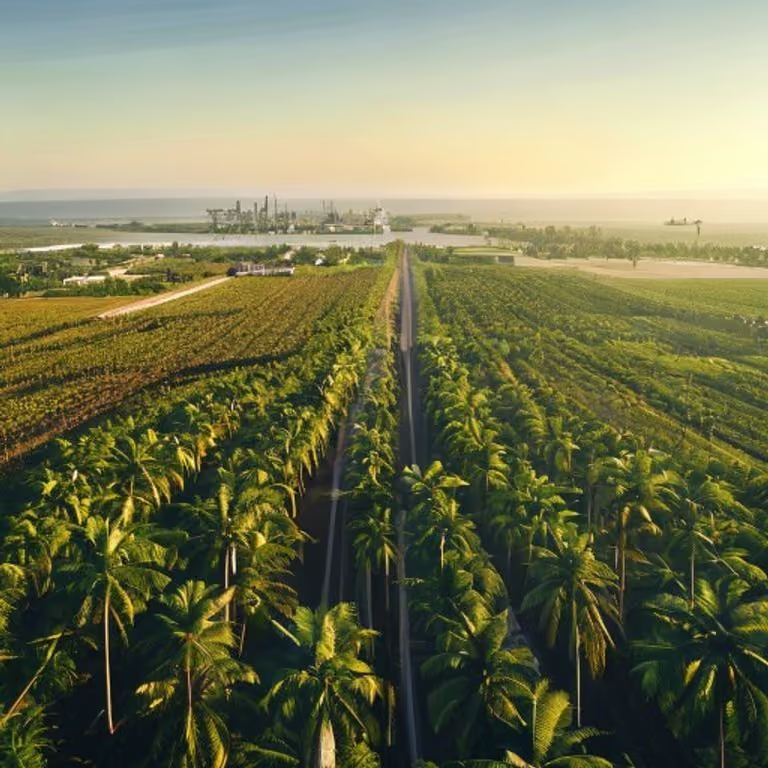
SAO PAULO: Brazil is poised to more than triple its planted area for palm oil production over the next decade by expanding cultivation on previously deforested land in the Amazon, according to Victor Almeida, president of the industry association Abrapalma.
Almeida stated in an interview that the growing demand for biofuels is expected to fuel significant growth in the sector. He noted that existing expansion has largely taken place on land cleared in the past, effectively avoiding environmental risks while ensuring a sustainable supply of vegetable oil.
Almeida's remarks come as the world grapples with successive heatwaves amid a warming climate, which is prompting industries to seek out feedstocks for advanced low-carbon biofuels, such as sustainable aviation fuel. 'We're going to reach 1 million hectares (2.47 million acres). Today we're at 280,000 — that means more than tripling the sector. I think it's possible to do that within 10 years,' said Almeida, who also chairs the board of Belem Bioenergia Brasil, one of the country's largest palm oil companies.
Growth in the sector, he explained, will be primarily driven by biofuel demand, with the use of oil palm trees for vegetable oil production attracting further investment. Almeida emphasized that these trees can only be planted on land deforested before 2008, a regulation that aids in restoring vegetation cover while simultaneously generating income for smallholder farmers in the Amazon.
Furthermore, he highlighted that stringent environmental regulations and a robust traceability system implemented by the state of Para provide buyers, particularly in Europe, with assurances that Brazilian palm oil used for biofuel production is not linked to recent deforestation. Sector companies operate their own plantations but also rely on smallholder farmers to supplement feedstock supplies, with smaller producers having access to subsidized credit, Almeida added.
Under this collaborative model, companies enter into long-term purchase agreements with growers, with prices tied to commodity markets, offering predictability for both parties. Nevertheless, Almeida stressed that a state-backed policy to shield the sector from recurring import tariff exemptions on palm oil and to secure long-term financing for all producers, both smallholder farmers and larger companies, will be crucial for the industry's sustained success.
Source: Arab News PK