 Advertise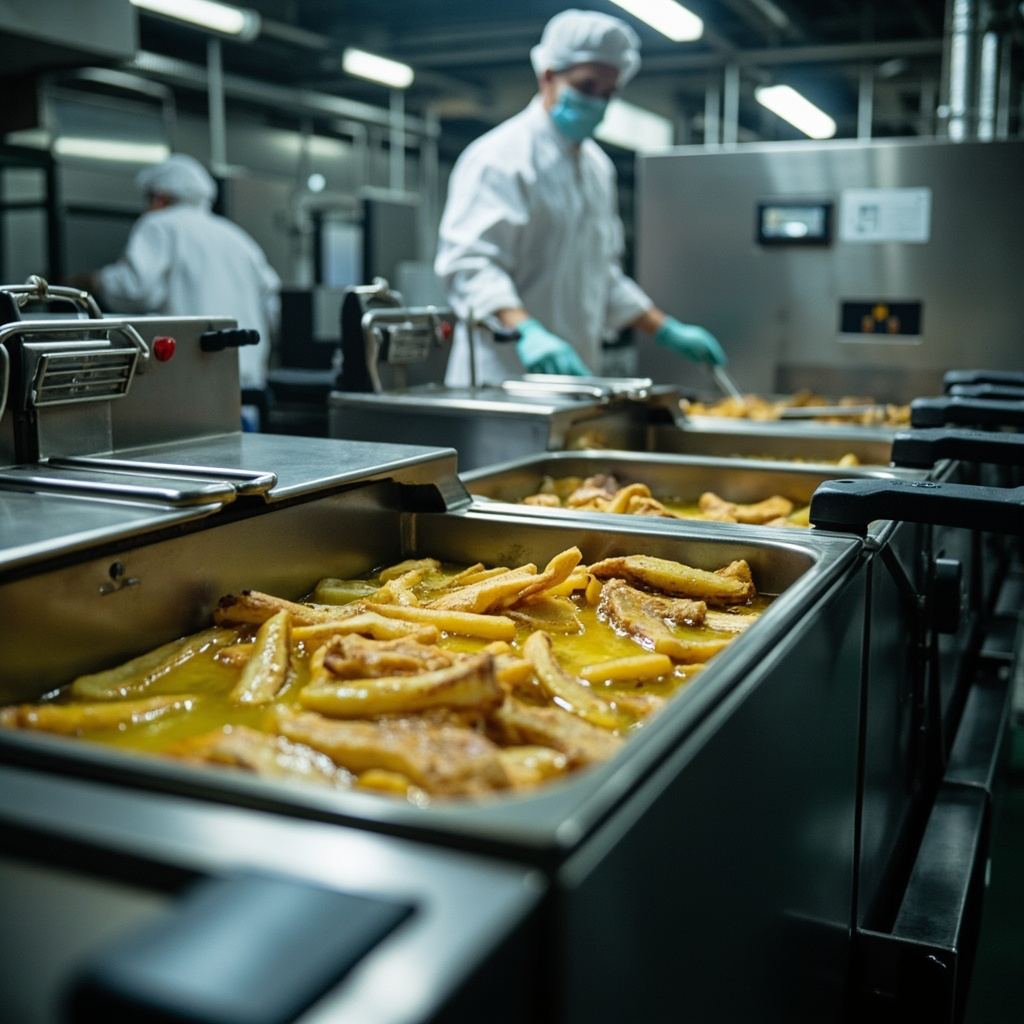
Beyond Oil Ltd. (CSE:BOIL), a food-tech innovation company, has successfully completed an independent industrial-scale pilot. This study validated the effectiveness of its patented filter-powder technology in a commercial food-production environment.
The pilot marks the first independently verified application of Beyond Oil's proprietary chemistry in an industrial frying operation, demonstrating the technology's ability to significantly improve oil quality while integrating seamlessly into existing production infrastructure.
The company reported substantial reductions in key indicators of frying-oil degradation. Results showed an approximate 93 per cent reduction in free fatty acids (FFA) compared with an untreated control fryer, with oil quality in the treated system remaining stable throughout the production cycle. The pilot also recorded an approximate 52 per cent reduction in total polar compounds (TPC), another critical measure of oil degradation. Throughout the testing period, the Beyond Oil-treated fryer remained comfortably below the regulatory threshold of 24 per cent TPC, while the untreated control fryer exceeded that limit.
Beyond laboratory measurements, notable improvements in product quality were observed. A structured sensory-panel evaluation found that food prepared using Beyond Oil-treated oil retained characteristics associated with freshly used frying oil, including a clearer and more golden appearance, uniform crispness, consistent flavour, and the absence of burnt-oil or rancid odours. The company also stated that the technology contributed to a noticeable reduction in secondary odours within the production facility, a factor that could have positive implications for workplace conditions and employee exposure to frying-oil emissions during extended production shifts.
The pilot was carried out over multiple production days at an industrial food-manufacturing facility, demonstrating the technology's seamless integration. Beyond Oil's specialized industrial powder was incorporated into the plant's existing filtration workflow, eliminating the need for custom equipment or major capital expenditures. At the end of each production day, hot cooking oil was transferred into an auxiliary mixing and settling tank and treated with the company's powder. After remaining overnight to allow phase separation, the purified upper oil layer was returned to the fryer through the facility's standard filtration system. The remaining settled material, which contained absorbed food particles and oil-degradation compounds, was then removed as a low-volume waste stream. An identical untreated fryer operated alongside the treated system throughout the pilot, serving as a control.
This successful integration into existing operations demonstrates what Beyond Oil described as strong compatibility with standard industrial frying environments, potentially lowering barriers to adoption for large food manufacturers. This validation comes as the industrial-frying sector continues to expand globally. For example, the North American frozen French fries market alone was valued at approximately US$6.8 billion in 2022 and is projected to reach roughly US$8.1 billion by 2028. Meanwhile, the broader industrial-frying-equipment market is expected to grow at a compound annual growth rate of approximately 7.4 per cent between 2026 and 2034.
The announcement arrives amid increasing scrutiny of frying-oil quality and workplace exposure to emissions generated during high-temperature frying processes. According to the International Agency for Research on Cancer (IARC), emissions from high-temperature frying are classified as a Group 2A agent, meaning they are considered 'probably carcinogenic to humans'. At the same time, regulators in major markets have increased oversight of frying-oil quality, acrylamide formation in processed foods, and employee exposure to cooking-oil emissions. Total polar compounds and free fatty acids are among the most widely monitored indicators of frying-oil degradation. Elevated levels are associated with the formation of substances such as acrylamide, polycyclic aromatic hydrocarbons, and trans fats, compounds that may be transferred to consumers through food consumption and to workers through inhalation or skin exposure. Beyond Oil said the pilot results suggest its technology addresses these challenges at the source by removing degradation compounds directly from the oil before they can accumulate, thereby maintaining stable oil quality.
Jonathan Or, CEO of Beyond Oil, commented in a news release, 'This pilot is a validation of what Beyond Oil's chemistry is fundamentally about – improving frying across every dimension that matters: food quality, health, worker safety, and sustainability.' He emphasized that this milestone confirms the patented chemistry's performance at industrial scale, delivering 'substantially cleaner oil, safer and higher-quality fried product, and a materially healthier working environment for the people producing that food.'
Beyond Oil Ltd. is a food-tech innovation company focused on reducing health risks associated with fried foods while improving food quality, minimizing waste, and advancing sustainability. The company's patented filtration technology is designed to remove harmful degradation compounds from frying oil, helping maintain oil quality and support safer, more efficient food-production processes.
The company's stock (CSE:BOIL) has seen significant market interest, rising over 170 per cent since the beginning of the year, with its last trade at C$2.10. Source: Stockhouse