
Lang
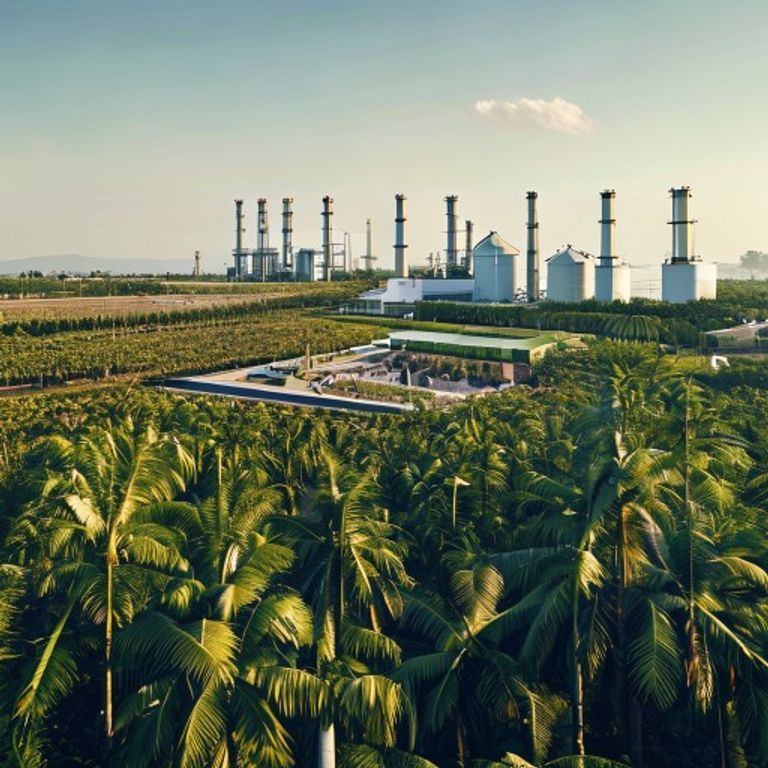
Mubadala-backed Acelen Renováveis is spearheading an ambitious project in Brazil, leveraging the country's native macaúba palm to make sustainable aviation fuel (SAF) economically viable against conventional fossil jet fuel. The company is establishing a fully integrated supply chain centered around this high-oil-yield crop, aiming to position Brazil as a premier global supplier of low-carbon aviation fuel.
The macaúba palm, indigenous to Brazil and adaptable to various biomes, is notable for its resilience, particularly in semi-arid regions, and its exceptional oil productivity. Acelen reports that macaúba yields approximately ten times more oil per hectare than soybeans. Despite decades of study by Brazilian researchers, the species has seen minimal commercial development until now.
Acelen's plans include the construction of a cutting-edge biorefinery in São Francisco do Conde, Bahia state. This facility will be strategically located next to the Mataripe refinery, which the company acquired from Petrobras in 2021. Once fully operational, the biorefinery is projected to produce up to 1 billion liters (264 million gallons) annually of either SAF or hydrotreated vegetable oil (HVO). HVO, a renewable diesel chemically identical to its fossil counterpart, is fully compatible with existing engine infrastructure.
Global demand for SAF is anticipated to surge as aviation decarbonization mandates come into force worldwide. Brazil itself has enacted legislation requiring airlines to progressively reduce emissions through SAF use, starting with a 1% target in 2027 and increasing by one percentage point each year to reach 10%. Internationally, the aviation sector aims for 10% SAF integration by 2030 and net-zero emissions by 2050.
However, the primary obstacle to widespread SAF adoption remains its cost, currently at least three times that of conventional jet fuel. Victor Barra, Agribusiness Director at Acelen Renováveis, emphasized the need for a sustainable solution, stating, 'A long-term solution, beyond mandates and subsidies that are difficult to sustain, requires a feedstock that is scalable, competitive and highly efficient.'
Barra asserts that macaúba fulfills these critical criteria while offering significant environmental advantages. The palm can thrive on degraded land, of which Brazil possesses over 100 million hectares (247 million acres), thereby avoiding competition with food production. Acelen also anticipates benefiting from carbon credits once Brazil's regulated carbon market is implemented. The company projects that the project will cut CO2 emissions by over 80% compared to fossil fuels and facilitate the capture of up to 60 million metric tons of carbon in the soil.
The ambitious project entails a capital expenditure of $1.5 billion, equivalent to approximately 7.6 billion Brazilian reais. This investment is partly financed by a consortium of 12 financial institutions, jointly led by the International Finance Corporation (IFC), the private-sector lending arm of the World Bank, and HSBC. Brazil's national development bank, BNDES, and the Inter-American Development Bank (IDB) are also participants. Separately, HSBC has committed an additional 125 million reais in financing through Brazil's Eco Invest program, specifically to support macaúba plantations.
Construction of the biorefinery is currently underway, with commercial operations slated to commence in 2029. Initially, the facility will process used cooking oil and soybean oil until macaúba orchards begin yielding fruit, which is expected around 2031. Post-2031, Acelen plans a complete transition to macaúba as its primary feedstock.
Mubadala Capital, the investment arm of one of the United Arab Emirates' largest sovereign wealth funds, manages assets exceeding $430 billion. While the group maintains investments in fossil fuels, it is actively expanding its renewable energy portfolio, with Brazil identified as a key strategic destination. Acelen has confirmed that approximately 90% of the planned production has already been contracted by customers in the United States, Canada, and Europe ahead of the facility's startup.
Furthermore, the project benefits from existing logistics infrastructure, particularly the Madre de Deus terminal, situated about 11 kilometers (6.8 miles) from Mataripe. Future infrastructure enhancements include the planned construction of two new pipelines, an electricity transmission line, a natural gas connection, and upgraded water infrastructure. Source: The AgriBiz