 Advertise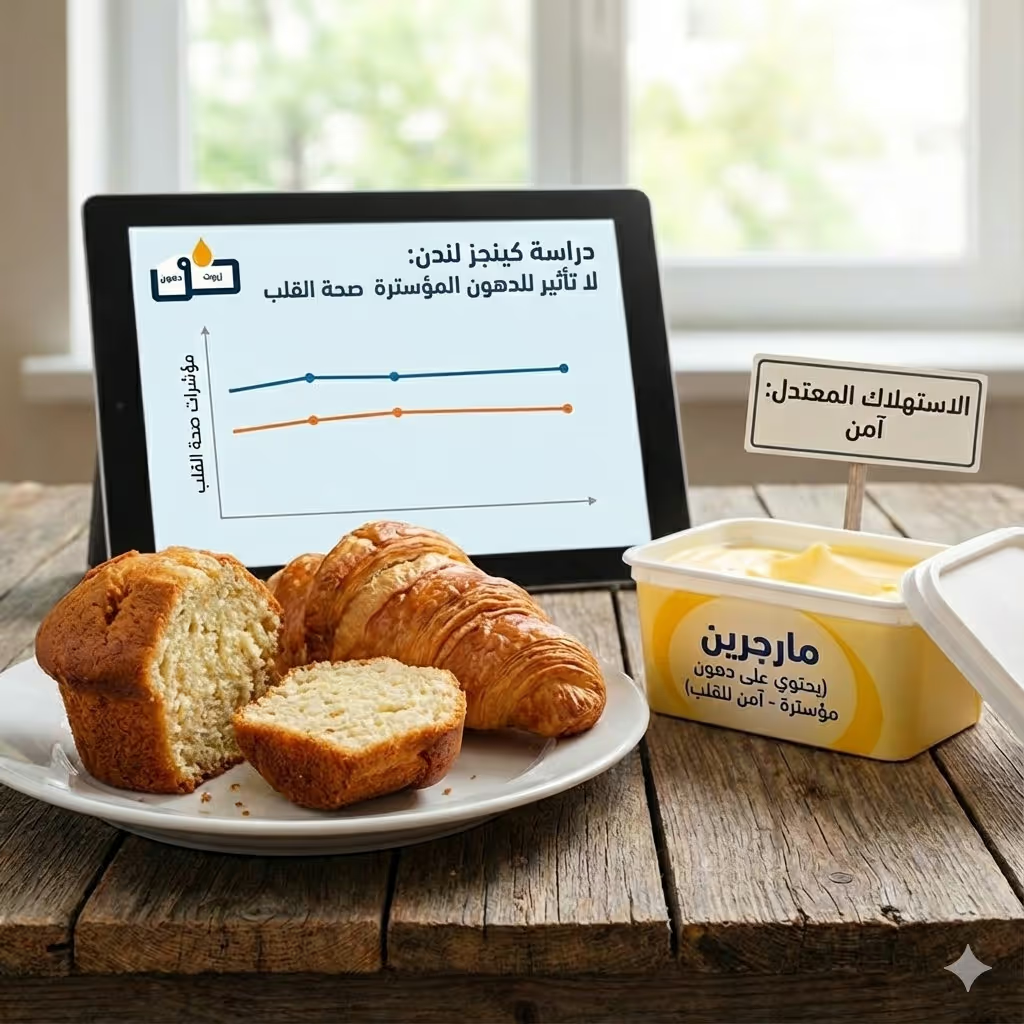
Professor Sarah Berry of King's College London says new research challenges claims that processed oils in everyday foods are harmful to cardiovascular health.
One scientist has issued a "warning" for anyone who has "ever eaten pastries, margarine, or plant-based spreads". Concerns have grown in recent times over the potential effects of certain processed oils.
Professor Sarah Berry, chief scientist at the healthy-eating app Zoe and an academic at King's College London, revealed that a new study published this week contains important findings for anyone interested in food and nutrition.
In recent years, processed oils have become the focus of numerous social media posts, with individuals claiming they are "toxic", "poisonous", and ultimately harmful to our health.
Professor Berry explained that, despite this, scientists have largely debunked these claims, and the new research supports that scientific position.
In an Instagram post, she wrote: "If you've ever eaten pastries, margarine, or plant-based spreads, you've probably consumed interesterified (IE) fats — a type of 'solid fat' made from vegetable oils. Food companies use them because the process makes fats stable, spreadable, practical and suitable for bakery products."
She added: "These interesterified (IE) fats can be rich in different building blocks, mainly palmitic acid (often from palm oil) or stearic acid (from other vegetable oils). For years, people have worried that the palmitic acid-rich types might raise cholesterol or harm heart health compared with those rich in stearic acid."
"That's why this new randomised controlled trial, carried out by Zoe's chief scientist Dr Sarah Berry, Wendy Hall, King's College London, Maastricht University and international partners, is so exciting."
"Participants ate muffins and spreads containing either palmitic acid-rich or stearic acid-rich interesterified fats for six weeks, at a high but realistic level of daily dietary consumption (10% of total energy intake). The results showed no meaningful difference between the two types of fat on key heart health measures. This includes cholesterol levels (such as the ratio of total cholesterol to HDL 'good' cholesterol), inflammation, and blood sugar control."
"The bottom line: there's no need to worry about either of these two types of interesterified fat appearing on an ingredients list. At realistic everyday consumption levels, neither appears to have any adverse effects on your heart health."
She revealed that their latest study, published this week in the American Journal of Clinical Nutrition, demonstrated that industrially processed fats containing different saturated fatty acids show no difference in their effects on heart health. She added: "Now, amid the current demonisation of anything processed, this research highlights that not all food processing is bad for us."
She continued: "Our trial examined the health effects of interesterified fats. These are modified solid fats widely used by the food industry in products such as bakery goods. They are margarine products and spreads rich in either palmitic or stearic saturated fatty acids."
"The food industry now uses these fats to replace trans fats or solid animal fats, which we know are harmful to heart health."
The study involved 47 healthy adults who followed diets containing muffins and spreads made from either palmitic acid-rich or stearic acid-rich materials, providing 10% of their daily energy intake, for six weeks.
Dr Berry said: "We measured a wide range of cardiometabolic risk factors, including blood lipids, inflammatory markers, insulin sensitivity, liver fat, and vascular function, both in a fasting state and following high-fat test meal challenges. We found no statistically significant differences in blood cholesterol or triglycerides."
She concluded: "There were no harmful effects or signs of inflammation, insulin resistance, liver fat, or impact on vascular function. These findings therefore suggest that the industrially processed fats currently used in everyday foods, whether rich in palmitic acid or stearic acid, are unlikely to have any adverse effects on cardiovascular health. I think this is really important given how widely these fats are used in processed foods such as margarine, pastries and confectionery."
Source: WalesOnline