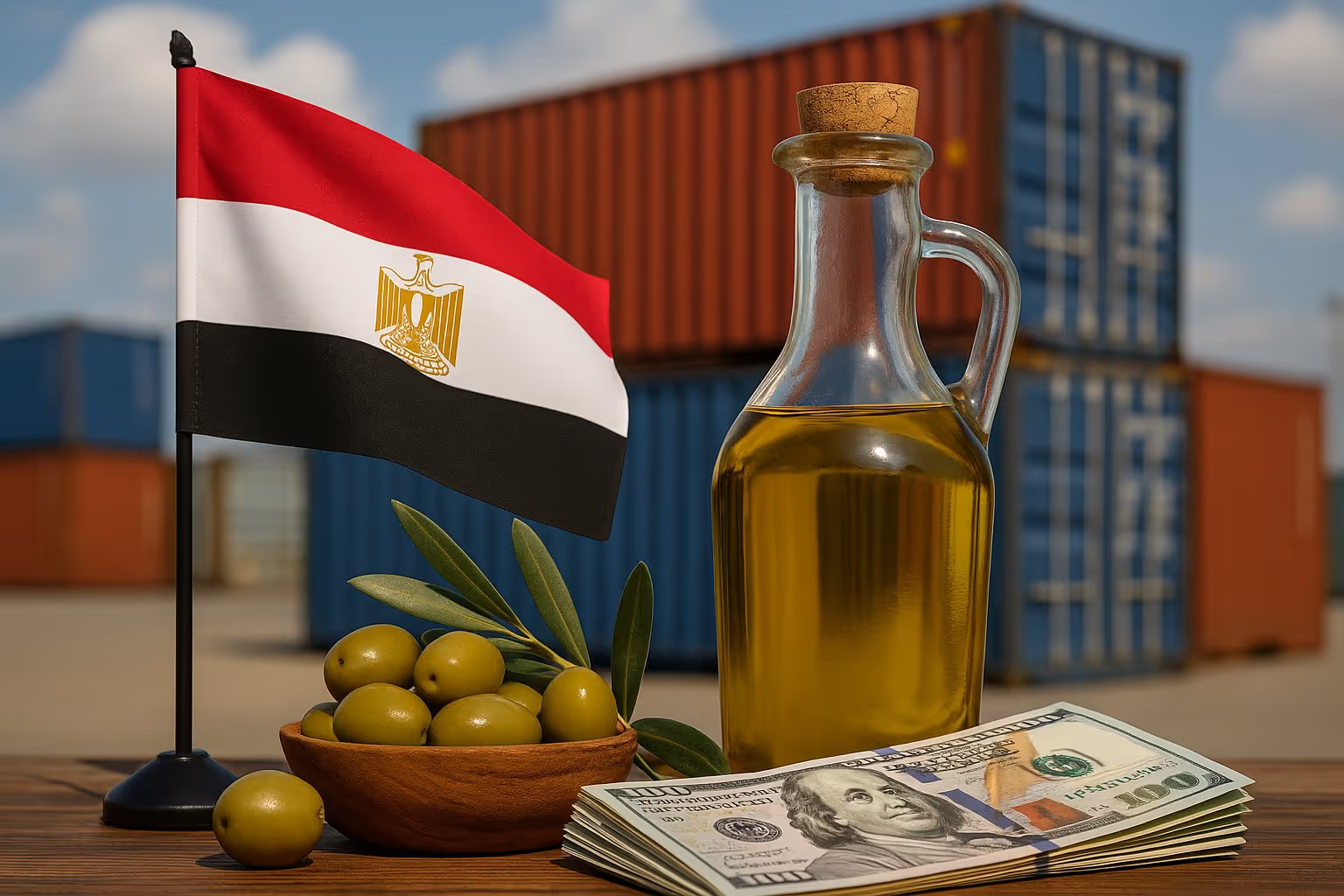
Egypt Among the World's Top Four Table Olive Exporters
$300 Million in Olive and Olive Oil Exports Expected in 2024, With "Promising" Output Despite Climate Change
Dr Adel Khayrat, chairman of the Egyptian Olive Council and a member of the advisory committee at the International Olive Council in Spain, confirmed that Egypt has successfully transformed from being a major importer of table olives and olive oil into one of the world's leading exporters, placing it among the top four alongside Spain, Italy and Portugal.
Speaking to "Al Alam Al Youm", Khayrat explained that Egypt achieved a historic milestone in 2019 when it took the top spot globally in table olive exports, overtaking Spain for the first time.
A Surge in Olive Tree Numbers
- In 2015, Egypt had only around 22 million olive trees.
- Thanks to the national project to plant 100 million trees, that number has now jumped to 60 million trees.
- This growth has helped boost annual production to between one million and 1.2 million tonnes.
Export and Production Figures
- 2024 production is expected to reach one million tonnes, with 50% of that exported as table olives or olive oil.
- 2023 exports totalled around $152 million, jumping to $229 million in 2024.
- Forecasts suggest exports could exceed $300 million by year-end if global prices remain stable.
Impact of Climate Change
- Climate change has affected global yields, temporarily pushing prices up to €/$9-10 per kilogramme before they returned to normal levels of €/$4-5.
- Egypt is relying on increasing the number of trees planted each year to offset any shortfall in production.
- The Climate Change Centre at the Ministry of Agriculture issues daily recommendations to farmers to reduce negative impacts.
Egypt's Harvest Season
- The olive harvest began early in July 2024 due to rising temperatures.
- Picking started first in the south (Fayoum, Minya, the western Assiut road), followed by other regions in August (Ismailia, Wadi El Natrun, the North Coast).
- Olive oil production begins nationwide in mid-October.
Global Production
- Spain: 8 million tonnes
- Greece: 3 million tonnes
- Italy: 2 million tonnes
- Portugal: 1.3 million tonnes
- Tunisia: 700,000 tonnes
- Turkey: more than 1 million tonnes
Egyptian Olive Council's 2025-2030 Plan
- Completing the national project to reach 100 million trees.
- Agricultural programmes to tackle climate change.
- Applying international standards in pesticide use.
- An online platform for Egyptian olives and complementary industries (olive leaves, pharmaceutical applications).
- A joint project with the International Olive Council to issue carbon certificates to producers and manufacturers.
Strict Quality Controls
- Olive samples are inspected at three stages:
- Upon receipt at the factory.
- After processing and before storage.
- After packaging and before shipment.
- The US market requires "zero pesticide residues," and currently only 10 Egyptian companies export there.
- The United States accounts for 30% of international trade in olives and olive oil, making it a strategic target for expansion.
With this approach, Egypt continues to strengthen its position in the global olive market, expanding cultivation, adhering to international standards, and capitalising on export opportunities in major markets.
Source: Al Alam Al Youm
 Advertise