The Kingdom of Saudi Arabia: A Look at the Oils and Fats Market
The Kingdom of Saudi Arabia is one of the largest markets in the Middle East region in the oils and fats sector, supported by rapid population and economic growth. The Kingdom’s population is around 36 million (2023 estimates), which raises the volume of demand for various food products, foremost among them the oils and fats used in the food industries and in daily consumption.
The Kingdom’s Exports, Imports, Production and Consumption of Oils and Fats
The data for 2023 shows a notable reliance on imports to meet the needs of the domestic market, with some domestic production of certain key oils, and growing export activity for some types.
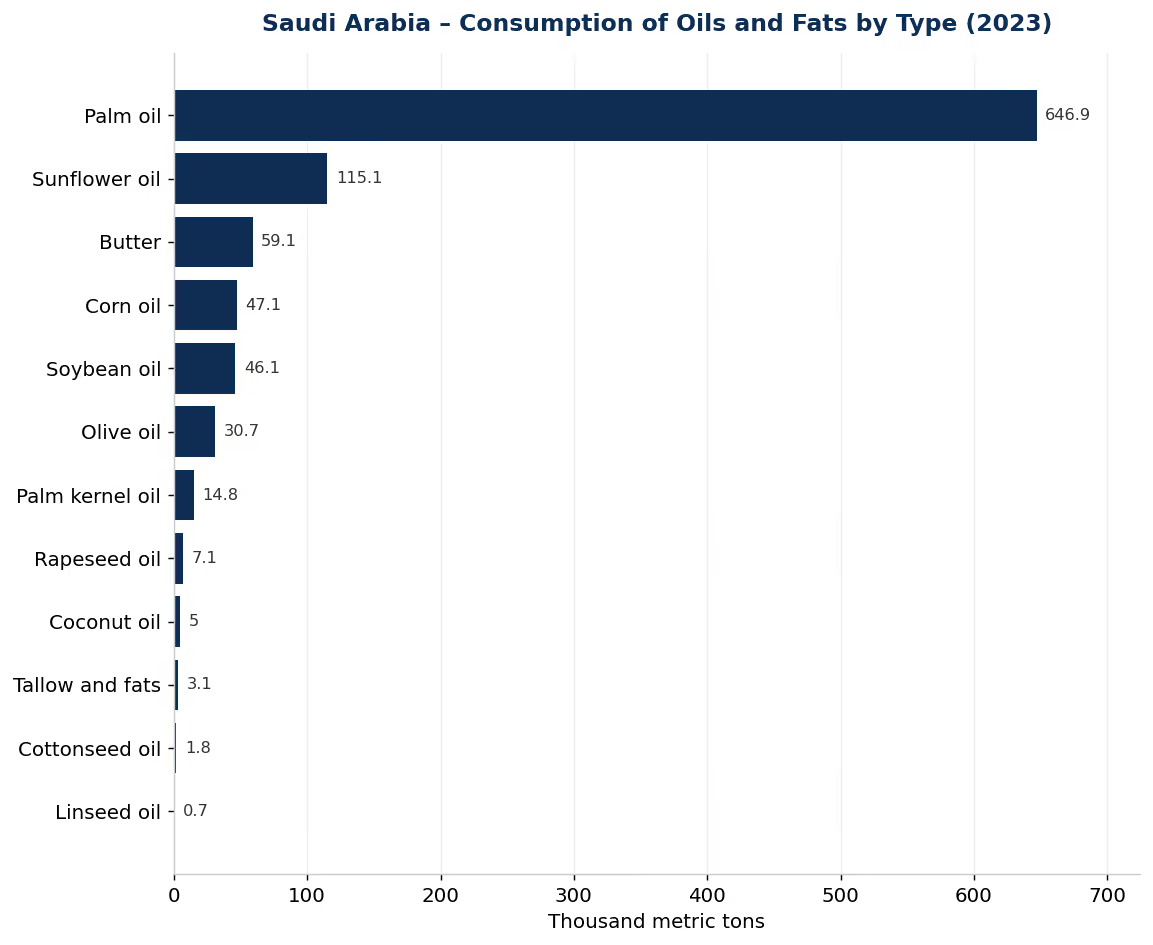
Domestic consumption: 978 thousand metric tons
Imports: 981 thousand metric tons
Domestic production: 89 thousand metric tons
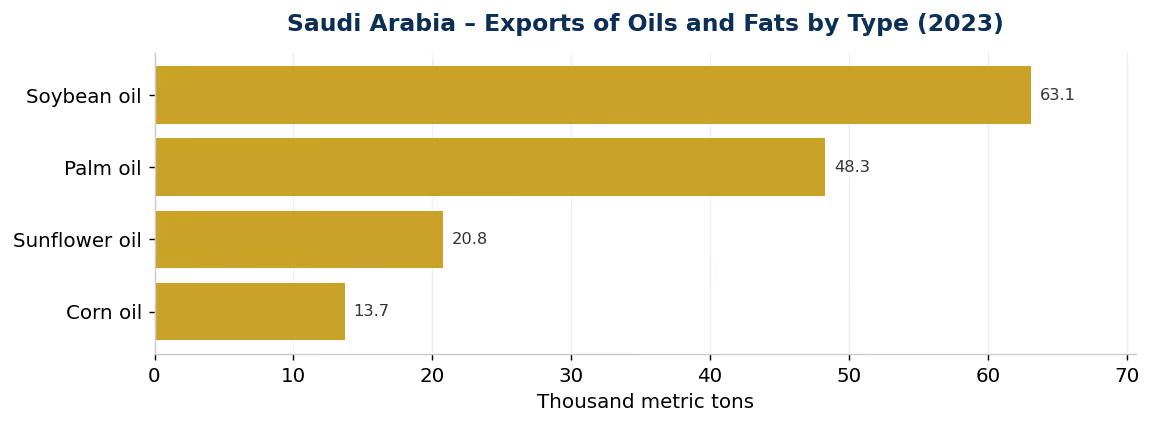
Exports: 146 thousand metric tons
These figures show a close convergence between consumption and imports, reflecting the importance of imports in covering domestic demand, while domestic production and exports point to notable development in certain oils, especially soybean oil.
Historical Analysis for the Period 2019 to 2023
The following chart presents the changes in consumption, imports, production and exports over the past five years:
Key Observations
Fluctuation in domestic production: it declined from 143 thousand metric tons in 2019 to 89 thousand metric tons in 2023, which may reflect challenges in certain agricultural or industrial sectors.
Relative stability in consumption: it ranged between 896 and 978 thousand metric tons during the period, with a notable rise in 2022 and 2023.
Fluctuations in imports: they peaked in 2022 (1,098 thousand metric tons), before declining to 981 thousand metric tons in 2023.
Export growth in some years: exports reached 182 thousand metric tons in 2022, then fell back to 146 thousand metric tons in 2023.
Consumption
Total consumption: 978 thousand metric tons in 2023.
The gap between production and consumption: domestic production is not enough to cover growing demand.
The diversity of market needs: the domestic market requires different types of oils, some of which are not produced locally in sufficient quantities.
Changes in global prices: these affect import volumes and the decisions of importers and manufacturers.
Domestic Production
Total production: 89 thousand metric tons in 2023.
Main products:
soybean oil (89 thousand metric tons)
Notes:
The concentration of production on soybean oil indicates the presence of processing industries linked to this crop, with the potential to expand production if the appropriate agricultural and industrial resources are available.
The rising demand for the remaining oils requires stimulating domestic production through encouraging agricultural and industrial policies.
Quality of logistics services: the availability of advanced storage and transport infrastructure supports re-export.
Re-export: the Kingdom imports large quantities of oils and refines or packages them, then exports them to other countries.
Trade agreements: these may provide easy access to regional and global markets.
Recommendations
Diversify domestic production: encourage investment in cultivating oilseed crops such as sunflower, soybean and rapeseed to reduce reliance on imports.
Stimulate processing industries: build modern refining and packaging facilities to raise added value and encourage exports.
Develop research capacity: support research centres specialized in improving crop productivity and developing alternatives to imported oils.
Expand trade exchange agreements: with the aim of reaching new markets for Saudi products and strengthening the Kingdom’s position as a regional hub for the oils and fats trade.
Conclusion
The 2023 data shows a continued heavy reliance on imports in the Saudi oils and fats market, against limited domestic production concentrated in soybean oil. Nonetheless, the notable export rates point to the potential for re-export and for leveraging the Kingdom’s strong infrastructure. Expanding domestic production, diversifying import sources, and strengthening industrial and research capacities remain the key factors for achieving sustainable food security in the oils and fats sector.
 Advertise