Edible Oils and Fats Specifications: The Scientific Constitution for Quality and the Bulwark Against Adulteration

تاريخ النشر:
April 30, 2026
أخر تعديل:
June 12, 2026

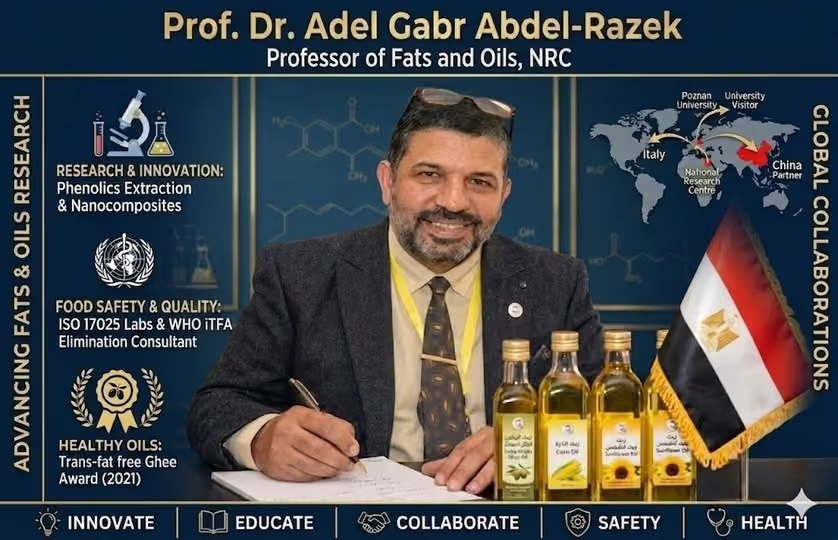
Head of the Oils and Fats Department at the Food Industries and Nutrition Research Institute, National Research Centre.

الفهرس

Text Link

In the world of oils and fats, commercial reputation and packaging glamour are not enough to convey the truth. Here, numbers speak, specifications govern, and the oil's identity is read from its chemical fingerprint, not just its appearance. This is where standard specifications stand as a fair judge and a guardian protecting the rights of both the market and the consumer.

Introduction: Specifications as a Food Security Issue

Food is no longer produced solely for local consumption but also to cross borders into highly regulated markets. The unique nature of oils lies in their visual similarity yet fundamental differences (purity, nutritional value, and price). Therefore, a specification is not a rigid document; rather, it is a protective system that distinguishes between authentic and adulterated products.

First: The Comprehensiveness of Specifications (More Than Just a Number)

It is incorrect to reduce a specification to a single analysis, as it is a continuous chain that includes:

  • Chemical Properties: Fatty acid percentages and stability indicators.
  • Analysis Methods: Conditions for conducting tests to ensure accurate results.
  • Sampling: Rules that ensure the sample truly represents the product.
  • Logistics: Packaging specifications, transportation, storage, and shelf life.

Second: Major International References

This industry relies on a network of global references that ensure the standardization of criteria:

  1. Codex Alimentarius: The most important global reference (e.g., CXS 33-1981 and CXS 210-1999 specifications).
  2. International Organization for Standardization (ISO): to standardize testing methods.
  3. American Oil Chemists' Society (AOCS): for advanced analytical methods.
  4. International Olive Council (IOC): specializing in olive oil standards.

Third: The Analytical Fingerprint... When Numbers Speak

The analytical fingerprint is a "molecular ID card" that reveals the authenticity or adulteration of a product through:

  • Fatty Acids: The backbone of the oil (e.g., oleic acid in olive oil and lauric acid in coconut).
  • Triglycerides: detecting complex forms of adulteration through molecular arrangement.
  • Sterols: the most precise indicators for detecting the mixing of oils with other types.

Fourth: Quality and Nutritional Value

The specification protects the nutritional value of the oil by monitoring:

  • Tocopherols: (Vitamin E), important for nutrition and natural resistance to rancidity.
  • Phenolic Compounds: Antioxidants that give the oil its health value.
  • Natural Pigments: An indication of the oil's authenticity and condition during handling.

Fifth: Reading the Oil's History (Indicators of Deterioration)

Laboratory analyses tell the oil's "story" and how it was handled, through:

  • Free acidity and peroxide value.
  • Spectrophotometric absorption coefficients and polar compounds.

Conclusion: These indicators tell us: Was the oil stored correctly? And was it exposed to heat or light in a way that spoiled its quality?

Sixth: Food Safety... The Red Line

Beyond commercial quality, the standard protects human health from dangerous contaminants such as:

  • Trans Fatty Acids (Trans Fats).
  • Processing contaminants (3-MCPD and glycidyl esters).
  • Pesticide residues and heavy metals.

Seventh: The Expert's Role in Deciphering Codes

A multitude of analyses isn't enough to judge oil; the key lies in "the right analysis for the right question."The specialized expert is the "oil doctor" who connects the results to understand whether a number indicates a manufacturing defect or deliberate adulteration.

Eighth: What Does the Standard Mean for Industry Stakeholders?

  • For the Producer and Manufacturer: A practical guide to quality control and loss prevention.
  • For exporters and importers: A "passport" ensuring shipments are accepted in international markets.
  • For the regulator: An objective tool for resolving disputes.
  • For the consumer: An invisible shield guaranteeing them a safe and accurately labeled product.

Ninth: Challenges in the Arab World

The Arab system faces challenges that need to be addressed:

  1. The gap in updating national standards to align with international developments.
  2. The increasing sophistication and complexity of adulteration methods.
  3. The need to improve laboratory efficiency and train technical personnel.
  4. Raising technical awareness among both manufacturers and consumers.

Conclusion

The standard is the constitution; and when the constitution is absent, industry falters. It is the faithful guardian that ensures a cleaner market, fairer trade, and solid trust between food and people. Adherence to standards is not merely a technical procedure, but an ethical and scientific commitment to public health.

مقالات آخرى للكاتب

Newsletter

Contact us and follow us on social media platforms

Tiktok logolinkedin logoinstagram logofacebook logoyoutube logoX logoEmail icon
.Copyright Zyotwdhon. All Rights Reserved ©