 Advertise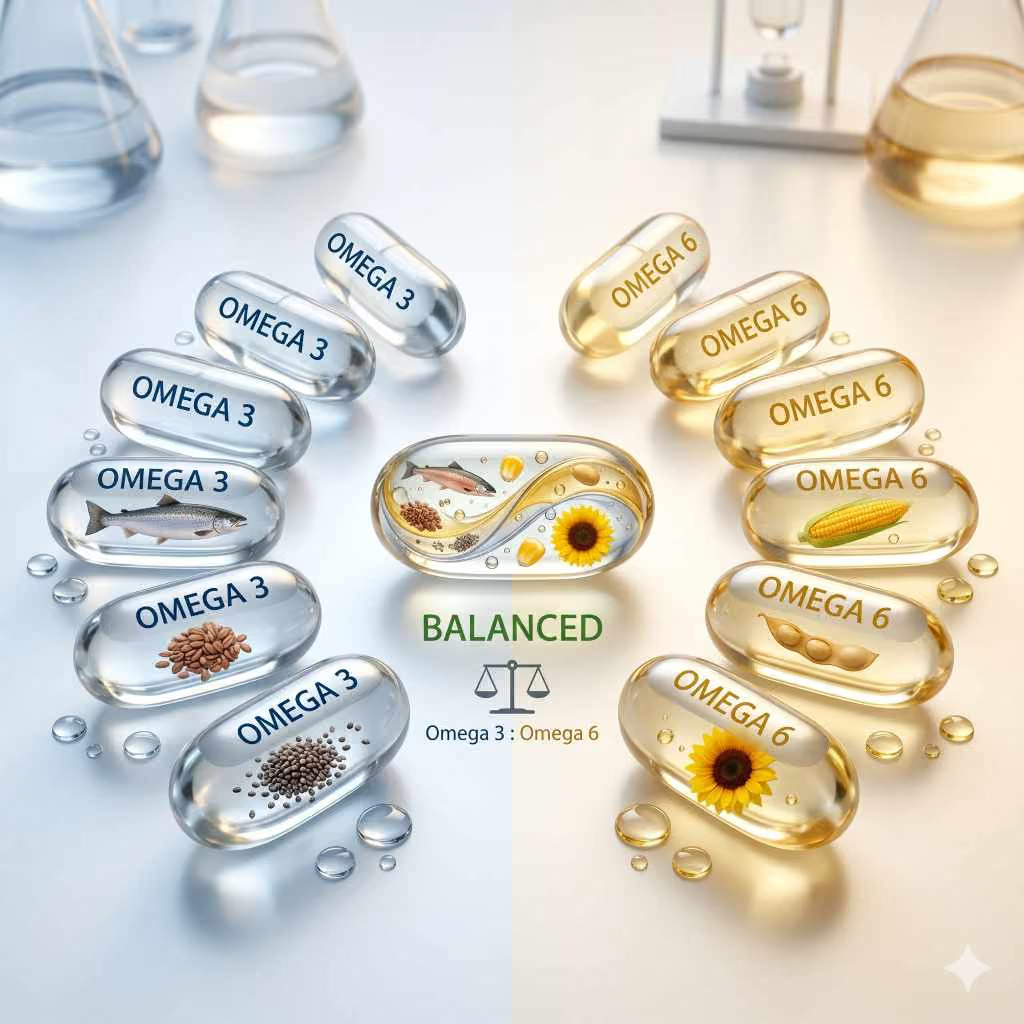
Note: This article was AI-translated from Arabic and is currently under manual review. The author is not responsible for any translation errors. Please refer to the original Arabic text for the most accurate and authoritative information.
Imagine that there is a rowing ship and there are two rowing rows on each side. The rowers decided to sit rowing on one side only because it has shade or because the air is better, what will happen to the ship? If it does not sink due to imbalance, it will certainly not be able to travel in a straight line because of vinegar in balance. This is what happens when there is a much greater imbalance in the consumption of Omega 6 than Omega 3. Despite the importance of both, Western diets have led to a significant disparity in their consumption in favor of Omega 6. It has become harmful, like any food that has increased its consumption and turned against it.
Omega-3 and omega-6 fatty acids are essential components of a healthy diet. As polyunsaturated fats, they play a vital role in maintaining cell health, reducing inflammation, and supporting brain and heart function. However, balancing its consumption is key to obtaining its benefits. This article explores the importance of omega-3 and omega-6 fatty acids, their recommended amounts, their daily intake, and the percentage of their presence in different vegetable oils.
The human body is able to produce all but two of the fatty acids it needs: linoleic acid (LA) - an omega-6 fatty acid, and alpha-linolenic acid (ALA) - an omega-3 fatty acid. These two acids should be eaten from the diet and are called “essential fatty acids.” Both acids are essential for growth and repair, and can also be used to produce other fatty acids.
Omega-3 fatty acids, such as alpha-linolenic acid (ALA), are essential for brain function, heart health, and reducing inflammation. They are raw materials for other important fatty acids such as eicosapentaenoic acid (EPA) and docosahexaenoic acid (DHA), which support heart and nervous system health.
Omega-6 fatty acids, such as linoleic acid, are also essential for health, as they play a role in cell structure and energy production. Supports skin health, bone density, and immune system function However, excessive consumption of omega-6 may promote inflammation, especially when it is not balanced with omega-3.
Omega-3 fatty acids, such as alpha-linolenic acid (ALA), are essential for brain function, heart health, and reducing inflammation. They are raw materials for other important fatty acids such as eicosapentaenoic acid (EPA) and docosahexaenoic acid (DHA), which support heart and nervous system health.
Omega-6 fatty acids, such as linoleic acid, are also essential for health, as they play a role in cell structure and energy production. Supports skin health, bone density, and immune system function However, excessive consumption of omega-6 may promote inflammation, especially when it is not balanced with omega-3.
Experts suggest a nutritional ratio of omega-6 to omega-3 acids that ranges from 4:1 and 1:1. This balance helps reduce inflammation and promote overall health. Unfortunately, the modern diet is heavily skewed towards omega-6, with rates of up to 20:1.
The recommended daily intake is as follows:
The table below shows the ratio of linoleic acid (omega-6), alpha-linolenic acid (omega-3), and the ratio of omega-6 to omega-3 in different oils and fats:
Your body is your ship. Try to choose the types of oils that keep you moving forward always. The diet is always varied and comprehensive. If your intake of omega 6 is high because of oils, try to balance it by eating foods rich in omega 3 such as fish to stop the inflammation in omega 3 that is expected from omega 6. Choosing oils that provide a better balance between omega-6 and omega-3 can help maintain better health. Maintaining this balance supports long-term health and reduces the risk of chronic inflammation, cardiovascular disease, and other related conditions. By paying attention to oil choices, you can achieve a healthy nutritional balance between omega-3 and omega-6.