 Advertise
Note: This article was AI-translated from Arabic and is currently under manual review. The author is not responsible for any translation errors. Please refer to the original Arabic text for the most accurate and authoritative information.
On a cold winter night, a car broke down on a long road. The fuel tank was full, the engine was powerful, and the driver was confident that fuel alone would be enough to get by. But the car suddenly stopped; not due to lack of fuel, but because the engine oil had been neglected, the coolant had dried up, and the friction points had nothing to protect them.
This raises the most important question: If a car cannot operate efficiently on fuel alone, how can we imagine that the human body, with all its complexity and precision, can suffice with just one type of oil or fat?
In our kitchens today, the question has shifted from “How do we consciously use oils and fats?” to an artificial battle: olive oil or ghee? Plant-based or animal-based? Virgin or refined? As if health only knows one choice, and as if food is either black or white. But the truth is deeper and smarter: Diversity is not a distraction... but a path to integration. And integration is not a luxury... but the secret to health and nutritional strength.
In life, no strong system relies on a single element, no civilization endures with a sole resource, and no machine operates efficiently if it depends on just one material. Diversity is not a luxury; it is a law of survival and a secret to strength and continuity.
Look at the energy sources around us; the world does not rely solely on electricity, nor solely on oil, nor solely on the sun or wind. Each energy source has its domain, role, and conditions, and when these sources integrate, the system becomes more capable of facing crises and more resilient to changes.
The same applies to transportation; it began with animals and carts, then ships and trains, then cars, airplanes, and modern means of transport. No single mode completely eliminated another; instead, each retained its role: ships carry heavy trade, trains connect cities, cars serve daily movement, and airplanes shorten distances. The strength here lies not in elimination, but in effective utilization and integration.
Even a vehicle or car itself does not run on fuel alone, despite it being the primary energy source for movement. It needs engine oil to reduce friction and protect internal parts, specialized oils for the gearbox and transmission, greases in specific areas that withstand pressure and friction, water or coolant to prevent overheating, and other fluids for brakes and steering. If one only takes care of the fuel and neglects this supporting system, the car will break down, even if its tank is full of the finest gasoline.
And the human body is more complex and precise than any machine. It doesn't just need energy, nor can it suffice with one type of food or one source of fat. The body needs carbohydrates as an energy source, proteins for building and repair, vitamins and minerals to regulate vital functions, and water as the essence of life. It also needs oils and fats in their diverse forms, types, and sources: plant-based, animal-based, and marine; virgin and refined when needed; liquid and solid; rich in various fatty acids and multiple micronutrients.
This is where the importance of oils and fats in our diet comes from. The issue is not a conflict between olive oil and ghee, nor a battle between plant-based and animal fats, nor an eternal choice between a "healthy" type and a "rejected" one. The more accurate question is: How do we understand the role of each oil and fat? When do we use it? In what quantity? In what cooking method? And within what overall dietary pattern?
Just as a car does not run efficiently on fuel alone, the body does not operate efficiently on a single oil or fat. Diversity among oils and fats provides the body with a broader spectrum of fatty acids, fat-soluble vitamins, antioxidants, and micronutrients. When one makes good choices and uses them well, this diversity transforms into integration, and integration transforms into true health and nutritional strength.
Therefore, the smarter question is not: Which is better... ghee or olive oil? But rather: How do we ensure each source plays its correct role, without excess or elimination?This is where kitchen awareness begins, and where the philosophy of balanced nutrition starts: Diversity is strength... and integration is health.
It's a mistake to elevate one type of fat to the status of a "superfood," just as it's unfair to blame a specific natural fat for all health problems. The issue isn't choosing between ghee and olive oil, or between butter and vegetable oils, but rather understanding the role of each source, how to use it, the appropriate quantity, and its dietary context.
Therefore, wisdom lies not in eliminating one in favor of the other, but in placing each oil or fat in its proper context.
Fats are not merely stored energy or excess calories to be feared; rather, they are one of the pillars of life within the body, a fundamental component in the efficiency of cells, organs, and tissues. They provide the body with concentrated energy, help with satiety, and give food its flavor and texture, but at the same time, they play roles far deeper than just caloric supply.
It's no exaggeration to say that fats are present in every detail of the body: in brain cells, nerve membranes, skin suppleness, protecting vital organs and viscera, maintaining body temperature, tissue elasticity, and joint efficiency within a balanced nutritional and physical system.
Therefore, fats are not an unwelcome guest at the human table, but a vital partner in energy and satiety, cell building, nerve efficiency, brain health, vitamin absorption, organ protection, and supporting skin, vision, immunity, and bones. However, these extensive functions are not performed by one type of fat alone; saturated, monounsaturated, polyunsaturated fatty acids, and omega-3 and omega-6 acids each have their own properties, limitations, and roles.
This is where the true meaning of integration emerges: the body should receive a controlled variety from multiple sources, without excess of one type or complete deprivation of another. Because a body that operates as an integrated system should not be nourished with a single-source mentality.
Every oil or fat has its own "compositional fingerprint." Olive oil is relatively rich in oleic acid, and oils like sunflower, corn, and soybean contain varying proportions of polyunsaturated fatty acids, while some marine sources are characterized by long-chain omega-3 fatty acids such as EPA and DHA. Natural animal fats, on the other hand, vary in their composition depending on the animal's type, diet, and the method of fat production.
This diversity in composition is not a drawback, but an advantage. When we make good choices and use them wisely, a better balance can be achieved between different fatty acids: saturated, monounsaturated, and polyunsaturated, as well as between omega-6 and omega-3.
This balance doesn't imply a rigid mathematical equation; rather, it means that daily nutrition should be broader and more diverse, moving away from the long-term dominance of a single source on the table.
The diversity among oils and fats is not limited to fatty acids alone; it extends to a critically important world of micronutrients. Some oils are distinguished by their tocopherol content, which are natural forms of vitamin E with antioxidant activity. Others contain phytosterols that, as part of a balanced diet, may contribute to supporting healthy blood lipid levels. Virgin olive oil, especially good quality varieties, is characterized by natural phenolic compounds, while other oils contain natural pigments like carotenoids and chlorophyll in varying degrees, alongside other minor components that differ from one source to another.
This brings us to an important concept in food science and nutrition: Synergistic Integration. This means that the combination of diverse bioactive components from more than one food source can yield a greater and deeper effect than simply summing the benefits of each individual component. Antioxidants, vitamins, fatty acids, phenolic compounds, tocopherols, sterols, and natural pigments do not always act as separate elements; rather, they can integrate to protect the oil itself, support food quality, and contribute to protecting cells from oxidative stress within a balanced dietary pattern.
In simpler terms: when the source is diverse, the active components are diverse, and when the components are diverse, the opportunities for integration among them increase. This is what makes a balanced diet more powerful than relying on a single product, regardless of its fame or advertising allure.
Not all oils are suitable for every use. An oil perfect for salads might not be the best for deep frying, and a fat that provides texture and flavor in some dishes shouldn't become an excessive daily source of saturated fats.
Therefore, a conscious kitchen doesn't just ask: What's the best oil? Instead, it asks: What's the best oil for this particular use?
The problem isn't with the oil itself, but with its misuse.
When discussing the interplay between natural oils and fats, we must draw a clear distinction between naturally occurring, nutritionally approved fats and trans fats, which primarily result from the partial hydrogenation of vegetable oils. These industrial trans fats have been scientifically linked to clear health risks, particularly for cardiovascular health. Consequently, health organizations and regulatory bodies worldwide have moved to limit their use and gradually eliminate their sources from food.
In this context, Egyptian efforts represent a significant step in consumer protection and market regulation. The National Food Safety Authority (NFSA) issued a binding technical regulation setting maximum limits for trans fatty acids in food. This regulation prohibits the circulation or use of partially hydrogenated vegetable oils and fats in food manufacturing and sets a maximum limit for trans fatty acids not exceeding 2 grams per 100 grams of oil and fat content in food intended for direct consumption. Producers are also mandated to declare the saturated fat content and trans fatty acid percentage on the food product's label. The NFSA further affirmed that these controls apply equally to both local and imported foods.
The issue doesn't stop at issuing technical regulations; it extends to a comprehensive regulatory system covering oil and fat factories, food manufacturing chains, local markets, customs checkpoints, and import controls. This ensures products comply with specifications and requirements and that oils, fats, and foods containing them are free from unauthorized trans fat sources. In collaboration with the World Health Organization, the National Food Safety Authority announced the "Towards a Trans Fat-Free Egypt" initiative, complete with a roadmap based on developing regulatory frameworks and legislation, enhancing market oversight, and improving laboratory efficiency to ensure accurate analyses and protect consumer health.
This highlights the importance of the integrated role played by national entities, including the Egyptian Organization for Standardization and Quality (EOS) in preparing and updating standard specifications related to oils, fats, and labeling, and the National Food Safety Authority (NFSA) in monitoring, verifying, and enforcing regulations on local and imported products. Food safety is not achieved by regulations alone, nor by oversight alone, but by the integration of legislation, standards, laboratory analysis, inspection, and awareness.
However, consumers and non-specialists should not be confused. Not every fat that is solid or semi-solid at room temperature is hydrogenated or artificial. There are natural oils and fats that are inherently solid or semi-solid due to their natural composition and high proportion of certain saturated fatty acids, such as palm oil, coconut oil, palm kernel oil, and some natural animal fats like ghee and butter. These sources differ fundamentally from partially hydrogenated vegetable oils, which are industrially produced and may contain trans fatty acids.
Therefore, a scientific distinction is essential: Partially hydrogenated is not the same as naturally solid, and solidity alone is not proof of hydrogenation. The real determinant is the source, composition, manufacturing method, trans fatty acid content, compliance with specifications, labeling, and laboratory analysis when needed.
Hence the importance of consulting meticulous specialists in oil and fat sciences and food safety when evaluating products or interpreting data, to prevent awareness from turning into confusion or inaccurate alarm. Natural ghee is not the same as industrial hydrogenated ghee, natural butter is not like unidentified processed fats, and good vegetable oils are not like degraded frying oils or fats subjected to incorrect and repeated heat use.
In summary, the real danger lies not in every fatty substance, but in industrial trans fats, partially hydrogenated oils, poor manufacturing practices, misuse, and the absence of clear labeling. As for approved natural oils and fats, their place in food is determined by quality, quantity, method of use, and compliance with specifications, not by general impressions or confusion between terms.
It's important to move beyond simplistic judgments that reduce saturated fats to a single phrase: either an "absolute enemy" or "completely harmless." Nutritional science is more precise and balanced than such a dichotomy. Saturated fats are not a monolithic entity isolated from their context, and they cannot be properly evaluated apart from their source, quantity, overall dietary pattern, and the health status of the individual consuming them.
Saturated fats are naturally present in various foods, such as butter, ghee, and some animal fats, as well as in certain tropical oils like coconut oil and palm oil. They play undeniable nutritional and technological roles; they give some foods their texture, flavor, and stability, are part of cell membrane structure, serve as a concentrated energy source, and contribute their physical properties to many cooking and food processing applications. Therefore, the scientific approach to them is not to eliminate them, but to appreciate their role and place them in their proper context.
However, appreciating their role does not mean opening the door to excess. Saturated fats, especially if consumed beyond the body's needs or as part of a diet rich in calories, sugars, and refined carbohydrates with little physical activity, can become part of an unhealthy dietary system, particularly for those with high cholesterol, heart disease, obesity, or related risk factors. Therefore, the goal is not to banish them from our plates or grant them an open acquittal, but to use them consciously and in moderation.
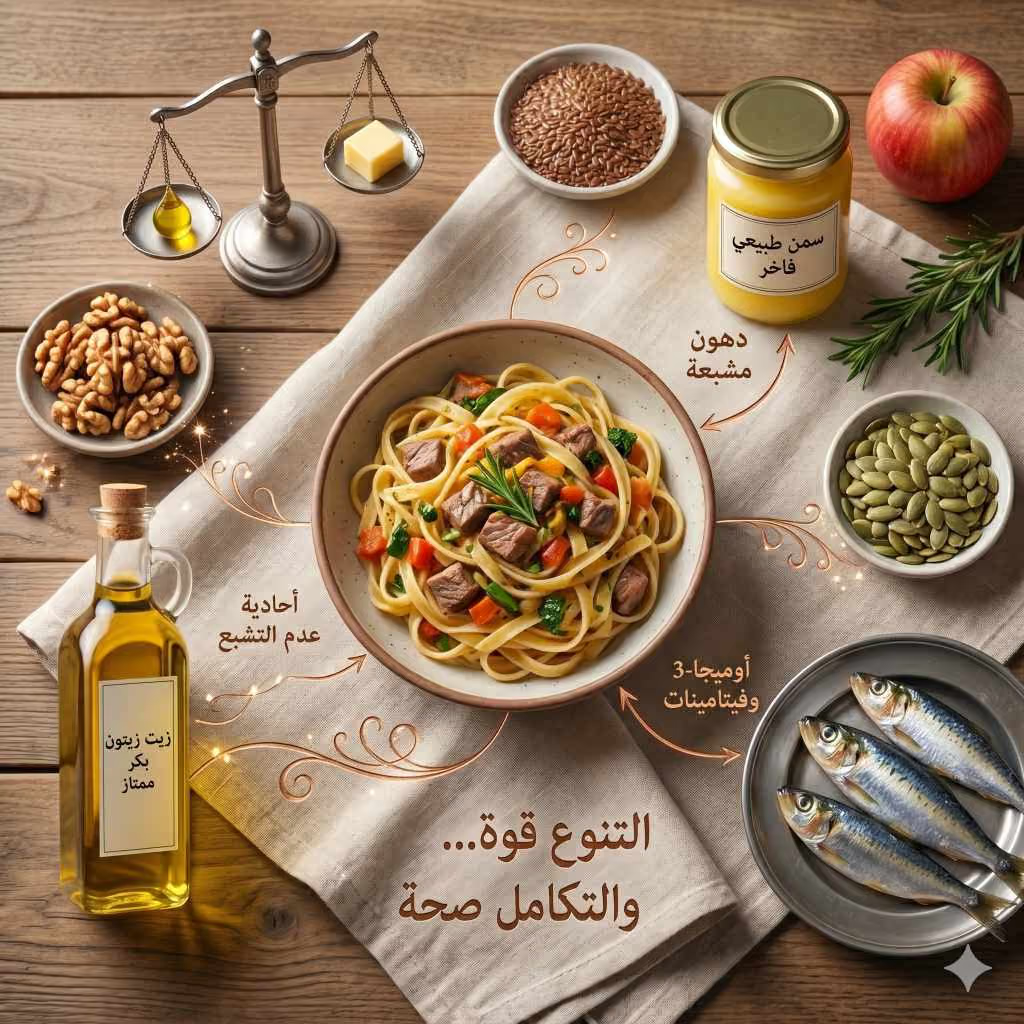
The same rule applies to other fats and oils, even those that have gained an excellent healthy reputation. Extra virgin olive oil is an important source of monounsaturated fatty acids and phenolic compounds, but it remains a high-calorie fat, and overconsumption does not automatically transform food into healthy food. Fish oil and omega-3 sources play important roles in supporting heart and brain health and regulating certain inflammatory pathways, but this is not an invitation to consume them without restraint or irrespective of individual needs and health status. Similarly, nuts, seeds, and good vegetable oils derive their value from their appropriate place, quantity, and variety, not from excessive use.
So, the essence of health isn't about replacing one reverence with another, nor shifting blame from one type of fat to another, but rather understanding the entire system. It's best for daily nutrition to primarily feature unsaturated fats from good sources like olive oil, nuts, seeds, and fatty fish, alongside a moderate and thoughtful inclusion of natural fats higher in saturation, while avoiding trans fats, partially hydrogenated oils, and thermally degraded fats as much as possible.
In summary, saturated fats are neither condemned solely by their name nor acquitted merely for being natural; instead, they are evaluated by scientific criteria: their source, quantity, method of use, an individual's health status, and what accompanies them in daily meals. Balance is the fair arbiter, giving each fat its proper place and preventing excess from any source, even if it's olive oil or omega-3.
To achieve intelligent variety, families can approach oils and fats with a simple rule:
One of the most dangerous pitfalls in contemporary nutritional discourse is its constant search for "the absolute best": the best oil, the best fat, the best diet, the best recipe, and sometimes a single, universal list of "dos and don'ts" imposed indiscriminately on everyone. This is where the problem arises, because food is not a one-size-fits-all mold for all humanity, nor a general recipe suitable for every age, body, health condition, environment, or lifestyle.
What suits a cold salad may not be appropriate for frying and browning, and what works for moderate cooking might not withstand high temperatures. What benefits a healthy, active individual may require specific adjustments for someone with heart, liver, kidney disease, diabetes, or high blood lipids. Furthermore, what is beneficial in a measured spoonful can, when consumed in excess, become a nutritional and caloric burden, even if it's extra virgin olive oil, fish oil, or a rich source of omega-3.
Therefore, the danger of the "allowed and forbidden" trend is no less than that of making poor choices; it strips food of its scientific and personal context, transforming it into universal commands: "this is allowed for everyone," and "that is forbidden for everyone." The reality is that food should be evaluated based on the individual, their health status, quantity, preparation method, source quality, frequency of use, and its role within their overall lifestyle.
From this perspective, we must shift from the superficial question, "What is the best oil?" to the more intelligent one: "What is the most suitable oil for this person, this dish, this cooking method, this quantity, and within this dietary pattern?"Only at this point does food become a science, not a fad; a culture, not propaganda; and awareness, not confusion. This is because health isn't built on pre-made lists, but on an understanding that places each food in its proper context, each oil in its appropriate use, and each benefit within its boundaries.
The human body is not a battleground between oil and ghee, nor a point of contention between plant-based and animal-based, nor a machine that runs on a single source, no matter how important or beneficial it seems. It is an intricate biological system that only thrives with calculated diversity, continuous balance, and conscious use that places each food in its proper context, and each oil or fat within its function and limits.
Unsaturated oils, especially olive oil and good quality vegetable oils, play a crucial role in supporting food quality and heart health when used appropriately and in suitable quantities. Naturally saturated fats, such as traditional ghee, butter, and some natural tropical oils and fats like coconut oil, palm oil, palm kernel oil, cocoa butter, and shea butter, have sensory, technological, and nutritional roles that cannot be denied, nor should they be exaggerated or overused. Omega-3 fatty acids, whether from fish or other sources, are an important component for brain and heart health and regulating certain inflammatory pathways, but they are not an open license for indiscriminate consumption or excessive doses. As for fat-soluble vitamins, tocopherols, sterols, phenols, carotenoids, chlorophyll, and other minor components, they add real vital value when they come from diverse and good sources, and operate within what can be described as synergistic integration; where the nutritional system becomes more impactful than merely combining its individual components.
Therefore, the message that should clearly reach the media, food commentators, and some specialists before consumers is that oversimplification is dangerous, and generalization is even more so. It is incorrect to reduce the science of oils and fats to sharp statements like: “This is allowed for everyone” and “This is forbidden for everyone,” or “This is a miracle oil” and “This is a deadly fat.” Food is not managed by trends, impressions, or exaggerated praise or fear-mongering, but by science, specifications, analysis, health context, method of use, and quantity.
It must also be clear that the real danger lies not in every fatty substance, but in industrial trans fats, partially hydrogenated oils, fats of unknown origin, degraded frying oils, poor storage, misuse, and the unscientific mixing of natural and processed ingredients. A natural tropical oil that is solid or semi-solid at room temperature is not necessarily hydrogenated oil, and natural traditional ghee is not the same as industrial hydrogenated ghee. Hardness alone is not proof of hydrogenation. The decisive factors are the source, composition, manufacturing method, nutrition label, specifications, and laboratory analysis when needed.
Health is not made by a single bottle of oil, a single spoonful of ghee, an omega-3 capsule, or advertising that promotes one product while demolishing another. Health is built by a nutritional mindset that understands diversity is the foundation of integration, integration is the path to strength, and moderation is the true guardian of every benefit.
Therefore, do not idolize an oil, demonize a fat, let your kitchen be captive to one type, or surrender your awareness to a fleeting trend or a general piece of advice without context. Give each source its due, each use what suits it, and each body what it needs.
The Conclusive Summary: Oil alone is not enough, ghee alone is not enough, and omega-3 alone is not enough; in fact, all food is insufficient if awareness is absent. A body created for integration should not be nourished with a mindset of exclusion.